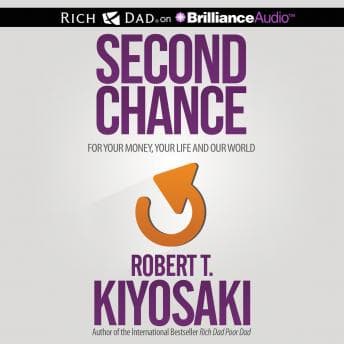

Bottom Line: Worth your commute if you're new to Kiyosaki. Skip if you've read Rich Dad Poor Dad—this is basically the remix album nobody asked for.
I started this one at 5:47 AM on a Tuesday, wedged between a guy manspreading into my personal space and someone eating what I can only describe as "aggressive breakfast burrito." Perfect conditions for a book that promises to help me see the invisible forces shaping our financial future. Nine hours later, I have thoughts.
The Rich Dad Extended Universe Problem
Here's the thing about Kiyosaki books—they're like Marvel movies at this point. If you've seen one, you kinda know the beats. The Cashflow Quadrant gets referenced approximately 47 times (I didn't count, but it felt like 47). The Rich Dad vs Poor Dad framework shows up again. The "assets vs liabilities" distinction that changed my financial thinking back in 2015? Yeah, it's here too. Again.
But here's where I got genuinely interested—the historical context actually holds up. Kiyosaki traces monetary policy decisions from 1971 (Nixon taking us off the gold standard) through 2008 and into the "Information Age" we're supposedly navigating now. For someone who debugs distributed systems, his framework of "visible vs invisible money" clicked in a weird way. Money has become increasingly abstracted, like layers of software hiding the hardware underneath. He's not wrong about that.
The problem? He keeps telling you THAT the world is changing without giving you the actual debugging steps. It's like a senior engineer saying "the architecture is broken" for three hours without ever opening a terminal.
Tim Wheeler Does the Heavy Lifting
Wheeler narrates this like a patient financial advisor explaining things to a slightly slow nephew. Clear, motivating, easy to follow at 1.5x (my default) or even 1.75x when Kiyosaki goes on his third tangent about why schools don't teach financial literacy. No weird pronunciation issues, no pacing problems. He's doing exactly what the material needs—making repetitive content digestible.
One listener said this is "something to listen over and over again and take notes." And honestly? That's the target audience. If you're the type who needs concepts reinforced through repetition, Wheeler's consistent delivery works. If you're the type who gets annoyed when someone makes the same point using different anecdotes (hi, that's me), you'll be reaching for that 2x button.
The ROI Calculation
Here's my honest assessment after 9 hours and 17 minutes of my life:
Perfect for: Someone who's never read Rich Dad Poor Dad and wants the philosophy plus updated context for post-2008 economics. You're getting the core concepts plus some macro analysis that's genuinely interesting.
Skip if: You're already in the Kiyosaki ecosystem. This is like paying for DLC that reuses 60% of the base game assets. The "second chance" framing is clever marketing, but the substance is largely recycled.
The book could've been a blog post. Okay, maybe a blog series. Three posts max. Instead it's stretched across 9+ hours with the kind of padding that makes business books the bane of my commute existence.
What Actually Stuck
I'll give credit where it's due—his point about the 2008 bailouts fundamentally changing the relationship between risk and reward in the economy is worth thinking about. And the "your house is not an asset" argument, while controversial, forced me to reconsider some assumptions. Think Like a Freak does something similar—challenging assumptions you didn't realize you were making until someone points them out. Kevin (boyfriend, also in tech, has opinions about everything) and I actually had a solid 45-minute debate about this over Thai food. So the book generated value, just... not 9 hours worth.
The historical framework connecting monetary policy to generational wealth patterns is the strongest section. If someone edited this down to just that analysis plus actionable steps, you'd have a 3-hour audiobook I'd recommend without hesitation.
Commit Message: "Needs Refactoring"
Listen, I wanted to love this. I really did. Kiyosaki's original work genuinely shifted how I think about income streams and financial independence. But Second Chance feels like a system that's accumulated too much technical debt—bloated, repetitive, and in need of serious refactoring.
If you're completely new to financial literacy content and want a philosophical framework for thinking about money in the modern economy, this works. Tim Wheeler makes it easy to absorb during your commute. But if you've already done the reading, this is basically Rich Dad Poor Dad with a fresh coat of paint and some macro-economic anxiety sprinkled on top.
I finished this in 6 commutes. Could've been 2 if we cut the redundancy.