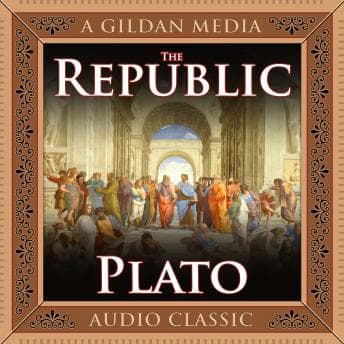

Plato's Republic is not a philosophy book. I mean, it is — obviously — but what nobody tells you in your first semester of college is that it's actually a psychology book. It's a 2,400-year-old case study in how people justify power, construct identity through social roles, and rationalize their way into authoritarianism while believing they're pursuing justice. I found myself asking: why does Socrates really keep pushing Glaucon and Adeimantus toward conclusions they clearly aren't arriving at on their own? The protagonist exhibits classic leading-the-witness behavior, and honestly? My therapist would have thoughts about this character.
I listened to this one during a week of cooking increasingly ambitious South Indian dishes — sambar from scratch, dosa batter that needed overnight fermentation, the whole production. Eleven hours of Plato pairs surprisingly well with tedious kitchen prep. I got into this habit after working through Salt, Fat, Acid, Heat, which taught me that repetitive kitchen tasks are basically free listening hours — and that understanding foundational principles matters whether you're building a curry or a theory of justice. Something about the rhythmic back-and-forth of Socratic dialogue while you're grinding chutney is almost meditative. Almost.
The Larson Translation vs. The One Everyone Assigns
Here's the thing that matters if you're choosing between audiobook versions of the Republic: the Larson translation reads aloud better than Allan Bloom's. Bloom's version is the one your professor probably assigned, and it's brilliant for annotation and close reading on the page. But spoken? It doesn't flow. The sentences trip over themselves. Larson's literal approach — and it is aggressively literal — actually preserves the conversational cadence of the original dialogue format. You can hear the pauses where Socrates is waiting for someone to take the bait. You can hear the moments where Thrasymachus is getting genuinely angry. The translation serves the audiobook format in a way Bloom's wouldn't have.
That said, "strictly literal" comes with trade-offs. Some passages feel stiff where a looser translation might have let the humor breathe. And yes, there is humor in Plato — the man was writing dramatic dialogues, not textbooks. Socrates is frequently sarcastic, occasionally petty, and the interplay between characters has a sharpness that this translation preserves structurally but not always tonally.
Don Hagen's Socrates Problem
Don Hagen is a competent narrator. Nine-time Peer Award winner, two AudioFile Earphones Awards — the man knows how to read. And his narration doesn't distract from the text, which for a work like this is genuinely important. You don't want someone doing dramatic Shakespeare energy with Plato. You want clarity.
But here's where it falls apart for me: Glaucon and Adeimantus sound like little boys. Not young men engaging with the most dangerous ideas in Western philosophy — little boys. These are Plato's brothers (well, Plato wrote them as characters based on his brothers), and they're supposed to be intellectually formidable interlocutors who push Socrates to actually defend his positions. When they sound like children asking permission to stay up past bedtime, the power dynamics of the dialogue collapse. Psychologically, this doesn't track. The whole point of Books II through IV is that Glaucon and Adeimantus are smart enough to see through Socrates' initial arguments and demand better ones. That requires vocal gravitas, or at least vocal equality.
Hagen's Socrates is fine — measured, authoritative, steady. But the absence of sparkle bothers me. Socrates was famously ironic. The research actually shows that Socratic irony functions as a psychological tool — it destabilizes the listener's certainty, forces them to examine their own assumptions. When the narration flattens that irony into monotone sincerity, you lose half of what makes the Republic psychologically interesting as a text.
Also: the book numbering in the audio doesn't match the text divisions cleanly, which is annoying if you're trying to follow along with a physical copy or reference specific passages for, say, a research paper that will not write itself.
This Is a Fascinating Case Study in How We Consume Ancient Texts
What makes this audiobook worth discussing is the fundamental question it raises: can you actually absorb the Republic through audio? I think yes — with caveats. The dialogic structure means you're essentially listening to a very long, very serious conversation. That's what humans are wired for. We process arguments better when they're voiced, when there's rhythm and pacing. But this particular recording asks you to do a lot of the interpretive work yourself. Hagen gives you the words clearly. He does not give you the subtext.
For serious students, this is probably the best audio version currently available. The translation is strong, the narration is clean, the production is uncluttered. But if you're coming to Plato for the first time and want to understand why this text has shaped human thinking about justice, governance, and the self for millennia — you might want to pair this with a reading guide. The audiobook gives you the skeleton. You have to supply the flesh.
Who This Is Really For (And Who Should Walk Away)
If you're studying Plato seriously and want to hear the text read at a natural pace while you follow along or review — this is your audiobook. If you're a philosophy nerd who already knows the Republic and wants a clean listen during your commute or, you know, while making dosa — solid choice. But if you're a newcomer hoping the audio format will make Plato accessible and engaging the way a good podcast makes complex ideas feel alive? You'll be disappointed. This is a lecture, not a conversation. And Plato deserves better than that, because he literally invented the conversation format.
The Unexamined Audiobook Is Not Worth the Credit
I keep coming back to Plato's own framework here. He'd probably hate audiobooks — too much passive reception, not enough dialectic. Pendulum actually digs into this cyclical pattern — how each generation swings between valuing individual reasoning and collective absorption, which maps eerily well onto Plato's anxieties about passive consumption versus active inquiry. But he'd appreciate someone trying to get the translation right, trying to honor the literal text even at the cost of entertainment value. This recording is dutiful and clear. It is not inspired. For a work about how humans construct their understanding of justice, truth, and the good life, "dutiful and clear" feels like it's missing the point. But it's the best option we've got right now, and that counts for something.