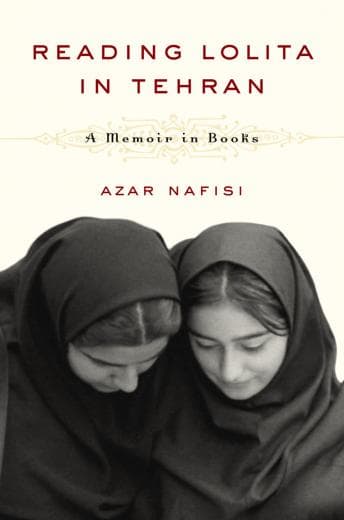

Look, I'm going to be honest with you. This book took me three weeks to finish. Three weeks. That's like a decade in mom-time. And it's not because it wasn't good—it's because this is not a multitasking book. This is a sit-down-and-actually-pay-attention book, and those are in short supply around here.
Azar Nafisi reads her own memoir, and there's something about hearing her tell her own story that just hits different. Her voice has this warm, almost conspiratorial quality—like she's sharing secrets with you over tea. But I'll be real: there were moments during the more literary analysis sections where I'd zone out, realize I'd been mentally planning dinner for the last five minutes, and have to rewind. Multiple times. During one particularly dense discussion about Henry James, I think I accidentally planned an entire week of meals.
When a Book Makes You Feel Guilty About Your Book Choices
Here's the thing that got me. These women—these seven students—are risking actual danger to read books. Books that I have sitting on my shelf, unread, because I "haven't gotten around to them." Meanwhile, I'm over here feeling accomplished because I finished a beach read during Sophie's nap. Nafisi describes these Thursday morning gatherings where her students would remove their veils and discuss Gatsby and Austen, and I'm listening to this while sitting in my minivan in the garage, hiding from my own children. The contrast is... something.
But that's what makes this memoir so powerful. It's not preachy about it. Nafisi just tells you what happened, how these books became lifelines, how fiction gave these women a space to be themselves when everything outside was trying to erase them. And you feel it. You really do.
The 17-Hour Elephant in the Room
Okay, let's talk about the runtime. Seventeen and a half hours. For a mom who considers a 6-hour audiobook a commitment, this was intimidating. And I won't sugarcoat it—this book requires more brain power than my usual listens. There are long passages about Nabokov's writing style and James's narrative techniques that, honestly, went over my head sometimes. I was an English minor in college (a million years ago), and even I found myself thinking "wait, what?" during some of the literary deep-dives.
But here's the thing—you don't have to catch every literary reference to appreciate what Nafisi is doing. The stories of her students, the descriptions of life in Tehran during the revolution, the way she weaves the books they're reading into their actual lived experiences—that's the heart of it. And that part? That part survived my 47 pauses, the toddler interruptions, the school pickup line distractions. It stuck with me.
Nafisi's narration does get a bit monotone during the more academic sections—I won't pretend otherwise. But when she's talking about her students, about the small rebellions and the fear and the hope? Her voice warms up completely. You can hear how much these women meant to her.
Skip It If You Need Background Noise, Grab It If You've Got Real Listening Time
This is not a comfort read. It's not something you throw on while folding laundry and half-watching Bluey. If you're looking for that, this isn't it. But if you've got some dedicated listening time—maybe during a solo road trip, or those blessed moments when all three kids are actually asleep—this is worth the investment. Skip it if you need something you can tune in and out of; the literary analysis sections will lose you completely.
I kept thinking about my book club. You know, the one I joined two years ago and have attended exactly four times because someone always has a fever or a school thing or a meltdown? This would be perfect for them. It's the kind of book that makes you want to talk about it, to process it with other people.
Made Me Cry at School Pickup (Worth It)
Emma asked why my eyes were red and I told her allergies. She didn't buy it.
Not groundbreaking to say that books matter—we all know that. I had a similar realization listening to Life of Benjamin Franklin—sometimes hearing about someone's dedication to learning makes you want to be better about your own. But hearing Nafisi tell the story of how much they mattered, in a place where they could get you in serious trouble? That's something else entirely. It made me want to actually read those classics I keep saying I'll get to. (We'll see if that actually happens. Don't hold your breath.)









