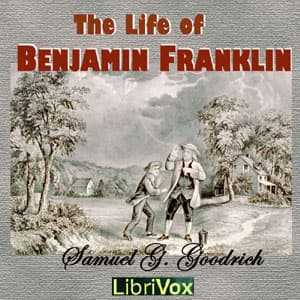
This is a book written for schoolchildren in the 1850s. Let that sink in for a second.
I picked this up during a long drive to Houston for a client meeting - figured four hours of Benjamin Franklin might be more educational than my usual thriller fare. Linda would be proud. Ranger slept through most of it, which honestly isn't a bad sign. He's picky about narration.
The Mission Brief
Look, here's the thing about Samuel G. Goodrich's approach: he wrote this for kids who didn't have smartphones, television, or frankly much entertainment at all. So the language is... different. Formal. The kind of English where people say "whilst" without irony. But once you adjust your ears - took me about twenty minutes - there's something genuinely charming about it. Goodrich clearly admired Franklin and wanted young readers to see him as a role model, not just a face on the hundred dollar bill.
The biographical content itself is solid. Franklin's story is inherently interesting - the guy went from runaway apprentice to founding father, invented bifocals and lightning rods, charmed the French court, and still found time to write pithy sayings. Goodrich covers the major beats: the printing business, the scientific experiments, the diplomatic missions. Nothing groundbreaking if you've read other Franklin biographies, but the 19th-century perspective adds a layer I hadn't expected. Different era, different values, different emphasis.
What caught me off guard were the essays Franklin himself wrote - they take up a good chunk of the back half. Some are genuinely funny. The man had wit. Others are practical advice that still holds up. Franklin's blend of strategic thinking and plain-spoken wisdom reminded me why I rated 48 Laws of Power so highly—both men understood that influence comes from understanding human nature. (My favorite was his piece on frugality. Guy knew how to stretch a dollar before dollars even existed.)
The Volunteer Factor
Now. The narration. This is LibriVox, which means volunteer readers, which means you're going to get some inconsistency. That's just the deal.
I've listened to enough military briefings delivered by exhausted lieutenants to tolerate imperfect delivery. Some of these volunteers are genuinely good - clear diction, appropriate pacing, the works. Others sound like they're reading aloud for the first time since fifth grade. The transitions between narrators can be jarring. You'll be cruising along with one voice, then suddenly someone else takes over and the whole tone shifts.
Is it professional polish? No. Is it free? Yes. Is it still comprehensible? Absolutely.
Here's my take: if you've ever listened to those old documentary narrations from the 1960s, or even amateur podcasts, you can handle this. If you need your audiobooks to sound like they came from a major studio with a single A-list narrator, this isn't your mission.
Worth the Intel?
I came away with a better appreciation for Franklin than I expected. Not because Goodrich revealed anything shocking, but because hearing his actual essays read aloud - even by inconsistent volunteers - reminded me the man was more than a historical figure. He was a thinker. A pragmatist. The kind of guy who would've been dangerous in a planning session. That same combination of tactical brilliance and personal narrative shows up in Geronimo's Story of His Life—another historical figure telling his own story, though under very different circumstances.
The quiz questions mentioned in the description? They skipped those in the recording, which is the right call. Nobody needs to be quizzed while driving through Waco.
At just under four hours, it's a reasonable commitment. I listened at 1.25x as usual, which smoothed out some of the pacing issues. Highly recommend that approach here.
Who Should Listen (And Who Should Skip)
If you're curious about how Americans in the 1850s taught their kids about the founding fathers, or you want a free, decent introduction to Franklin's life and thought, this gets the job done. Skip it if you need a definitive Franklin biography with top-tier production values.
Ranger woke up for the essay on thrift. I'm choosing to believe that means something.






![Steve Jobs [unabridged audiobook] audiobook cover](/_next/image?url=https%3A%2F%2Fcovers.audiobooks.com%2Fimages%2Fcovers%2Ffull%2F9788499923406.jpg&w=1920&q=75)