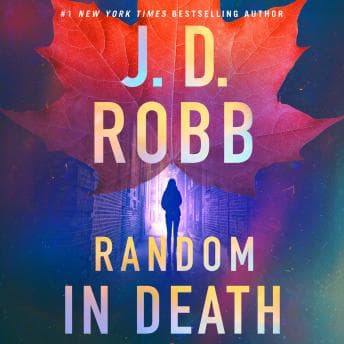

People usually tell you this series is about the romance between Eve and Roarke. Or the futuristic tech. They're wrong.
(Okay, they aren't wrong, but they're missing the point.)
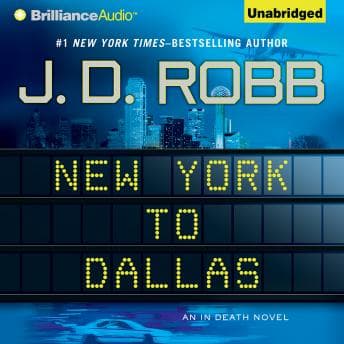
I picked this up expecting a standard police procedural—something to listen to while I catalog new arrivals at the library. Instead, I got a dose of pure, distilled urban anxiety. Because Random in Death taps into that very specific fear we all pretend we don't have when we're squeezed into a concert venue or a subway car. The fear that the person next to us isn't just a stranger, but a threat.
I listened to the opening scene in my car, parked in my driveway, way past the time I should've gone inside. Shirley (my cat) was watching from the window, judging me. But I couldn't turn it off. The setup—a sixteen-year-old girl, a needle, a crowd—is terrifying because it's so quiet. No chainsaws. No haunted houses. Just a prick in the arm.
The Voice That Never Sleeps
Let's talk about Susan Ericksen.
If you've listened to any of the previous fifty-whatever books (yes, the list is intimidating), you know she is Eve Dallas. She brings that same intensity to Ceremony in Death, though the occult angle in that one gives her even more range to play with. If you haven't? Brace yourself.
Ericksen makes choices. Bold ones. Her New York accent is thick—like, "coffee and concrete" thick. Some people hate it. I've seen the reviews calling it grating. And honestly? I get it. It's stylized. It's aggressive. But for a story set in a gritty, high-octane version of NYC? It works for me.
She doesn't just read; she acts. (And you know my rule: if the narrator doesn't commit, I'm out.) She handles the shift between the hardened Lieutenant Dallas and the grieving parents with scary precision. There were moments where her pacing was so frantic I actually started driving faster.
That said—and let's be real for a second—with a cast this massive, some of the voices bleed together. There were a couple of times I lost track of who was talking during the squad room scenes. But considering she's juggling dozens of recurring characters? I'll give her a pass.
The Horror of the Mundane
Here's why this worked for me as a horror fan, even though it's technically a thriller.
The villain isn't targeting a specific sin or a specific grudge. It's random. The title isn't lying. That senseless violence hits the same nerve as If It Bleeds—King's always been good at making chaos feel personal. The victim, Jenna, did everything right. She was a good kid. She had permission. She was just... there.
That creates a different kind of dread. It's not the "don't go in the basement" dread. It's the "I can't protect anyone from chaos" dread. J.D. Robb (Nora Roberts, obviously—we all know the score) is a machine at plotting, but she usually gives us a reason why. Here, the lack of reason is the terror.
I found myself pausing the audio just to breathe during the interview scenes. The grief felt heavy. Real. It wasn't just plot fodder.
Who This Is (and Isn't) For
If you're jumping in here without reading the previous books, you might feel like you walked into a party where everyone has inside jokes you don't understand. The backstory is heavy. And the accent takes adjustment. Skip this one if you need a clean entry point.
But if you're already invested in Eve's world—or if you're a thriller reader who wants something that crawls under your skin without relying on gore—this delivers.
Locking Up for the Night
Is this a perfect audiobook? No.
But the tension? The craft? Undeniable.
I finished this at 2 AM on a Tuesday. My apartment was dark. The street outside was quiet. And for the first time in a while, I checked the locks twice.
If a thriller can make a horror junkie do that? It wins.