
When did we stop being hungry?
I don't mean for food—I mean that deep, gnawing spiritual hunger that used to send people into deserts and monasteries. That's the question I kept circling back to while listening to Tozer at 11 PM, papers half-graded and forgotten on my lap. Denise had already gone to bed. The apartment was quiet except for the radiator clicking and this self-taught pastor from Pennsylvania telling me, with uncomfortable directness, that I'd been treating God like a theological concept instead of a living presence.
The Prose Demands 1.0x (Don't You Dare Speed This Up)
At just under four hours, this isn't a long listen. But it's a dense one—the kind of book that makes you hit pause every few minutes because Tozer just said something that needs to sit in your chest for a while. This reminds me of what Hemingway said about writing: the dignity of movement of an iceberg is due to only one-eighth of it being above water. Tozer writes like that. Simple sentences carrying enormous weight beneath them.
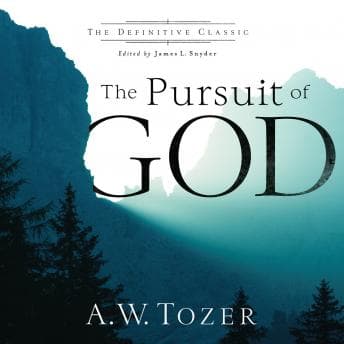
James L. Snyder narrates with the kind of measured clarity this material requires. No vocal fireworks, no dramatic flourishes. Just clean, readable delivery that lets Tozer's words do the work. Where Snyder really shines is in the prayers at the end of each chapter—there's an almost poetic quality to how he handles them, a reverence in his pacing that feels genuinely devotional rather than performative. (My students would hate this. I love it.)
The production is straightforward—no music, no sound effects, just voice and silence. And honestly? That's exactly right. Adding production value to Tozer would be like adding a laugh track to Dostoevsky.
What Tozer Is Really Saying
Let's talk about the author's central argument, because it's not comfortable. Tozer—with the bluntness of someone who doesn't care if you like him—insists that modern Christianity has become about knowing things *about* God rather than knowing God. We've substituted theology for experience, doctrine for encounter.
Written on a train from Illinois to Texas in 1948, these words somehow feel more urgent now than they must have then. There's a passage where Tozer essentially calls out the entire project of comfortable, intellectual Christianity—the kind that fits neatly into Sunday mornings and doesn't inconvenience the rest of your week. The kind, I realized with some discomfort, that I've been practicing for years while congratulating myself on reading all the right books.
This is why we still read the classics. Because a pastor who died in 1963 can still reach across six decades and poke you in the chest.
Who This Will Wake Up (And Who Should Wait)
If you're looking for systematic theology or doctrinal arguments, this isn't that. Tozer isn't interested in winning debates. He's interested in waking people up.
This book is for the spiritually restless—the people who've done all the right religious things and still feel like something's missing. It's for anyone who's ever sat in a pew and wondered why the whole enterprise feels so... tame. If you want practical application—five steps to a better prayer life, that sort of thing—you'll be frustrated. Tozer deals in convictions, not techniques. And if you're not in a place where you want to be challenged, maybe come back to this one later.
Margin Notes from the Back Row
I've been teaching literature for twenty years. I've watched teenagers pretend to engage with texts while their minds are elsewhere. And listening to Tozer, I kept thinking about how easy it is to do the same thing with faith—to have all the right vocabulary while remaining fundamentally unchanged.
The prose deserves to be savored. At 1.0x, because the author chose those words and Snyder delivers them with appropriate weight. This isn't background listening. This is the kind of book you put on when the house is quiet and you're ready to be honest with yourself. Prayer: Experiencing Awe and Intimacy with God asks similar uncomfortable questions about whether we're actually seeking God or just going through motions.
If you loved Augustine's Confessions or Thomas Merton's Seven Storey Mountain, this is their spiritual successor—shorter, more accessible, but carrying the same essential question: What would it look like to actually want God, not just the benefits of believing in God?
Denise asked me this morning why I was so quiet. I told her I was thinking about a book. She knows that look. It's the same one I get after finishing something that matters.