
I have a confession. I've been teaching literature for twenty years, and I've never quite known what to do with the Beats and their psychedelic offspring. Ginsberg shows up in the curriculum, sure, but Leary? Alpert? These were the guys my professors whispered about like cautionary tales. So when I finally sat down with this audiobook - and I mean sat down, because this is not lakefront walking material - I felt like I was finally reading the forbidden texts from the faculty lounge.
Here's my complaint, though: nobody warned me this would be homework. Serious homework.
The Tibetan Book of the Dead Meets Harvard, 1964
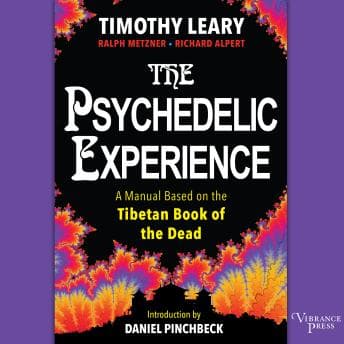
Let me be clear about what this actually is, because the title undersells the density. Leary, Metzner, and Alpert didn't just interpret the Bardo Thodol - they rebuilt it as a practical manual. The original Tibetan text guides the dying through intermediate states between death and rebirth. These three took that framework and said, essentially, "What if ego death during a psychedelic experience follows the same map?"
It's audacious. It's also - and I say this as someone who teaches Faulkner to teenagers - genuinely difficult. The prose deserves to be savored, but it demands your full attention. I tried listening while grading papers at 11 PM and found myself rewinding constantly. This isn't the authors' fault. They're describing states of consciousness that language wasn't built to handle.
Paul Heitsch narrates with what I can only call measured reverence. He doesn't dramatize. He doesn't rush. One listener called his performance helpful for "obtaining ego death and enlightenment," which - okay, that's a bold claim. But I understand what they mean. There's a hypnotic quality to his pacing that makes the text feel less like instruction and more like guided meditation. At 4 hours and 40 minutes, it's compact enough to feel intentional rather than padded.
Why My Students Would Hate This (And Why That's the Point)
Here's what the psychedelic renaissance crowd sometimes forgets: this book was written by academics. Harvard academics, specifically, before Harvard threw them out. The structure shows it. There are passages that read like phenomenological philosophy - careful, precise, almost clinical descriptions of what happens when the self dissolves. Leary and company weren't trying to be groovy. They were trying to be systematic.
My students would hate this because it demands patience. It asks you to sit with concepts that resist easy understanding. The authors describe the "Clear Light of the Void" and the "wrathful deities" of the Bardo with the same scholarly distance they might apply to any religious text. But that distance is the point. They're trying to give you a map, not an experience.
This reminds me of what Hemingway said about writing - that the dignity of movement of an iceberg is due to only one-eighth of it being above water. The Psychedelic Experience is all iceberg. The eight-ninths below the surface is whatever you bring to it.
Who This Is (and Isn't) For
If you're curious about the intellectual foundations of psychedelic therapy - the stuff that's now being studied at Johns Hopkins and NYU - this is primary source material. It's history. It's also surprisingly practical, with specific instructions for preparing "set and setting" that have influenced every serious guide since.
But if you're looking for trippy entertainment or a casual introduction to psychedelics, skip this. Seriously. You'll be bored and confused. This is for focused listening only - I'd say headphones, quiet room, maybe a notebook. One reviewer described themselves as a "psychonaut" who "learned a lot and reflected on things I already knew." That's the ideal audience. People who already have context. That same sense of needing preparation applies to Heaven, though in a completely different register.
For the rest of us - the curious English teachers, the spiritually adjacent, the people who read Ram Dass's Be Here Now in college and wondered where it came from - this is a fascinating artifact. It's the moment when Eastern mysticism, Western psychology, and chemical exploration collided in a Harvard apartment. The fact that we can listen to it now, narrated with such care, feels almost transgressive.
Class Dismissed
I listened at 1.0x because the authors chose those words. (All three authors, technically, though Leary's voice dominates.) And I'm glad I did. This isn't a book that rewards speed. It's a book that rewards attention, patience, and probably a second listen.
Is it important? Absolutely. It's the Rosetta Stone for understanding how a generation tried to map the unmappable. And Heitsch's narration serves the text beautifully - never getting in the way, always letting the ideas breathe.
My mom will definitely fall asleep during this one. But I'll be thinking about it for a while.