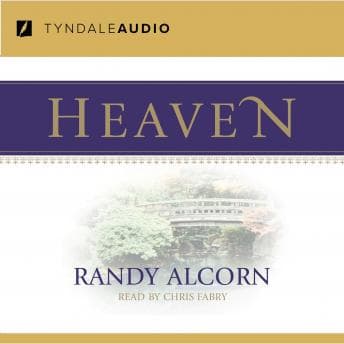

Randy Alcorn doesn't want you to be vague about Heaven. That's the thesis, really. After twenty-five years of research, the man has opinions—backed by Scripture, organized into chapters, and delivered with the confidence of someone who's thought about this way more than you have.
And honestly? I respect it.
I picked this up during a particularly brutal week of grading junior essays on The Great Gatsby. (If I read one more paper claiming Gatsby "represents the American Dream," I might need to believe in an afterlife just to cope.) Denise and I were walking the lakefront, and I figured—why not? Let's think about something bigger than symbolism debates.
Where Alcorn Earns His Stripes
Here's what surprised me: this isn't devotional fluff. Alcorn treats Heaven like a research project. He's pulling from Old Testament prophecy, New Testament promises, church history, and theological tradition. The man has footnotes. Metaphorical footnotes, but you can hear them.
He tackles the questions people actually ask. Will we recognize each other? Will we eat? (Yes, apparently. Which is good news for those of us who consider a good meal part of the good life.) Will we be bored floating on clouds playing harps? Alcorn says no—emphatically no—and he builds a case for a physical, tangible New Earth that feels more like restoration than escape.
This is theology that takes embodiment seriously. As someone who teaches literature, I appreciate when a writer commits to the material world. Spiritual Exercises wrestles with similar questions about the physical and spiritual intersecting, though Alcorn's approach is far more systematic. His Heaven isn't some ghostly abstraction. It's gardens and cities and work that matters. It's Tolkien's Shire, but eternal.
Now, is it dense? Absolutely. This is eleven hours of detailed biblical exposition. If you're looking for comfort food—a quick devotional to feel warm about grandma being in a better place—this might overwhelm you. Alcorn doesn't do surface-level. He does comprehensive.
Chris Fabry Does the Heavy Lifting
I couldn't find much about Fabry's background before this, but based on his performance here—the man understands pacing for theological content. He reads like a teacher who knows when to slow down for the important parts. Clear enunciation. Warm but not saccharine. He paints the word pictures without overselling them.
That said, I get why some listeners find it boring. This isn't dramatic narration. There are no character voices to distinguish because there aren't really characters—just ideas, Scripture references, and Alcorn's analysis. Fabry's job is to be a clear vessel, and he does that well. But if you need performance pyrotechnics to stay engaged, you'll struggle.
I listened at 1.0x because—look, the author chose those words. And Alcorn's prose deserves to be processed, not rushed. My students would roll their eyes at this take. They're not wrong about me being ancient.
The Slow Burn That Paid Off
The middle sections dragged for me. There's a lot of repetition—Alcorn circles back to his core themes repeatedly, which is great for retention but rough for continuous listening. I found myself zoning out during some of the heavy referencing sections, then snapping back when he'd land on something genuinely surprising.
But here's the thing: by hour eight or nine, the cumulative effect started working. Alcorn's vision of Heaven became vivid in a way I hadn't expected. Not because of any single argument, but because of the sheer weight of evidence he'd assembled. It's like reading a novel where the first half is setup—you have to trust the author.
The best moments are when Alcorn addresses specific objections. "Won't Heaven be boring?" He dismantles that with genuine theological creativity. Blood of the Covenant tackles equally difficult theological territory, though with less academic rigor and more narrative drive. "Will we remember our earthly lives?" He handles the complexity without flinching. These aren't easy questions, and he doesn't pretend they are.
Who Should Listen (And Who Should Skip)
This is for Christians who want to think seriously about eschatology. If you've ever felt like your mental picture of Heaven was embarrassingly vague—harps, clouds, general niceness—Alcorn will give you something concrete to work with.
Skip it if you want comfort without intellectual engagement. Skip it if slow theological narration makes you reach for the 2x speed button. And honestly, skip it if you're grieving and need something gentler—this is more seminary lecture than pastoral care.
I'm giving it to my wife for our next long drive. She'll probably fall asleep during the chapters on the New Jerusalem. But she'll wake up with better theology than she started with, and that's not nothing.