
Bottom Line First
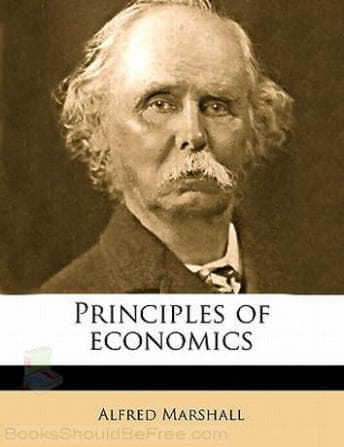
Look, I'm gonna be honest with you. This is 2 hours and 9 minutes of Book 1 - the introductory survey - of Alfred Marshall's foundational economics text. Not the whole thing. Just the warm-up. And somehow, that's both the problem and the saving grace here.
I listened to this while meal prepping on Sunday. Jenny was out, I had chicken thighs to marinate, and I thought - hey, let's revisit the classics. Marshall basically invented how we think about supply and demand curves. The guy's framework is still taught in every Econ 101 class. This should be good.
If you want the full foundational economics experience, Wealth of Nations pairs well with this—Adam Smith laid the groundwork that Marshall built on.
What Marshall Gets Right (Still)
Here's the thing about 130-year-old economics texts - most of them age like milk. But Marshall? Surprisingly readable. His whole approach was making economics accessible to regular people, not just academics. You can tell. The concepts build logically, there's a systematic flow to how he introduces ideas, and he actually bothers to explain why things work the way they do.
My parents never read Marshall. But watching them price dry cleaning services, adjust for competition from the place two blocks over, figure out how much to charge for rush jobs - that was Marshall in action. Supply, demand, marginal utility. They didn't need the vocabulary. They lived it. So when I hear Marshall laying out these principles, I'm basically hearing someone finally put words to what I watched my dad calculate in his head every day.
The eighth edition (1920) is what you're getting here, which means you get Marshall's refined thinking after decades of feedback. It's the polished version. And for students or anyone wanting to understand where modern economics actually came from, this is the source material.
Marx took a completely different angle on capitalism in Capital, but both texts are wrestling with the same industrial revolution reality my parents eventually navigated as small business owners.
The Audio Experience (Meh)
Kenny Davis narrates this, and he does exactly what you'd expect - clear articulation, steady pacing, no frills. It's fine. It's fine. The audio quality is clean, no weird background noise or volume issues.
But let's be real for a second. This is an academic text from 1890. Davis reads it like an academic text from 1890. There's no emotional variation because there's nothing emotional happening. There are no characters to voice because Marshall isn't telling stories. It's just... ideas, delivered clearly.
I couldn't even speed this up to my usual 2.0x. The concepts are dense enough that I needed to actually process them. Dropped to 1.25x and even then caught myself rewinding a few times. This isn't Davis's fault - it's just the nature of the material. You can't make marginal utility theory sound like a thriller.
The Catch (And It's a Big One)
Two hours and nine minutes. That's it. That's what you get.
The full "Principles of Economics" is a massive work - we're talking multiple books, hundreds of pages. This audiobook covers Book 1 only. The "Preliminary Survey." It's Marshall saying "here's what we're going to talk about" before actually talking about it.
So if you're looking for the complete education? This ain't it. You're getting the table of contents with extra steps. It's like ordering a meal and receiving a very detailed menu instead.
Now, is that menu valuable? Actually, yes. For someone who wants a taste of Marshall's thinking without committing to the full academic deep dive, this works. It's a sampler. An appetizer. Just know that's what you're buying.
Who Should Listen (And Who Should Skip)
Econ students who need to understand Marshall's influence but don't have time to read 800 pages - this is your shortcut. You'll get the framework, the approach, the foundational concepts. Enough to sound smart in class.
Business folks who want to understand where all these supply-demand frameworks actually came from - worth the two hours. Seriously. It's like reading the original source code.
Casual listeners looking for something engaging on their commute? Skip. Hard skip. This is dense, academic, and - I'll just say it - kind of dry. Jenny would say I'm being harsh. Jenny is right. But I'm also right.
The Bottom Line
This is what my parents did instinctively, now with academic vocabulary attached. Or in this case, a 2-hour audiobook that's really just the introduction to a much longer lecture.
Marshall's thinking shaped everything that came after in economics. Understanding his framework helps you understand why businesses work the way they do. That's valuable.
But this specific audiobook? It's incomplete by design. You're getting a solid foundation with nowhere to build. If you want the full Marshall experience, you'll need to look elsewhere. If you just want to understand why everyone keeps citing this guy in business school, two hours will do the job.
I finished it. I don't regret it. I probably won't listen again. That's about as honest as I can be.