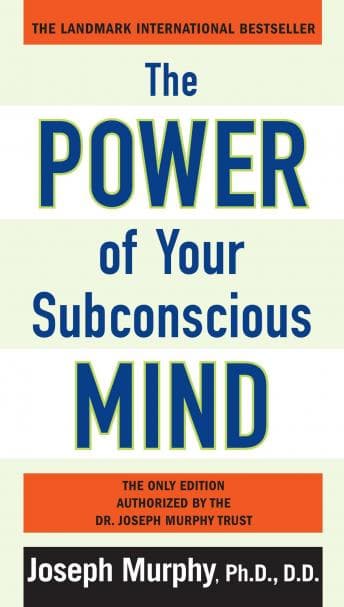

Look, I'm gonna be honest with you. Seven hours of being told my subconscious mind can cure diseases, attract wealth, and basically turn me into a manifestation machine? My 2.0x speed couldn't save this one.
I picked this up because a founder I'm advising swears by it. He's also the guy who thinks vision boards are a valid business strategy, so maybe I should've known better. But hey, Murphy's book has been around since 1963 - it's survived longer than most companies I've consulted for. That has to mean something, right?
The Core Idea (Which Takes 45 Minutes to Explain, Not 7 Hours)
Here's the thing - there's a legitimate kernel here. The subconscious mind does influence behavior. Cognitive behavioral therapy, habit formation, placebo effects - these are real. Murphy was onto something about how our mental patterns shape outcomes. My parents didn't call it "subconscious programming," but they absolutely believed that what you think about, you become. My mom still says "think rich, be rich" in Korean, usually while working a 12-hour day.
But Murphy takes this reasonable premise and drives it straight off a cliff. Cancer cured by positive thinking. Blindness healed through mental imagery. Wealth appearing because you visualized it hard enough. I've seen this fail at three different companies - the ones where founders confused "manifesting success" with "building a product people want."
The book is maybe 90 minutes of useful content stretched into 7 hours through relentless repetition. Same concept, different anecdote. Same concept, slightly different wording. Same concept again. I found myself checking how much time was left more than I'd like to admit.
Jason Culp's Voice in Your Head
Jason Culp narrates with this calm, almost hypnotic quality that - I'll give him this - matches the material perfectly. It's soothing. Too soothing, maybe. I nearly missed my exit on the 405 because I'd zoned out during another story about someone curing their arthritis through affirmations.
The pacing is slow. Deliberately slow. Which I get - this is meant to be absorbed, not consumed. But for someone who listens to business audiobooks like they're podcasts on deadline, it felt like wading through honey. Even at 2x, it dragged.
That said, Culp doesn't oversell it. He reads Murphy's more outlandish claims with the same measured tone as the practical advice, which is either professional restraint or plausible deniability. I respect it either way.
Who Gets Value Here (And Who Doesn't)
If you're curious about where the modern self-help industry came from - the DNA of everything from "The Secret" to Tony Robbins - this is ground zero. It's interesting as a historical artifact.
Skip this if you want evidence-based behavior change (read "Atomic Habits"), actual neuroscience ("Thinking, Fast and Slow"), or spirituality without the pseudoscience (try a meditation app). The Wayne Dyer foreword adds context, but no other bonus content - feels like a missed opportunity for an "updated" edition.
Jenny would say I'm being harsh. Jenny is right. There's something earnest about Murphy's conviction that I can't completely dismiss. And some of the affirmation techniques - the ones grounded in repetition and habit formation - aren't that different from what sports psychologists use today. Character Building takes a similar approach to self-improvement through repetition, though with a lot less cosmic promise and a lot more practical grounding.
The ROI Calculation
This is what my parents did instinctively - believing in themselves, visualizing success, working like hell to make it real. Murphy just skips that last part. And that's where it falls apart for me.
The core insight is worth maybe 90 minutes. The other 6 hours? Negative ROI. Skip to the chapters on practical techniques if you're curious. Skip the miracle healing testimonials entirely. Thank me later.