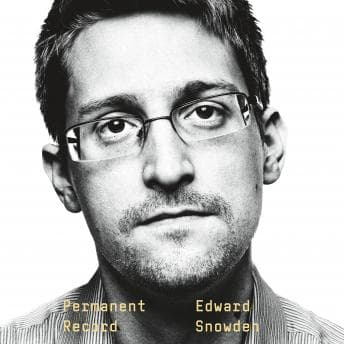

I went into this expecting a self-righteous manifesto. What I got was basically a coming-of-age memoir that happens to end with the biggest intelligence leak in American history. And honestly? That structure works way better than it has any right to.
Look, I've consulted for enough government contractors to know the culture Snowden describes. The clearance flex. The contractor-vs-fed dynamics. The way everyone pretends they're James Bond while pushing spreadsheets. He nails all of it. My parents never had security clearances, obviously - dry cleaning doesn't require TS/SCI - but they'd recognize the institutional loyalty he describes. The way you become the job. The way questioning anything feels like betrayal.
The 90s Internet Kid Origin Story
The first third of this book is basically a love letter to early internet culture, and I didn't expect to care about that as much as I did. That origin-story structure reminded me of Franklin's autobiography - using personal history to argue for a specific worldview. Snowden's not just explaining his technical background - he's making a case that the internet used to be something fundamentally different. Anonymous, decentralized, genuinely free. Whether you buy that nostalgia or not, it contextualizes everything that comes later.
Here's what surprised me: the business case for whistleblowing is actually pretty solid. Not the ethics - that's been debated to death - but the decision framework. He walks through his options, the risk analysis, the stakeholder mapping. It's basically a case study in what happens when institutional incentives completely diverge from stated mission. I've seen this at companies, just with lower stakes. Usually it's about cooking quarterly numbers, not collecting everyone's emails.
Holter Graham Earns His Check
The narrator sounds enough like Snowden that I kept forgetting it wasn't him. Graham pulled off the same trick in Fire and Fury - disappearing into material that could've easily gone theatrical. That's not a small thing for a memoir this personal. Graham's delivery is steady - almost deliberately understated - which works because the material doesn't need dramatic enhancement. The surveillance details are already paranoid enough without someone punching them up.
Pacing-wise, this is an 11-hour listen that doesn't feel like 11 hours. I burned through most of it during a client site visit in Austin last month - airports, Ubers, hotel gym. The espionage tradecraft sections (dead drops, operational security, the actual mechanics of the leak) read like a thriller. The childhood stuff is slower but not boring. 1.25x is comfortable if you're used to business audiobooks, but 1.0x works fine too.
What My Clients Would Ask
Bottom line: is this worth 11 hours of your life? If you work in tech, government, or anywhere that handles sensitive data - yes. Snowden's description of how mass surveillance actually works (not the conspiracy theory version, the mundane bureaucratic version) is genuinely useful context. The NSA wasn't running some slick operation. It was government IT. Contractors building systems nobody fully understood. Mission creep dressed up as national security.
The key takeaway is worth the listen: institutions optimize for self-preservation, not stated purpose. That's not controversial in management consulting. We just don't usually see someone torch their career to prove it.
What's missing? Any real engagement with the counterarguments. Snowden presents his decision as morally obvious, which - fine, it's his memoir. But there's a version of this story where he's reckless, where the leaks endangered people, where the ends don't justify the means. He doesn't grapple with that seriously. If you're looking for a balanced analysis, this isn't it. It's a defense brief, well-argued but one-sided.
Who Should Listen (And Who Should Skip)
If you're in any industry that touches data privacy, tech, or government contracting, this is required listening. Not because Snowden is right about everything - I'm genuinely agnostic on that - but because understanding how surveillance infrastructure actually gets built helps you understand the incentive structures you're operating in. Skip it if you want a balanced debate on whistleblowing ethics; this is a defense brief, not a panel discussion.
Would I Recommend This to Jenny?
She'd probably find the surveillance stuff interesting (she's gotten way more paranoid about her phone since we started dating, which is either my influence or just being married to a consultant). The romance-novel-level drama of him meeting his girlfriend while planning the leak? That's actually kind of compelling. But she'd also roll her eyes at the libertarian tech-bro undertones. Fair.
Skip to chapter 5 if the childhood stuff doesn't grab you. But honestly, the whole thing moves. I've listened to business books three hours shorter that felt twice as long. This isn't one of them.








![Steve Jobs [unabridged audiobook] audiobook cover](/_next/image?url=https%3A%2F%2Fcovers.audiobooks.com%2Fimages%2Fcovers%2Ffull%2F9788499923406.jpg&w=1920&q=75)