
The Original Self-Help Book (No, Really)
I was grading sophomore essays on The Great Gatsby — the ones where they all think Gatsby is "goals" and miss the entire point about American ambition — when I realized I needed a palate cleanser. Something to remind me that ambition can actually be instructive rather than destructive. So I pulled up Franklin's autobiography while red-penning my way through another stack of papers at 11 PM, and honestly? This is why we still read the classics.
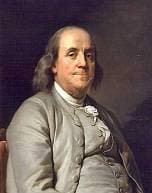
Here's the thing about Benjamin Franklin's autobiography that my students would never believe: it's basically the 18th-century version of a productivity podcast. The man invented a 13-virtue system for self-improvement, tracked his progress in a little notebook, and wrote about it with the kind of earnest enthusiasm that would make any modern influencer jealous. Except Franklin actually, you know, did things. Founded libraries. Invented bifocals. Helped birth a nation. The difference between Franklin and your average LinkedIn thought leader is that Franklin had receipts.
The structure is fascinating from a literary perspective — Franklin wrote this as an extended letter to his son, which gives the whole thing an intimate, conversational quality that formal autobiographies often lack. He's not posturing for posterity (well, not entirely). He's telling his kid how he made something of himself, starting as a runaway printer's apprentice and ending up as... Benjamin Franklin. The prose deserves to be savored. There's a dry wit running through it that modern readers might miss if they're not paying attention. When Franklin describes his vegetarian phase or his elaborate schemes to appear humble while actually being quite proud of himself, there's a self-awareness that feels remarkably contemporary.
Gary Gilberd's Steady Hand
I couldn't find much about Gary Gilberd's other work online, but based on this performance, he understands something crucial: the narrator's job here isn't to dramatize. It's to clarify. Franklin's 18th-century prose can feel dense to modern ears — long sentences, formal constructions, references that assume you know your Colonial American history. Gilberd reads with enough clarity and measured pacing that you can actually follow Franklin's train of thought without rewinding every thirty seconds.
The tone is warm without being overly theatrical. He doesn't try to "do" Franklin as a character — no affected old-timey accent or grandfatherly quaver. Instead, he reads it straight, letting Franklin's own voice come through the words. The narrator understands that pause is punctuation. When Franklin delivers one of his pithy observations about human nature, Gilberd gives it room to land.
That said, I'll be honest — some listeners have found the narration a bit flat. I get it. If you're coming from audiobooks with full-cast productions or narrators who really perform, this might feel subdued. But I'd argue that's actually appropriate for the material. Franklin himself was famously understated. The man who said "Early to bed and early to rise" wasn't exactly going for dramatic flair.
What the Author Is Really Saying
Let's talk about what makes this more than just a historical curiosity. Franklin is doing something sneaky here — he's writing a success manual disguised as a memoir. Every anecdote has a lesson. Every failure leads to a principle. It's instructive in a way that feels almost quaint now, but was revolutionary for its time. This is America's first "how to succeed" book, and you can draw a direct line from Franklin's 13 virtues to every self-improvement system that came after. That same unflinching self-examination shows up in Geronimo's Story of His Life, though obviously from a radically different cultural perspective.
But here's what my students would hate (and I love): Franklin is also deeply honest about his own failures and hypocrisies. He admits he never fully mastered humility — "I cannot boast of much success in acquiring the reality of this virtue, but I had a good deal with regard to the appearance of it." That's hilarious. And deeply human. He's essentially saying, "I learned to fake being humble, and honestly, that worked pretty well." The self-awareness is refreshing.
The autobiography does have gaps — it was never finished, and it focuses heavily on his early life and middle years. If you're looking for Revolutionary War drama or his time in France, you'll need to look elsewhere. Walter Isaacson's biography fills in those blanks nicely if you want the complete picture.
Who Should Listen (And Who Should Skip)
This is perfect for history buffs, obviously, but also for anyone interested in how the "self-made man" narrative got started in America. If you loved The Autobiography of Mark Twain, this is its spiritual predecessor — though Franklin is considerably more earnest and less sardonic than Twain. It's also surprisingly relevant if you're into productivity culture and want to see where all those "optimize your life" ideas originated. Skip it if you need high-energy narration or want the Revolutionary War years — this covers Franklin's rise, not his greatest hits.
At 7 and a half hours, it's a manageable commitment. I listened over about a week of grading sessions and lakefront walks with Denise. (She asked what I was listening to, I said "Benjamin Franklin," she said "Of course you are," and we kept walking. Twenty-three years of marriage, folks.)
The audio quality is clean, the pacing works at 1.0x — don't speed this up, the prose really does deserve to breathe — and while there's no bonus content to speak of, the text itself is substantial enough.
Worth pausing the faculty meeting for? Absolutely. Though to be fair, Principal Martinez's budget presentations set a pretty low bar.







![Steve Jobs [unabridged audiobook] audiobook cover](/_next/image?url=https%3A%2F%2Fcovers.audiobooks.com%2Fimages%2Fcovers%2Ffull%2F9788499923406.jpg&w=1920&q=75)