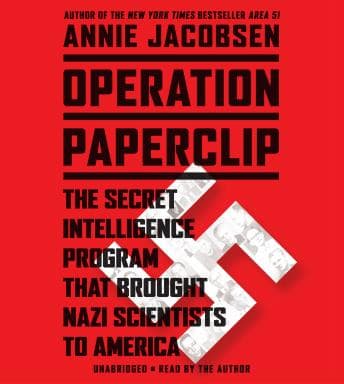

What does it mean when the nation that defeated fascism quietly imports its architects?
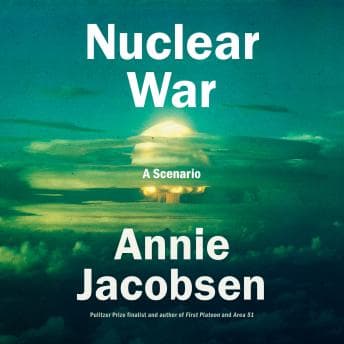
That question kept rattling around in my head during my lakefront walks with Denise this past month. She'd ask what I was listening to, I'd try to explain, and she'd just shake her head. "Marcus, why do you do this to yourself?" Honestly? Because someone has to reckon with this stuff. And Annie Jacobsen makes you reckon with it whether you want to or not.
The History Lesson My AP Curriculum Skipped
Here's the thing about Operation Paperclip that my Advanced Placement History curriculum conveniently glosses over: we didn't just recruit German scientists. We actively whitewashed war criminals. Men who had stood trial at Nuremberg. One guy convicted of mass murder and slavery. And we gave them houses in the suburbs and jobs at NASA.
Jacobsen's research is meticulous in a way that would make my dissertation advisor weep with joy. She's pulling from German archival documents, FOIA requests, interviews with family members of actual Nazi scientists. The sourcing alone is staggering. But what makes this audiobook work isn't just the facts—it's how she structures them. Linear timeline, clear through-lines for each scientist she follows. You're tracking maybe a dozen different men through decades of postwar America, and somehow it never gets confusing.
(Don't tell my students I said this, but I actually took notes. During a walk. On my phone. Denise thought I was texting.)
The moral complexity here is the real gut-punch. These men gave us the space program. Medical advances. Rocket technology that arguably won the Cold War. And they did it while their colleagues were being prosecuted for crimes against humanity. Jacobsen doesn't tell you what to think about this—she just lays it out and lets you sit with the discomfort.
Jacobsen Behind the Mic
Author-narrated nonfiction is always a gamble. Some writers can't perform. Some overperform. Jacobsen lands somewhere interesting: clear, objective, almost journalistic in her delivery. There's passion underneath—you can hear it when she's describing a particularly damning document or a moment of bureaucratic absurdity—but she keeps it controlled.
Some listeners find this monotone. I get it. If you're coming from true crime podcasts with dramatic scoring and breathless hosts, this will feel flat. But here's my take as someone who teaches literature: the material is disturbing enough. You don't need a narrator adding emotional weight to descriptions of concentration camp experiments. Jacobsen's restraint is a choice, and I think it's the right one.
The pacing surprised me. Nineteen and a half hours is a commitment—I've assigned shorter novels that students complained about. But this moved. I'd look up and realize I'd walked an extra mile without noticing. That's the mark of good narrative nonfiction: you forget you're learning.
Who Should Queue This Up (And Who Shouldn't)
Look, I'm going to be honest. This is not a casual listen. You can't half-pay attention during a faculty meeting (Principal Martinez, I was definitely not doing this). The content requires engagement. There are names to track, agencies to remember, timelines to follow.
If you're a history person who cares about how governments justify moral compromise in the name of security—if you've ever wondered how Dr. Strangelove became less satire and more documentary—this is essential. Skip it if you want clean narratives with clear villains. History isn't clean. The villains sometimes become our neighbors.
That moral ambiguity—where heroes and villains blur together—shows up differently in Where the Crawdads Sing, though the discomfort of judging people by their worst moments feels surprisingly similar.
The Past Isn't Even Past
I've been teaching Faulkner's line about the past not being dead, not even being past. Jacobsen's book is that quote in 19-hour form. The scientists she profiles—some of them lived into the 1990s. Their work shaped institutions that still exist. The ethical compromises we made in 1945 didn't stay in 1945.
Worth pausing the faculty meeting for. Worth the extra miles on the lakefront. Worth the uncomfortable conversations with Denise about why I keep listening to things that make me angry.
That's what good history does. It makes you angry. And then it makes you think.