
I was labeling backup SD cards at my desk after a late edit session, headphones still on, when Lenora Hope’s typewriter became more interesting than anything on my own timeline that evening. A woman unable to speak, a caregiver dependent on what she chooses to type, and a mansion with a massacre attached to its address. I left the card cases open on the desk. Occupational standards briefly collapsed.
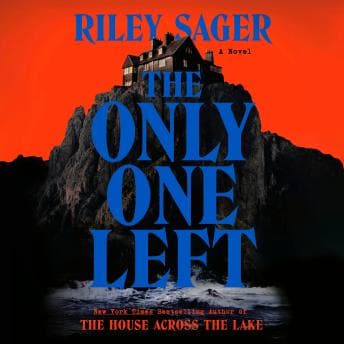
That’s the particular hook of Riley Sager’s The Only One Left: not simply whether Lenora murdered her family, but what happens when the person controlling the account also needs help getting through the night. Christine Lakin and Dawn Harvey make that arrangement inviting enough to sustain twelve and a half hours. Just don’t mistake the Gothic packaging for a promise of sustained terror. This is a mystery wearing mourning clothes, and eventually it starts enjoying its own revelations more than its shadows.
Lenora controls the typewriter—and the terms
In 1983, home-health aide Kit McDeere arrives at Hope’s End to care for the elderly Lenora, whose family was killed in 1929. Local memory has preserved the murders as a children’s rhyme. That detail got under my skin more effectively than the prospect of another sinister mansion: a family’s deaths reduced to something people can chant without thinking about the bodies.
Lenora survived. Everyone has decided what that means.
Now she’s had strokes, cannot speak, and communicates through an old typewriter. Her previous nurse disappeared from the household in the middle of the night. When Lenora offers to explain the murders, Kit becomes both caregiver and audience—and those roles don’t sit comfortably together.
The typewriter is the book’s smartest suspense mechanism. A spoken conversation allows interruption, contradiction, an answer blurted before someone can reconsider it. Lenora’s account arrives through a more deliberate channel. The setup makes you attend to who supplies information, who waits for it, and how much trust assistance requires. I found that imbalance more unsettling than the simple question of whether Kit was sharing a house with a killer.
And Hope’s End supplies exactly the right enclosure: a decaying cliffside mansion where the past isn’t something you research elsewhere. You move into it. You take a job there. Sensible employment decisions are not the engine of Gothic fiction (thankfully).
Two readers, one very crowded family history
Lakin and Harvey give the audiobook a useful contrast between its perspectives. With Kit’s present-day caregiving and the account of the Hope family’s past competing for attention, the two-reader format helps establish which narrative thread you’re following. That matters more here than an elaborate collection of character accents would.
The performance’s strength is dramatic clarity. The emotional delivery supports the suspicion surrounding Lenora without making every exchange sound like an announcement that someone is hiding evidence. There’s enough commitment to the material to keep the Gothic premise from feeling embarrassed by itself. A narrator who keeps a knowing distance from this sort of story can puncture it in minutes; these readers let it play. Christine Lakin's presence also made me think of Imaginary Friend, another recording where she has room to work inside a much longer unease.
I wouldn’t sell the recording on vocal gimmicks or elaborate production. Particular accent tricks or theatrical sound effects aren’t the reason to choose this edition. The clean recording and clearly handled perspectives are. Coming from podcast work, I appreciate an audio presentation that doesn’t make the listener wrestle with the delivery while also trying to untangle a family history.
My reservation belongs chiefly to the writing. Sager is very good at making the next disclosure feel necessary. But as the explanations accumulate, my attention shifted from fearing what might be true to evaluating how the machinery would fit together. Still entertaining. Less frightening. That push-pull between a strong premise and a need to account for every loose floorboard also reminded me of Riley Sager's Last Time I Lied: A Novel.
That distinction matters. The children’s chant and Lenora’s restricted communication create an ugly, intimate unease; the increasingly twist-driven plotting offers a different pleasure. If you want the uncertainty to keep spreading after you stop listening, the book’s appetite for answers may work against you. If you want your suspicions repeatedly rearranged, you’re better positioned to enjoy the ride.
Take the job at Hope’s End—with conditions
You should pick this up if you want a substantial Gothic whodunit, can enjoy familiar ingredients, and value committed narration over relentless scares. The 12-hour, 32-minute running time gives Kit’s arrangement with Lenora room to develop before the revelations demand more attention. You’ll need some patience with the setup, then a willingness to accept heightened thriller logic.
You should pass if the family massacre premise has you expecting brutal horror or if increasingly elaborate reversals usually make you stop believing in the people involved. There’s violence and psychological tension here, but fear isn’t the book’s most reliable payoff.
For me, this earns a credit: four stars for the novel, with the narration lifting the experience rather than repairing it. I wanted a little more lingering poison and a little less explanation. Still, Lenora typing her own version of a story everyone thinks they already know was enough to keep those SD cards waiting on the desk.