
What do you really know about the people around you?
I mean, really know. I spent 25 years in the Army evaluating threats, reading people, trusting my gut about who'd have my back when things went sideways. And this book—it messed with my head in ways I wasn't expecting.
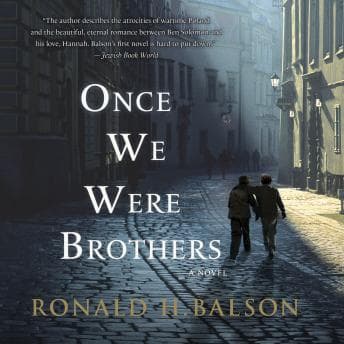
Let me cut to the chase: Once We Were Brothers is worth your time. Ranger and I finished it during a long drive to Houston for a client meeting, and I sat in that parking garage for an extra twenty minutes because I couldn't walk away mid-chapter.
The Intel Brief
Here's the setup: wealthy Chicago philanthropist gets publicly accused of being a Nazi war criminal. The accuser is an elderly Holocaust survivor named Solomon, absolutely convinced this respected businessman is actually Otto Piatek—a kid his own family took in and raised like a son, who then turned on them when the Germans occupied Poland.
I've worked with intelligence agencies. I've seen how identity gets complicated in war zones, how people reinvent themselves. Balson's a trial attorney, and you can tell—he builds his case like he's presenting to a jury. The evidence unfolds methodically. The flashbacks to 1930s Poland aren't just backstory; they're exhibits.
What got me was the brotherhood angle. I've had men under my command who I'd take a bullet for. The idea that someone raised as family could become the instrument of your destruction—that's a betrayal that goes bone-deep. Balson doesn't flinch from showing how that happens. How ordinary circumstances, fear, ambition, and opportunity can turn someone into a monster.
Fred Berman Earned His Paycheck
I don't throw around compliments easily. But Berman? He nailed it.
The accent work alone—Polish, German, American, and the subtle shifts as characters age across decades. He's got this warm, steady delivery that pulls you through the courtroom drama, then drops you into occupied Poland and somehow makes that transition feel natural. Not theatrical. Just... right.
I listened at my usual 1.25x and never felt lost. That's the mark of a narrator who understands pacing. The emotional scenes hit hard without getting melodramatic. When Solomon describes what happened to his family, Berman lets the horror speak for itself. No vocal gymnastics. Just clean, honest storytelling.
The guy's won multiple AudioFile Earphone Awards and an Audie. After this performance, I get why.
Where It Lost Me (Briefly)
I'm not gonna pretend this is perfect. The legal thriller elements with attorney Catherine Lockhart—they're solid, but occasionally the courtroom procedural stuff felt like it was slowing down the real story. I wanted to stay in Poland. I wanted to understand how Otto became what he became.
Also, at 13 and a half hours, there are stretches in the middle where the narrative could've been tighter. Not a dealbreaker, but I noticed.
Different War, Same Truth
Here's what I wasn't prepared for: how much this book made me think about my own service. Different war, different enemy, but some truths are universal. The way trauma reshapes people. How survivors carry guilt for simply being alive. The impossibility of explaining what you've seen to people who weren't there.
Solomon's determination to get justice after sixty years—that's not revenge. That's a man who needs the world to acknowledge what happened. I've known veterans like that. The ones who can't rest until someone says, "Yes. That was real. That mattered."
Balson clearly did his homework on the Holocaust. The historical details are specific and accurate—the ghettos, the deportations, the impossible choices families faced. Nothing felt sensationalized. It's brutal because the truth was brutal.
Mission Debrief
This is the kind of book that sticks with you. Linda found me staring at my coffee the morning after I finished, and I couldn't really explain why. Some stories just hit different.
Best for anyone who appreciates historical fiction with teeth—if you're drawn to legal thrillers, WWII history, or stories about loyalty and betrayal that don't take the easy way out, this delivers. Skip it if you're looking for something light. This isn't escapism. It's the opposite. The Silent Patient gave me that same gut-punch feeling—a story that demands you sit with uncomfortable truths.
Ranger approved this one. He slept through most of it, but he's a good judge of when I'm locked in.