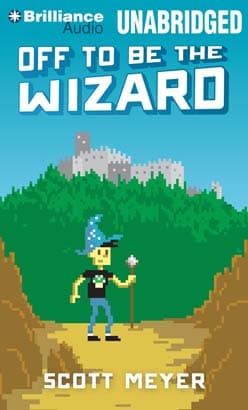

Look, I'm a horror person. You know this. My entire brand is darkness and dread and things that go bump in the night. So when I tell you I listened to a comedy fantasy about a guy who discovers reality is a computer program and decides to become a wizard in medieval England—and I genuinely had fun? That should tell you something.
I picked this up because Luke Daniels narrated it, and I'd heard good things about his work. Sometimes you need a palate cleanser between dark listens, you know? I was shelving returns at the library (the quiet afternoon shift, bless it) and figured something light would keep me from getting too deep into my own head.
The Premise That Shouldn't Work (But Does)
Martin Banks finds a file that controls reality. Like, THE file. The one that proves we're all living in a simulation. Instead of having an existential crisis like a normal person, he starts tweaking things—making himself taller, adding money to his bank account. Government notices. Government is not pleased. So Martin does what any reasonable hacker would do: he uses the file to yeet himself back to medieval England and pretend to be a wizard.
I mean. It's ridiculous. It's absolutely ridiculous. And Scott Meyer knows it's ridiculous, which is why it works. The book doesn't take itself seriously for a single second, and that self-awareness keeps it from becoming annoying. There's a whole community of other "wizards" who figured out the same hack, and watching Martin navigate their weird little society—complete with bureaucracy and training programs and petty rivalries—is way more entertaining than it has any right to be.
Why Luke Daniels Sells This Whole Thing
Okay, here's where I get to talk about what I actually came for. Luke Daniels commits. He commits in a way that turns what could've been a mildly amusing premise into something genuinely fun to listen to. His comedic timing is sharp—he knows exactly when to land a punchline, when to pause, when to let the absurdity breathe.
The character differentiation is solid too. Martin sounds appropriately bewildered and sarcastic. The other wizards each have their own distinct voices without any of them feeling like caricatures. (Well, okay, some of them ARE caricatures, but that's the point, and Daniels plays into it perfectly.) The medieval locals sound appropriately medieval-ish without veering into Monty Python territory. Unless the scene calls for it.
I've seen some people complain that his voice got grating after a while, and honestly? I can see how that might happen if you're not vibing with the humor. The pacing is quick—really quick—and if you're not locked in, it might feel relentless. But for me, shelving books and half-paying attention to the chaos, it was perfect.
The Horror Person's Confession
Here's the thing I wasn't expecting: this book actually does something clever with its premise. The whole "reality is a simulation" concept could go dark REAL fast—and there are moments where Meyer gestures toward that darkness without fully committing. What happens if you delete someone from the file? What does it mean that none of this is real? The book doesn't dwell on these questions (it's a comedy, after all), but they're there, lurking at the edges.
(Shirley was unimpressed when I tried to explain this to her. She knocked a book off my shelf and walked away. Fair.)
As someone who spends most of their time thinking about dread and existential horror, I appreciated that Meyer planted those seeds even if he didn't water them. It gave the whole thing just enough weight to feel like more than pure fluff.
Who This Is (and Isn't) For
If you need your fantasy to be serious and epic, this ain't it. If humor that leans heavily on nerd culture and programmer jokes makes you roll your eyes, you're gonna have a bad time. And if fast-paced, quippy narration isn't your thing, maybe sample first before committing to ten hours. Barbarian Alien has that same quick-paced energy, though it leans way more into the romance side of things.
But if you want something genuinely funny, surprisingly clever, and performed by a narrator who understands that comedy requires just as much skill as drama? Yeah. This works.
I'm probably going to listen to the sequel. Don't tell my podcast listeners—they'll think I've gone soft.