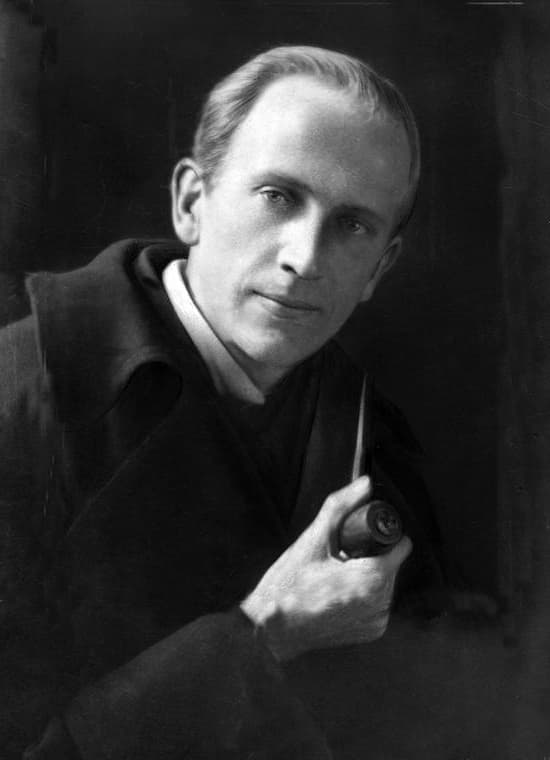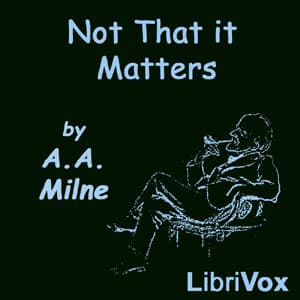

Everyone knows A. A. Milne as the man who gave us a bear of very little brain. What most people don't know — what I certainly didn't appreciate until I spent a week with these essays trickling through my earbuds — is that before Pooh, before Piglet, before the Hundred Acre Wood, Milne was one of the sharpest comic essayists in England. And honestly? I think he might have been funnier without the honey.
The Man Behind the Bear Had Teeth
I came to Not That It Matters expecting lightweight Edwardian whimsy. Something pleasant and forgettable, the literary equivalent of a cucumber sandwich. What I got instead was a writer who could dismantle social pretension in three paragraphs flat, then pivot to a genuinely tender meditation on the pleasure of doing absolutely nothing on a summer afternoon. The range here is wild. Milne writes about golf, about walking in the rain, about the absurdity of formal dinner parties, about Christmas — and in each case he finds the exact angle that makes you think, "How did nobody say this before?"
This reminds me of what Hemingway said about writing one true sentence and then going from there. Milne's version is writing one perfectly observed absurdity and then building an entire worldview around it. His essay on the British obsession with weather isn't just funny — it's anthropology disguised as comedy. He's doing the same work Orwell would later do in essays like "A Nice Cup of Tea," but with more charm and less political anxiety. If you loved Orwell's lighter essays or Chesterton's Tremendous Trifles, this is their spiritual successor — arguably the prototype.
The pieces vary wildly in length and weight. Some are two-minute poems, others are proper essays that build an argument with the patience of a barrister who happens to be hilarious. The collection covers 1912 to 1920, which means you're reading a man whose voice sharpened right through World War I. He doesn't address the war directly in most of these, but there's a quality to the later essays — a certain insistence on finding joy in small things — that feels deliberate. Defiant, even. My students would hate this. I love it.
The LibriVox Gamble (You Know the One)
Here's the thing about LibriVox recordings, and I say this as someone who deeply respects the project: it's volunteer narration, and it sounds like volunteer narration. Multiple readers rotate through the essays, which means you get wildly inconsistent quality from chapter to chapter. One reader will nail Milne's dry timing perfectly — that slight pause before the punchline that makes British humor work — and then the next reader will barrel through the same kind of material like they're reading a train schedule.
The narrator understands that pause is punctuation. Or rather, some of them do. Some of them absolutely do not. I found myself mentally grading the readers the way I grade student presentations. (Occupational hazard. Denise tells me I do it at restaurants too.) The better readers here treat the material with the light touch it demands — Milne's comedy depends on understatement, and you can't shout understatement. The weaker ones read with a kind of earnest flatness that drains the wit right out.
There's no consistency in audio quality either. Some chapters sound like they were recorded in a proper setup, others have that hollow room-echo that tells you someone's reading into a laptop mic in their kitchen. For a free audiobook, this is perfectly acceptable. For someone used to professional narration — and I am, shamelessly — it's a bump in the road every few essays. I ran into a similar situation reviewing Bridgertons: Happily Ever After, where the production quality kept pulling me out of writing that genuinely deserved better — a frustrating reminder that delivery and content are not the same thing.
Who Gets Invited to This Particular Dinner Party
If you want to understand Milne beyond Pooh, this is essential. If you love early 20th-century English humor — Wodehouse, Saki, Jerome K. Jerome — Milne belongs in that conversation and this collection proves it. The prose deserves to be savored, and at 5 hours and 40 minutes, it's perfectly sized for a week of lakefront walks.
But — and this matters — some of the references are deeply, specifically Edwardian British. Cricket jokes. Parliamentary procedure humor. References to social customs that haven't existed in a century. I teach literature for a living and I still had to pause and think about a few of them. If you need immediate accessibility, this might frustrate you.
And if you're particular about narration quality, the LibriVox format will test your patience. This is Milne's writing fighting through an inconsistent delivery system. The writing wins more often than it loses, but it shouldn't have to fight at all.
Worth Pausing the Faculty Meeting For
The writing is genuinely brilliant — witty, warm, occasionally sneaky in its depth. The audio production is what it is: free, uneven, occasionally charming in its imperfections. I'd honestly love to hear a professional narrator — someone like Simon Vance or Hugh Laurie — take a crack at this material. Until then, this LibriVox version is the price of admission, and the price is literally zero. For Milne completists and Anglophile humor nerds, that's a fair deal. Just know what you're getting into.