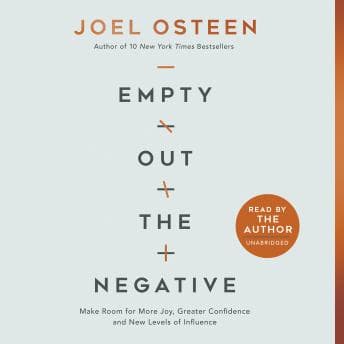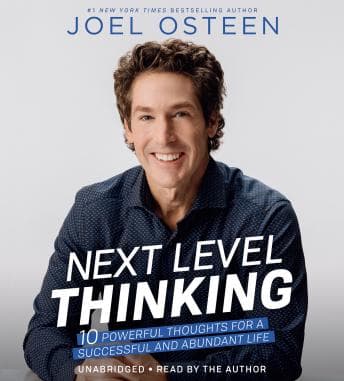

Look, I know what you're thinking. Sarah, why is a systems engineer who debugs distributed databases reviewing a Joel Osteen book? Fair question. Here's the honest answer: Kevin's mom gave me this on Audible as a gift, and I had a weird Tuesday where my usual queue was empty and my commute wasn't going to listen to itself. So here we are.
The Sermon You Didn't Know You Queued Up
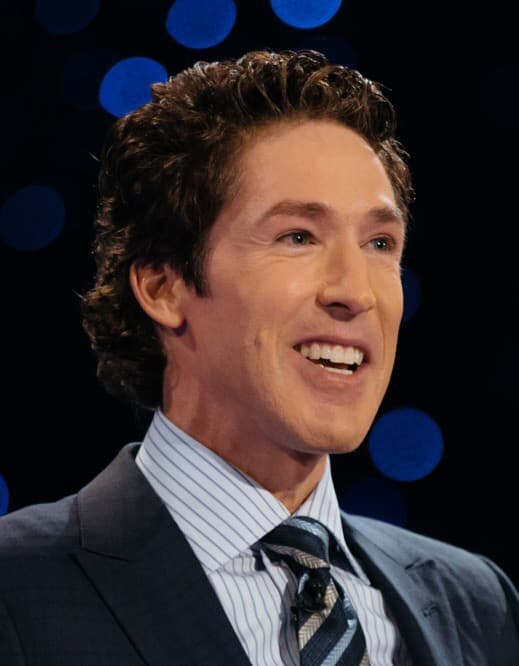
Let me be real with you. This is basically a prosperity gospel TED talk stretched across 4 hours. Joel Osteen reads his own book - and I mean reads it, with that warm Southern drawl and the cadence of a Sunday morning service. If you've ever watched him on TV, you know exactly what this sounds like. Measured pauses. Rising inflections right before the punchline about God's favor. It's polished, it's practiced, and it's... fine? He's not doing character work or anything complex here. It's one man, one message, one gear.
The structure is ten chapters, each built around a "powerful thought" - things like moving past guilt, rejecting a scarcity mentality, not letting other people's limitations define you. Each chapter follows the same template: personal anecdote → scripture reference → motivational reframe → repeat. If you've read any of Osteen's other books, you've basically read this one. The formula hasn't changed. It's like a microservice that does one thing and does it consistently, even if you wish it had a few more endpoints.
Could've Been a Blog Post (Maybe Ten Blog Posts)
Here's my engineering brain talking: the signal-to-noise ratio is low. The ten core ideas could fit on a single index card. "Stop dwelling on past mistakes." "Don't let negativity define you." "Believe good things are coming." These aren't bad ideas - they're just not 4 hours of ideas. There's a lot of padding. A lot of "I know someone who was going through a hard time, and then they changed their thinking, and now everything is great." The anecdotes blend together after a while because they all follow the same arc: person was stuck → person shifted mindset → blessings arrived.
I bumped this to 1.75x about 30 minutes in and honestly wish I could've gone faster. At that speed it's a tight 2.5-hour listen, which felt about right. Osteen's delivery is smooth enough that acceleration doesn't make him sound like a chipmunk - it actually helps the pacing feel less like a sermon where the pastor keeps pausing for the congregation to nod.
Who This Is Actually For (And Who Should Hard Pass)
If you're already in the Joel Osteen ecosystem - you watch the sermons, you've read Your Best Life Now, you find genuine comfort in faith-based positive thinking - this will land for you. It's comfort food. It's not trying to challenge you intellectually. It's trying to make you feel like things are going to be okay, and for some people in some seasons of life, that's exactly what they need.
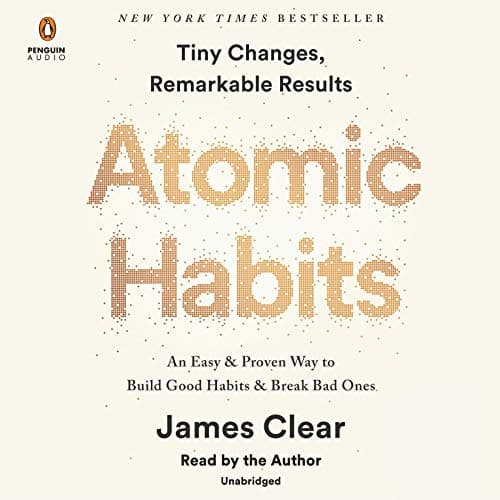
But if you're coming from the secular self-help world expecting something like Atomic Habits or Deep Work - books with frameworks, evidence, actionable systems - you're going to be frustrated. There's no research cited, no studies, no structured methodology. The "how" is basically "change your thinking and trust God." Which, look, that's a valid worldview for millions of people. Wallace Wattles' Science of Getting Rich operates in a surprisingly similar lane — prosperity through belief and mental alignment — but at least it's short enough that the thin framework doesn't overstay its welcome. It's just not an actionable playbook for someone who thinks in terms of inputs and outputs.
I'll admit there was one moment around the chapter on breaking generational patterns where I paused and actually thought about some stuff from my own family - my parents' immigrant hustle mentality, the way certain anxieties get passed down without anyone naming them. That chapter had a specificity the others lacked. But then it dissolved back into the general positive-vibes formula and the moment passed.
The ROI Calculation
The ROI on this audiobook is low for my particular use case. Four hours I could've spent on a hard sci-fi novella or a technical deep-dive. But I promised Kevin's mom I'd listen, and now I can honestly tell her I did. The production is clean, Osteen is a practiced speaker, and nobody's going to have a bad time listening to this - it's just not going to give you anything you couldn't get from watching two of his free YouTube sermons.
Perfect for: a rough week when you just need someone telling you it's going to be fine. Skip for: anyone wanting substance, specifics, or secular frameworks.