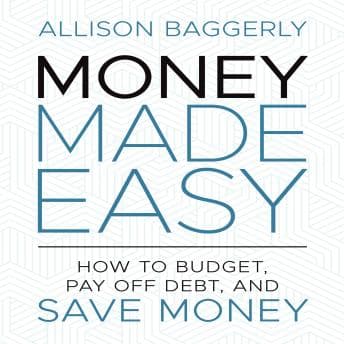

Look, I have a confession. I almost didn't finish this one. Not because it's bad—it's actually pretty solid—but because I kept pausing to text my sister. She's a teacher. Her husband's a teacher. They've got two kids and a mortgage that makes me wince. And Allison Baggerly? Also a former teacher who paid off $111,000 in debt on two teacher salaries. So basically I spent half this audiobook going "YOU NEED TO LISTEN TO THIS" in all caps.
Here's the thing about personal finance books: 90% of them are written by people who've never had to choose between the electric bill and groceries. They talk about "optimizing your portfolio" while you're trying to figure out why your checking account is negative again. Baggerly isn't that. She's been in the trenches. She knows what it feels like to overdraft before payday. And that credibility? It shows.
The Stuff That Actually Sticks
The "money pattern" concept is the real gem here. Baggerly breaks down how your childhood relationship with money shapes your current habits—and honestly, I sat in my car for an extra ten minutes after parking just processing that section. My parents worked themselves to exhaustion at their dry cleaning shop, and they had zero concept of "sinking funds" or "buffer accounts." They just... survived. Breaking those survival-mode patterns—the kind that get wired into you early—is exactly what Awaken the Giant Within tackles from a different angle. Watching them, I internalized that money was something you fought for, hoarded, and worried about constantly.
Baggerly's framework isn't revolutionary if you've read every personal finance book published since 2015 (guilty), but her execution is cleaner than most. The sinking fund strategy—basically saving for predictable expenses in advance so they don't blow up your budget—is something my parents did instinctively with cash envelopes. Now it has a TED talk. Or at least an 8-hour audiobook.
The credit card section is solid. Nothing you haven't heard if you've listened to Dave Ramsey yell at people, but Baggerly delivers it without the judgment. She's not going to make you feel like garbage for having debt. She's going to show you the exit.
Marguerite Gavin's Coffee-Shop Delivery
I'll be honest—I couldn't find much about Gavin's other work, but based on this performance? She's exactly what a personal finance audiobook needs. Pleasant without being saccharine. Clear without being robotic. She's got that "supportive friend explaining something over coffee" energy that makes 8 hours feel manageable.
And 8 hours is long for this content. At 2.0x, I got through it during a week of commutes and one very long flight delay. The pacing works because Gavin doesn't rush the important bits. When Baggerly's explaining the "mini budget" concept or walking through common mistakes, Gavin slows down just enough to let it land.
No production issues. Clean audio. My only complaint is that the book references worksheets and PDFs that cost extra money, which—irony alert—feels a little off-brand for a debt payoff book. But that's on the author, not the audiobook production.
Who Needs This (And Who Doesn't)
Bottom line: This is a beginner's guide. If you've already read Ramit Sethi, absorbed YNAB's philosophy, and have a functioning budget, you're not going to learn much here. Skip to chapter 5 if you want the sinking fund breakdown, but otherwise, move along.
But if you're my sister? If you're drowning in debt and don't know where to start? If the word "budget" makes you want to cry into your steering wheel? This is the audiobook.
Baggerly does something rare: she makes financial literacy feel achievable instead of aspirational. She's not promising you'll be a millionaire. She's promising you can stop living paycheck to paycheck. That kind of grounded, achievable goal-setting shows up in Girl, Stop Apologizing too—though Rachel Hollis aims it at different life areas. That's a lower bar, sure. But it's the bar most people actually need to clear first.
The Spreadsheet Summary
My wife Jenny would say I'm being generous with my rating because I'm thinking about my sister the whole time. Jenny is right. But also—a book that makes complex financial concepts accessible to people who need them most? That's worth something. Even if it's not optimized for consultants who've already read 47 books on the topic.
Would I listen again? No. Did I send it to three people before I finished? Yes. That's the real review right there.