
The Onion Effect
I was standing in my kitchen, aggressively chopping onions for a dal that probably didn't need that much garlic, when Lindsay Gibson's words finally made me put the knife down.
(And no, the tears weren't just from the onions. Or maybe they were. Let's keep that ambiguous.)
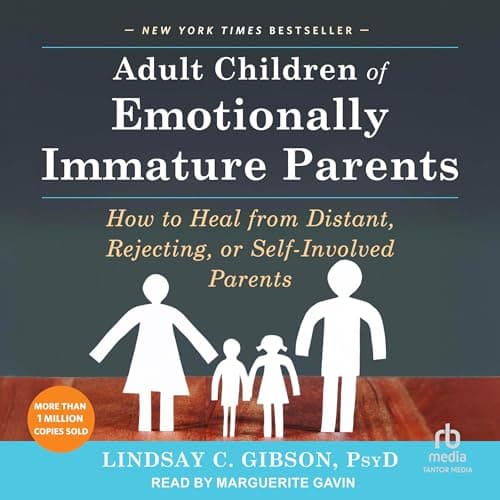
I listen to a lot of audiobooks—usually thrillers where the motive is money or revenge. Clean. Understandable. But Adult Children of Emotionally Immature Parents? This is the messy stuff. The stuff that explains why the villain in the thriller became a villain in the first place. I picked this up because, frankly, as a psychologist, I see the fallout of this dynamic every single day in my research. We are narrative creatures, and usually, the scripts were written for us by people who didn't know how to write their own.
It's the same dynamic I saw playing out in 48 Laws of Power—people operating from scripts they never questioned, just executed.
So, glass of wine in hand, I dove in. And yikes.
The Psychology of "Why"
Here's the thing about Gibson's work: she doesn't pull punches. She categorizes parents into four types—emotional, driven, passive, and rejecting—and let me tell you, I started mentally sorting fictional characters into these bins immediately. (Lady Macbeth? Definitely an "Emotional" type parent if she'd had kids. Just saying.)
But on a human level? It's relentless.
Gibson explains emotional loneliness—that feeling of being unseen by the people who raised you—with such surgical precision that it feels like she's been reading your diary. Or my diary. Whatever. The research here is solid, but it's presented in a way that feels like a conversation. She validates the experience of the "internalizer" (the kid who tries to fix everything) so well it actually made me uncomfortable.
My therapist says discomfort is where growth happens. I say discomfort is annoying. But Gibson makes a compelling case for sitting with it.
The Narration: Clinical or Cold?
Okay, we need to talk about Marguerite Gavin.
I checked the reviews before listening—(yes, I do that, I'm a researcher, I can't help it)—and people were divided. Some called her soothing; others called her "tense" or "robotic."
Here's my take: Gavin sounds like a professional who has seen it all and isn't going to coddle you. She has this crisp, articulate delivery that borders on stern. For a book like this? I actually think it works. If she had read it with a soft, flowery, "let me hug you" voice, I would have turned it off. I hate being patronized.
However—and this is a big however—there are moments where her intonation feels a little... news anchor-y? Like she's reading a breaking news report about emotional neglect rather than a guide to healing. It creates a bit of distance. If you're looking for a warm, maternal voice to guide you through trauma, Gavin might feel a bit sharp.
But for me? I appreciated the clarity. It kept me grounded in the logic of it, rather than drowning in the emotion.
The Verdict
This isn't a fun listen. Obviously. It's 6+ hours of realizing that your "normal" childhood might have been a minefield of emotional immaturity.
But it is necessary.
Gibson gives you a vocabulary for things you've felt but couldn't name. She explains the pattern—and you know I love a good pattern. Once you see the mechanism of the "emotionally immature parent," you can't unsee it. It stops being about you not being good enough, and starts being about their limitations.
Who should listen: Anyone who's ever felt invisible in their own family, or who keeps repeating relationship patterns they can't explain. Skip it if you want gentle hand-holding—Gavin's delivery is too clinical for that, and Gibson's framework is more scalpel than salve.
I finished the audiobook while the dal was simmering. I felt exhausted, validated, and a little bit lighter.
(I am absolutely recommending this to three of my students. And maybe my mother. Actually, definitely not my mother. She'd just ask why I'm listening to books instead of finding a husband.)