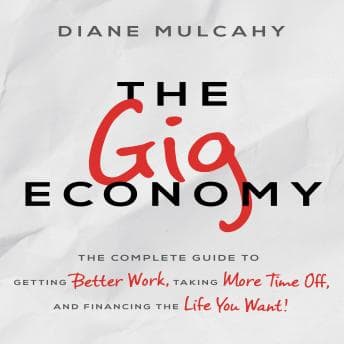

Look, I have a bone to pick with business audiobooks that promise to "change your life" and then spend 80% of their runtime telling you things you already know. So when I started The Gig Economy on a particularly brutal 6:47 AM Caltrain, I was fully prepared to be annoyed.
I wasn't.
The Part Where I Ate My Words
Here's the thing—Diane Mulcahy actually knows what she's talking about. She's not some lifestyle blogger who freelanced for six months and wrote a book about it. She teaches an MBA course on this stuff at Babson, worked in venture capital, and you can tell. The research is solid. The frameworks make sense. And—this is the part that got me—she doesn't pretend the gig economy is all sunshine and remote work from Bali.
She talks about the hard parts. Building your own safety net. Dealing with income volatility. The psychological weight of being your own everything. As someone who's watched multiple friends leave FAANG jobs to "go independent" and then quietly return eight months later, I appreciated the honesty.
The exercises are actually useful too. Not the "journal about your dreams" type stuff. More like practical worksheets for figuring out your financial runway, identifying your marketable skills, building what she calls "portfolio income." I found myself pausing the audiobook to think through some of them—which, on a packed commute surrounded by other tech zombies, is saying something.
Marguerite Gavin Carries the Dense Parts
Business books have a narration problem. They're usually read by someone who sounds like they're presenting quarterly earnings to a bored board of directors. Marguerite Gavin is not that.
She's got this rich, clear voice that somehow makes financial planning exercises sound... not boring? I know that's a low bar, but with this type of content, the narrator can make or break the whole thing. She's won a bunch of AudioFile Earphones awards and been nominated for Audies multiple times, and yeah, I get it now.
The pacing works too. At 5 hours 43 minutes, it's not trying to be more than it needs to be. I finished it in exactly three commutes (plus one gym session where I was on the elliptical pretending to be productive). The ROI on this audiobook? Solid.
Who This Is (and Isn't) For
Perfect for: your commute, gym sessions, any time you're doing something mindless and want to feel like you're planning your future. Skip for: deep work, bedtime (you'll want to take notes), or if you're looking for entertainment.
Here's my honest breakdown:
If you're actively considering going freelance or already doing gig work and feeling chaotic about it—this is worth your time. Mulcahy gives you actual frameworks instead of just "follow your passion" nonsense.
If you're happy at your corporate job and have no plans to leave—you might still get value from the financial flexibility chapters. The stuff about building multiple income streams applies even if you're employed. Though if you want actual investment strategies beyond just diversifying income, Rich Dad's Cashflow Quadrant covers that territory—even if it's a bit more rah-rah than Mulcahy's approach. (And let's be real, in tech right now, "stable employment" is kind of a joke anyway.)
If you want a light, motivational listen—skip this one. It's dense. It's instructional. It expects you to do the work. Some people find that exhausting. I found it refreshing, but I'm also the person who listens to optimization podcasts for fun, so take that with appropriate salt.
The book is a few years old now, so some of the specific platform references feel dated. But the core principles? Still solid. Maybe even more relevant now that half my LinkedIn feed is "excited to announce" posts about starting consulting practices.
I bumped it up to 1.5x for the parts that felt familiar and dropped back to normal speed for the financial planning sections. Gavin's narration handles the speed adjustment well—no weird artifacts or rushed feeling.
Final Commit
Would I listen again? Probably not cover to cover, but I could see revisiting specific chapters when I'm ready to make moves. Which, given the current state of tech, might be sooner than I'd like to admit.
(Kevin asked if this meant I was quitting my job. I told him no, I just like being prepared. He didn't look convinced.)