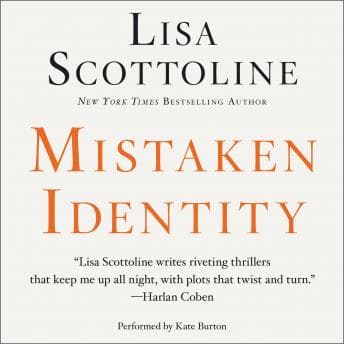

People keep telling me Scottoline is "the female Grisham." I've heard this from colleagues, from back-cover blurbs, from my aunt who reads exclusively in airport terminals. And I want to push back on that comparison — not because it's wrong, exactly, but because it sells short what Scottoline does differently. She's messier than Grisham. More emotionally tangled. Her courtrooms feel less like chess matches and more like family arguments that happen to have a judge present.
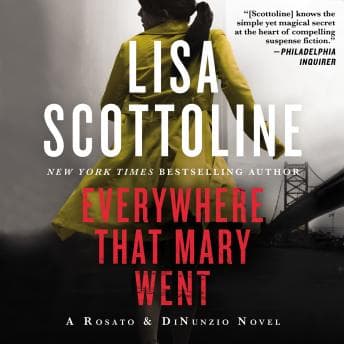
I picked up Mistaken Identity on a recommendation from a fellow teacher who swore it was the best in the Rosato & Associates series. This is the fourth book, and I came in cold — hadn't listened to the first three. Probably a mistake. But Scottoline does enough legwork in the setup that I never felt completely lost, just occasionally aware I was missing inside jokes at a party I showed up to late.
The Doppelgänger Problem (And Why Literature Keeps Coming Back to It)
Here's what caught me: the identical twin premise. Bennie Rosato, tough Philadelphia defense attorney, meets a woman accused of murder who looks exactly like her and claims to be her twin sister. Now, this is a device that goes back centuries — Dostoevsky's The Double, Stevenson's Jekyll and Hyde, even Shakespeare loved a good twin mix-up. But where those writers used the doppelgänger to explore fractured identity and moral duality, Scottoline uses it as a thriller engine. And it works. The scenes where Bennie first confronts Alice — where she's staring at her own face and trying to decide if she's being conned or if her entire childhood was a lie — those hit harder than I expected. Scottoline understands that identity isn't just philosophical. It's visceral. It's the panic of not knowing your own story.
My students would hate this. I love it. Not because it's difficult literature, but because it takes a literary premise and makes it accessible without dumbing it down. This reminds me of what Hemingway said about prose being architecture — Scottoline builds functional structures, not cathedrals, but the rooms are solid and the doors lock behind you.
Kate Burton at the Counsel's Table
Now, Kate Burton. Here's where things get complicated. She's strong in the courtroom scenes — really strong. Her Bennie voice carries authority with just enough vulnerability underneath that you believe this woman as both a shark litigator and someone whose world is cracking open. The cross-examination sequences have genuine tension, and the narrator understands that pause is punctuation. She lets moments land instead of rushing past them.
But the supporting cast voices? That's where the performance stumbles. Mary DiNunzio sounds about eight years old — this high, breathy register that made me think I was listening to a child character until context clues corrected me. And Judy Carrier comes across with this low, almost masculine tone that felt wildly inconsistent with how the text describes her. It's distracting. When your brain has to stop and recalibrate who's speaking every few minutes, you lose the thread of a scene. In a 14-hour listen, that recalibration adds up.
I listened at 1.0x because the author chose those words. But I'll be honest — around hours 8 through 10, I understood the folks recommending a speed bump. The middle section drags. I've spent two decades trying to convince teenagers that the cetology chapters in Moby Dick are worth the trudge, so I have a finely calibrated sense for when a story loses its footing in open water. There's a long stretch of legal procedure and investigation that feels like Scottoline stalling before the third-act courtroom fireworks. The setup is excellent. The payoff is excellent. The connective tissue between them could've used a tighter edit.
Who This Is Really For (And Who Should File an Objection)
If you loved Grisham's A Time to Kill or Turow's Presumed Innocent, this is their spiritual successor on the Philadelphia side of the map — same DNA, different accent. Scottoline writes women in law with a specificity those guys never quite managed. Bennie feels like a real person with real doubts, not a legal superhero in heels.
Skip it if you need literary prose. Scottoline writes clean, functional sentences that serve the plot. The prose doesn't ask to be savored — it asks to be consumed. That's not a criticism, exactly. It's a genre choice. But if you're coming from Toni Morrison or even Michael Connelly at his most lyrical, the writing itself won't be the draw.
Also maybe skip if you haven't read the first three Rosato books. I survived coming in cold, but I could feel the weight of backstory I was missing — references to past cases, relationship dynamics with obvious history I wasn't privy to.
Worth Losing Sleep Over — Mostly
I finished this at 1:47 AM on a Tuesday. Denise was asleep. I had 87 sophomore essays on The Great Gatsby waiting for me the next morning. And I don't regret it, which is about the highest compliment I can give a legal thriller on a school night. Scottoline knows how to build a courtroom scene that makes you hold your breath, and the twin revelation carries genuine emotional weight — the kind of weight that literary fiction explores with more subtlety but genre fiction delivers with more urgency.
Burton's performance, for all its inconsistencies with the secondary characters, nails Bennie. And Bennie is who matters.
It's too long by about two hours, the narrator's voice choices occasionally yank you out of the story, and the middle sags like my resolve at a faculty potluck. But when it works — and it works more often than it doesn't — it's smart, propulsive genre fiction that respects your intelligence. Worth a library hold. Worth a long weekend. Just maybe not worth a full credit when tighter thrillers are out there competing for your time.