
What does obsession sound like?
I've been teaching Moby Dick for fifteen years. Fifteen years of watching juniors squirm through cetology chapters, fifteen years of explaining that yes, the whiteness of the whale matters, fifteen years of defending Melville against accusations of being "boring." And yet—I'm almost embarrassed to admit this—I'd never experienced the novel as Melville intended: as sound. As voice. As twenty-five hours of a man's descent into magnificent madness.
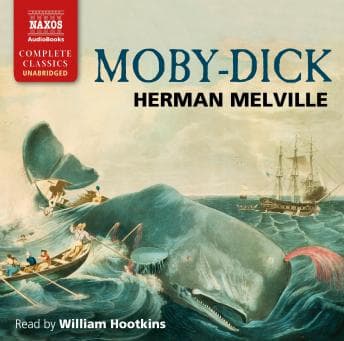
William Hootkins changed that for me during a week of lakefront walks with Denise. She thought I was being unusually quiet. I wasn't quiet. I was at sea.
The Voice That Understands the Pause
Hootkins gets something that most readers miss: Melville wrote Moby Dick as performance. Those philosophical tangents about whiteness, those exhaustive chapters on whale anatomy—they're not interruptions. They're Ishmael buying time, circling his trauma, avoiding the ending he knows is coming. Hootkins reads them that way. His pacing in Ahab's monologues isn't slow—it's deliberate. The man understands that pause is punctuation.
His Ahab rumbles with something genuinely unsettling. Not theatrical villain energy, but the quiet conviction of a man who has reasoned himself into insanity. When Ahab speaks of the white whale, Hootkins finds this register that's almost confessional—like he's sharing a secret he shouldn't. It gave me chills walking past Montrose Harbor.
And then there's Stubb. Here's where Hootkins surprised me—his comedic timing with the second mate's gallows humor actually lands. The contrast between Stubb's easy laughter and Ahab's brooding intensity creates this class divide on the Pequod that I've always taught but never quite felt before.
Where the Ship Takes on Water
I have to be honest about the rough patches. Some of Hootkins' nautical pronunciations made me wince—and look, I'm an English teacher, not a sailor, but when you've read something a hundred times, you know how it should sound. There are moments in the philosophical passages where he leans too hard into the drama, gilding what's already gold. Melville's prose about the whiteness of the whale is already operatic. It doesn't need the extra push.
The audio production has some volume inconsistencies too. I found myself adjusting my earbuds during transitions between chapters. Not a dealbreaker, but noticeable when you're deep in the meditation of a long walk.
And yes—this is slow. Twenty-five hours slow. Some listeners recommend 1.25x speed, and I understand the impulse. But here's my ancient take: Melville chose those words. He chose that rhythm. Speeding up Moby Dick is like fast-forwarding through a symphony because you want to get to the finale. The finale only matters because of what came before.
The Chase Earns Its Weight
The harrowing last hours—the chase, the confrontation, the ending we all know is coming—Hootkins earns every second of emotional payoff. By the time you reach it, you've spent so long with these men, so long inside Ishmael's head, that the tragedy feels personal. I finished the final chapter standing on the rocks at Promontory Point, looking at the lake, not quite ready to take my earbuds out.
This is why we still read the classics. Not because they're assigned, not because they're "important," but because they still have something to say about obsession, about meaning, about the stories we tell ourselves to survive.
Who Should Set Sail (And Who Should Stay Ashore)
This is not background listening. This is not your workout companion. This is a commitment—the kind you make when you're ready to actually encounter a book rather than just consume it. Into the Forest demands that same kind of attention—it's another slow burn that rewards patience.
If you loved Lonesome Dove's epic patience, if you've ever wondered why your English teacher kept insisting Melville was a genius, if you want to finally understand what all the fuss is about—Hootkins' performance is the way in. My students would hate this. I love it.
Skip this if you need plot momentum, if philosophical digressions make you reach for the skip button, if you're looking for something to half-listen to while doing dishes. This isn't your book. Not this version, anyway.
Worth Pausing the Faculty Meeting For
I'm adding this to my curriculum. Not as assigned reading—I'm not that cruel—but as an option. An invitation. Because some books deserve to be heard, and Hootkins, despite his imperfections, understands that Moby Dick isn't just a novel about a whale. It's a novel about a voice crying out against an indifferent universe.
Call me converted.