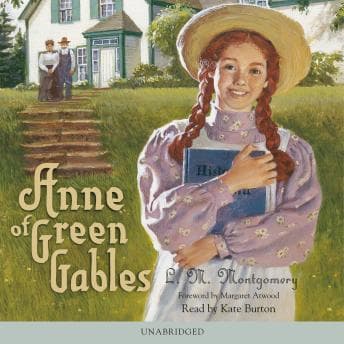

Kate Burton understands something about Anne Shirley that a lot of narrators miss: this girl doesn't pause. She doesn't take a breath. She launches into her next thought before the last one has even landed, and Burton captures that perfectly. It's a headlong, breathless delivery that had me grinning on my morning walks along the lakefront while Denise pretended not to notice me laughing at an 11-year-old's dramatics.
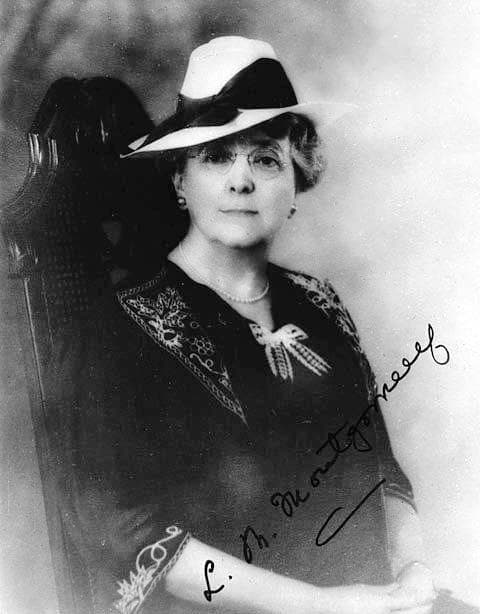
I've taught this book. I've assigned chapters to sophomores who rolled their eyes at the "old-fashioned" language. And honestly? Hearing it performed—really performed—reminded me why Montgomery's prose still works over a century later.
The Voice That Matches the Spirit
Burton's Anne is passionate, excitable, and just slightly unhinged in the best possible way. When Anne goes on one of her imaginative tangents about the Lake of Shining Waters or her tragic backstory with Katie Maurice (the imaginary friend who lived in a bookcase glass), Burton doesn't slow down to let you catch up. She trusts that you'll keep pace. And you do, because that's exactly how Anne would tell it.
The character voices are distinct without being cartoonish. Matthew's quiet warmth comes through in his hesitations. Marilla's stern practicality softens gradually—you can actually hear her falling in love with this strange, talkative child she never asked for. Mrs. Rachel Lynde sounds exactly like the neighborhood busybody who means well but can't help herself. (Every faculty has one. I'm looking at you, Mrs. Henderson from the history department.)
Some listeners have noted the pacing runs fast—almost clipped in places. I get that. If you're used to slower, more measured narration, this might feel like drinking from a fire hose. But here's the thing: Anne Shirley is a fire hose. The pacing isn't a bug; it's a feature.
Where Montgomery's Prose Gets to Breathe
What surprised me was how Burton handles the descriptive passages. Montgomery loved Prince Edward Island with an intensity that borders on religious devotion, and those long, lush descriptions of orchards and sunsets could easily become tedious in audio. Burton slows down for these moments. She lets the language settle. It's a smart contrast—Anne's dialogue racing forward, then these pools of stillness where you can almost smell the apple blossoms.
This is why we still read the classics, honestly. Montgomery wasn't just writing a children's book. She was writing about belonging, about chosen family, about a child who'd been discarded by the world learning that she was worth keeping. Truth About Tall Tales explores similar themes of outsiders finding their place, though through a completely different lens of American mythology. Burton understands that pause is punctuation. The quiet moments hit harder because of the chaos around them.
The Margaret Atwood foreword is... fine. Some listeners found it condescending, and I can see that. Atwood's doing her literary analysis thing, contextualizing Montgomery's work in the Canadian canon. It's valuable for what it is, but it does feel a bit like a professor explaining why you should care before letting you actually experience the thing. (My students would hate this. I love it. But I understand why they'd hate it.)
Who This Is For (And Who Should Sample First)
If you loved the book as a child, this is worth revisiting. If you've never read it (and honestly, no judgment—we all have gaps), this is a beautiful way to experience it for the first time. The production is clean, the performance is committed, and at just over ten hours, it's the perfect length for a week of commutes or a couple of long road trips.
My only caveat: if you genuinely prefer slower narration, sample first. Burton's energy is infectious, but it's definitely a choice. She's not giving you a gentle bedtime story. She's giving you Anne Shirley in full, unfiltered glory. Skip this one if you want something soothing to fall asleep to—you'll be too busy grinning.
Class Dismissed
Look, I'm biased. I've loved Anne since I was a kid sneaking my older sister's copy under the covers with a flashlight. But this audiobook made me fall for the story all over again. Burton doesn't just read—she interprets. She makes choices about emphasis and timing that reveal layers I'd glossed over in print.
Worth pausing the faculty meeting for. (Sorry again, Principal Martinez.)