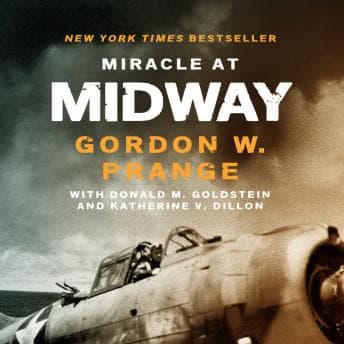

I was driving back from a client site in Houston - four hours of I-10 through absolutely nothing - when the Japanese carriers started burning. Ranger was asleep in the back seat, and I nearly missed my exit because I was so locked into the dive bomber attacks. That's the kind of book this is.
Let me cut to the chase: Miracle at Midway is the definitive account of the battle that broke Japan's offensive capability in the Pacific. I've read a dozen books on Midway over the years, and this one stands apart because Prange spent decades interviewing Japanese officers and sailors who survived. That same commitment to ground truth - getting the story from the people who were there - is what made With the Old Breed so powerful. You're not getting the usual American victory lap here. You're getting Nagumo's hesitation, Yamamoto's overconfidence, and the genuine shock when those Dauntlesses appeared out of the clouds.
The Intel Picture
What separates this from standard military history is the dual perspective. Prange was MacArthur's chief historian during the occupation, which meant he had access to Japanese commanders while memories were fresh and they were willing to talk. The book doesn't just tell you that Nagumo made a fatal decision to rearm his aircraft - it walks you through the Japanese staff discussions, the conflicting reports, the pressure he was under. You understand why he made a choice that looks obviously wrong in hindsight.
The American side gets the same treatment. Nimitz comes across as the steady hand he was, but you also see the gamble he was taking. Sending his carriers to ambush a superior force based on codebreaking that wasn't 100% certain? That's not cautious planning - that's calculated risk. The book makes clear how easily the whole thing could have gone sideways. Yorktown was still damaged from Coral Sea, patched together in 48 hours at Pearl when she needed months of yard time. Enterprise and Hornet were all we had.
The codebreaking sections are particularly strong. Commander Rochefort and his team at Station Hypo basically saved the Pacific Fleet through sheer analytical brilliance, and the book gives them proper credit without oversimplifying the intelligence work.
Seventeen Hours of Commitment
Here's where I have to be honest - this is not a quick listen. At 17 hours, you're signing up for a serious investment. The book was written in the early 1980s, and it reads like academic military history of that era. Detailed. Thorough. Sometimes exhausting. There are stretches where you're tracking ship movements and squadron assignments that feel more like staff work than storytelling.
Qarie Marshall handles the narration competently. Nothing flashy, nothing distracting - just steady delivery that keeps the material moving. For a book this dense with names, ship designations, and Japanese terminology, that's exactly what you need. I listened at 1.25x and it worked fine. The production is clean. No weird audio artifacts, no music trying to dramatize what doesn't need dramatizing. Just the text, delivered straight.
Where It Lost Me (Briefly)
The middle section drags. There's a lot of organizational detail about Japanese planning that, while historically important, gets repetitive. I found myself checking how much time was left during some of the pre-battle chapters. But once the shooting starts, the book earns back every minute of setup. The actual battle narrative is exceptional - minute-by-minute accounts of the torpedo bomber attacks, the sacrifice of VT-8, and those five critical minutes when everything changed. That same intensity when a plan falls apart? Lone Survivor captures it too.
I've seen this scenario play out in real life - not carrier battles, obviously, but the fog of war, the incomplete information, the decisions made under pressure that only look clear afterward. Prange captures that uncertainty better than most military historians.
Who Should Saddle Up (And Who Shouldn't)
If you're serious about Pacific War history, this is essential. If you want to understand why Midway mattered - not just that we won, but how close we came to losing - this is your book. The dual perspective alone makes it worth your time. But if you're looking for something fast-paced and dramatic, maybe try something else first. This is scholarship, not entertainment. Excellent scholarship, but it demands attention.
Mission Debrief
Prange clearly did his homework - decades of it. Miracle at Midway remains the gold standard for understanding the battle from both sides. The length is demanding, but the payoff is a complete picture of how America won its first decisive victory in the Pacific. Ranger approved this one. Worth your time? Absolutely, if you're willing to put in the hours.





![Steve Jobs [unabridged audiobook] audiobook cover](/_next/image?url=https%3A%2F%2Fcovers.audiobooks.com%2Fimages%2Fcovers%2Ffull%2F9788499923406.jpg&w=1920&q=75)