
How many people who talk about "the lessons of history" have actually sat down and studied a thousand years of it in one go?
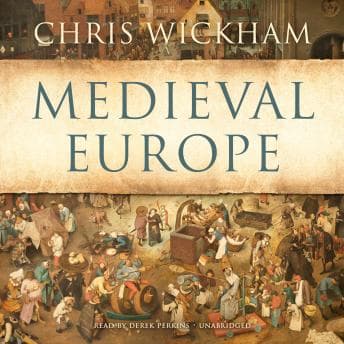
I finished this one on a Saturday afternoon, sitting on my back porch with Ranger stretched out in the sun, and I'll be honest — I started it three weeks ago. Not because it's bad. Because it's dense. This is the kind of book you can't half-listen to while checking email or running a threat assessment for a client. Wickham demands your full attention, and if you give it to him, he rewards you. If you don't, you'll find yourself rewinding the same chapter twice. I know because I did.
A Thousand Years Without the Hollywood Treatment
Let me cut to the chase: this is not a medieval history book full of dramatic battle sequences and castle sieges. If you're looking for Agincourt blow-by-blow or Viking raids narrated like an action movie, keep walking. Wickham is an Oxford historian, and he writes like one — but in the best possible way. He's interested in why things happened, not just the spectacle of them happening.
What I appreciated most is his century-by-century approach. Instead of trying to tell a single narrative thread across a millennium (which would be insane), he picks the most significant shifts in each century and examines them through social, economic, and political lenses. The section on Charlemagne's reforms, for instance, doesn't just cover the conquests — it gets into how his administrative system actually worked on the ground, how local power structures either cooperated or resisted. That's the kind of operational detail I find genuinely interesting. I've seen enough command structures in my career to know that the org chart never tells you how things actually run. Wickham gets that.
The feudal revolution section hit me differently too. The way he describes the slow decentralization of power — local lords essentially building their own security apparatus because central authority couldn't project force effectively — well, I've watched that exact dynamic play out in certain provinces in Afghanistan. Different century, same human instincts. I kept a similar mental notepad reading Miracle at Midway — the way command authority either holds or fractures under pressure is the same story whether you're talking about Frankish counts or Pacific fleet admirals.
Derek Perkins Earns His Pay
Here's where this audiobook justifies its existence as an audiobook rather than just a print book. Wickham's sentences are long. Academic-long. The kind where you hit a subordinate clause three layers deep and you've forgotten what the subject was. Perkins handles this with a kind of quiet intelligence — his pauses and tonal shifts actually parse the grammar for you. He's essentially doing real-time sentence diagramming with his voice, and it works.
His delivery is unaffected, no dramatic flair, no trying to make the Black Death sound like a thriller set piece. He reads it like a smart person telling you something important, which is exactly what this material needs. I've listened to history audiobooks where the narrator tries to inject excitement into every paragraph, and it feels like a used car commercial. Perkins respects the material and respects the listener's intelligence. At 1.25x he's still perfectly clear, though I dropped back to 1x for a few of the more complex economic analysis sections. No shame in that.
Where It Gets Tough
I won't pretend this was easy listening. There are stretches — particularly when Wickham gets into Byzantine political structures and the specifics of medieval Italian city-state economics — where the abstraction level is high and the narrative momentum drops to near zero. He's not a storyteller first; he's an analyst who occasionally tells stories to illustrate his points. The vignettes about individual lives are good when they appear, but they're sparse. You'll go 45 minutes of pure structural analysis before getting a human moment.
At 14 hours, that's a real commitment. And unlike a thriller where you're chasing a plot, here you're building a mental framework. It's more like an extended professional development course than a page-turner. Worth it? Absolutely. But you need to know what you're signing up for.
The other thing — and this is minor but it bugged me — Wickham sometimes assumes a baseline knowledge of European geography and political entities that not every listener will have. If you don't know where Aquitaine is or what the Lombard kingdom was, you might feel a step behind. A map would help, but obviously that's not an option in audio format.
Who Should Load This Up
If you're genuinely interested in understanding medieval Europe rather than just being entertained by it, this is your book. Military history buffs who want context for why wars happened rather than just tactical details. Anyone who's read popular medieval histories and wants something more rigorous without going full academic journal. And honestly, anyone in leadership or strategic planning — the patterns of institutional rise, decay, and reform that Wickham traces are uncomfortably relevant.
Skip it if you want narrative drive, if you need characters to root for, or if "feudal property relations" makes your eyes glaze over. No judgment. Different missions.
Mission Debrief
Worth your time? Here's the debrief: this is serious history for serious listeners, delivered by a narrator who's perfectly matched to the material. It made me smarter. It connected dots I didn't know existed between late Roman collapse and early modern state formation. And it gave me a framework for understanding a thousand years that most people dismiss as "the Dark Ages" — a term Wickham would probably find irritating, and after this book, so do I.
Ranger slept through most of it. But he sleeps through most things that don't involve squirrels. The author clearly did their homework — decades of it, apparently — and it shows on every page.




![Steve Jobs [unabridged audiobook] audiobook cover](/_next/image?url=https%3A%2F%2Fcovers.audiobooks.com%2Fimages%2Fcovers%2Ffull%2F9788499923406.jpg&w=1920&q=75)