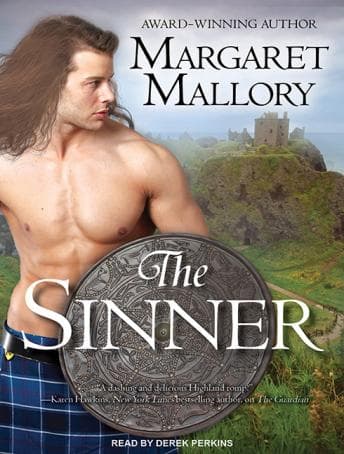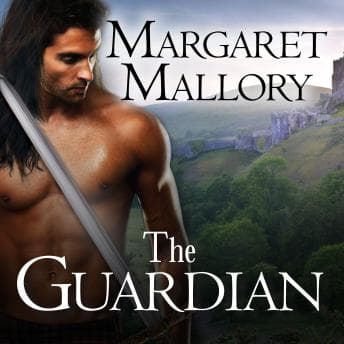

Look, I have a bone to pick with historical romance as a genre. Not the romance part—love is eternal, literature's oldest engine, all that. My complaint is the sheer number of Scottish Highlanders who apparently spent five years abroad fighting and then returned home brooding and impossibly handsome. If I had a dollar for every reluctant husband who "won't take no for an answer" in these novels, I could retire from teaching and just listen to audiobooks full-time. Denise would probably appreciate that.
But here's the thing. Margaret Mallory knows exactly what she's doing with this trope, and Derek Perkins knows exactly how to sell it.
When the Narrator Understands the Assignment
I was grading sophomore essays on The Great Gatsby—you know, the ones where they all discover symbolism for the first time and suddenly everything is a metaphor for the American Dream—when I put this on. Nine hours of Highland drama seemed like the appropriate antidote to seventeen variations of "the green light represents hope."
Perkins has this gift with accents that makes the MacDonald clan feel genuinely distinct. Ian's voice carries the weight of a man who's been running from his own marriage for half a decade, and you hear it in the slightly clipped way Perkins delivers his early dialogue. There's a guardedness there. The female voices are... well, let's be honest. Male narrators doing women's intimate sounds is always a bit like watching your uncle try to dance at weddings. Slightly awkward, but you appreciate the effort.
What works better is the character differentiation. When you've got a clan full of Scottish warriors who could easily blur together into one mass of testosterone and tartans, Perkins gives each enough vocal distinction that you're never confused about who's speaking. That's craft. That's someone who's read ahead and knows these people.
The Forced Marriage Trope Gets Its Due
This reminds me of what Hemingway said—well, actually, Hemingway wouldn't have touched this with a ten-foot pole, but bear with me. The best romances, like the best literature, understand that conflict has to be earned. Ian and Sileas were married when she was too young to understand what marriage meant and he was too proud to accept a bride he hadn't chosen. Five years of war later, she's become someone worth fighting for, and he's become someone capable of fighting for her.
The prose deserves to be savored here. Mallory doesn't rush the reconciliation. There's genuine tension in watching Ian realize that the awkward girl he abandoned has become a woman who doesn't need him anymore—and that's precisely what makes him want her. My students would hate this. They'd call it "slow" and ask when something "actually happens." I love it.
The nine-hour runtime gives this room to breathe. You get the clan politics, the physical danger, the slow thaw between two people who have every reason to distrust each other. If you're looking for instant gratification, this isn't it. But if you appreciate the architecture of a romance—the way desire has to be rebuilt from the wreckage of resentment—this delivers.
Worth Pausing the Faculty Meeting For
I'll admit I finished the last two hours during Principal Martinez's quarterly budget presentation. (The irony of listening to Scottish clan warfare while someone drones about textbook allocations is not lost on me.) The climax—and I mean the plot climax, though the other kind is present too—had me genuinely invested in ways I hadn't expected.
The content warnings are real: violence, some abuse in backstory, language, and sexual content that earns its historical romance label. If you're looking for a clean read, this isn't it. If you're looking for a romance that takes its characters' trauma seriously while still delivering on the promise of a happy ending, Mallory understands that balance.
Who Should Claim This Highlander (And Who Should Keep Walking)
If you loved Diana Gabaldon's Outlander but wanted something shorter and more focused on a single couple's journey, this is its spiritual successor. For something that takes world-building to an entirely different level of ambition, Silmarillion constructs mythology with the same meticulous attention to clan dynamics and ancient conflicts. If forced marriage tropes make you roll your eyes, you might struggle with the premise—though I'd argue Mallory handles the power dynamics more thoughtfully than most. If you need a narrator who can make the Scottish Highlands feel like a real place rather than a theme park, Perkins delivers.
Skip it if you need constant action or if male narrators doing female voices genuinely pulls you out of the story. The occasional awkward moment is noticeable, but not enough to derail the experience.
Class Dismissed
Forty-seven podcast listeners and counting. Maybe I should do an episode on romance as legitimate literature. Mom would definitely stay awake for that one.