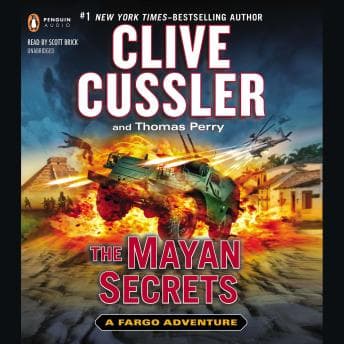

Clive Cussler writes beach reads for people who want to feel smart while turning off their brains. I mean this as a compliment. I had the opposite experience with Railway Children—a book that rewards you for keeping your brain fully engaged.
I've been teaching high school English for two decades, which means I spend most of my year convincing teenagers that Fitzgerald matters and Hemingway wasn't just some guy who liked fishing. So when summer hits—or when I'm grading a particularly brutal stack of essays on The Great Gatsby—I need something that doesn't ask me to annotate. The Mayan Secrets delivered exactly that, and honestly? No shame in my game.
The Fargos Are Basically Indiana Jones With Better Hair
Sam and Remi Fargo are the kind of couple that makes you simultaneously jealous and suspicious. Wealthy, adventurous, attractive, and apparently incapable of taking a normal vacation without stumbling onto an ancient artifact that multiple people want to kill them over. It's ridiculous. It's also deeply satisfying.
The setup is classic Cussler: our heroes find a Mayan codex bigger than any ever discovered, stuffed in a pot clutched by a skeleton. (Because of course it is.) What follows is a globe-trotting chase involving drug cartels, archaeological secrets, and enough historical detail about Mayan civilization to make you feel like you learned something. Whether you actually did is another question—Thomas Perry co-wrote this one, and while the research feels solid, I'm not about to assign it to my AP students.
The pacing is relentless. I listened during my morning walks along the lakefront, and I kept finding excuses to extend my route. "Just one more chapter" became "I've been gone for two hours and Denise is texting asking if I drowned."
Scott Brick Knows Exactly What He's Doing
Here's the thing about Scott Brick: the man understands that adventure novels need momentum. His delivery is clean and propulsive—he doesn't linger, doesn't overact, doesn't try to turn pulp into prestige. He reads Cussler like Cussler should be read: fast, clear, exciting.
His character differentiation is solid without being showy. Sam sounds confident but not cocky. Remi sounds sharp without being cold. The villains are appropriately menacing without veering into cartoon territory. It's not the kind of performance I'd analyze on my podcast (sorry, Brick, you're no Jeremy Irons reading Lolita), but it's exactly right for the material.
Brick's an AudioFile Golden Voice narrator for a reason. He knows when to push and when to coast. During the action sequences, his pacing tightens in a way that genuinely builds tension. During the expository bits—and there are plenty, because Cussler loves his historical deep dives—he keeps things moving without making you feel like you're being lectured.
That Third Act, Though
Look, I'm not going to pretend this is perfect. The third act feels rushed, like Cussler and Perry suddenly realized they were running out of pages and needed to wrap things up. Plot threads that seemed important earlier just... stop mattering. The climax is exciting but the resolution is hasty.
My students would call this "giving up on the ending," and they wouldn't be wrong. It's the literary equivalent of a student who writes a brilliant thesis statement and then submits a conclusion that says "and that's why Shakespeare was important." You can feel the momentum stalling.
But here's my honest take: I didn't care that much. By the time the ending disappointed me, I'd already had ten hours of enjoyable listening. The journey was the point. (Don't tell my students I said that—I spend half my year lecturing them about satisfying conclusions.)
Your Ideal Listening Scenario
This is commute listening. This is "I'm grading papers at 11 PM and need something in my ears that won't distract me but will keep me awake" listening. Beach vacation, airport layover, long drive—all perfect fits.
If you want literary complexity, skip it. If you want to think hard about what the author is really saying, skip it. But if you want a fast-paced adventure with likeable protagonists and enough historical flavor to feel vaguely educational? This is your book.
My students would hate it because there's nothing to analyze. I loved it because there's nothing to analyze.
Mr. Williams's Final Grade
Sometimes you need Middlemarch. Sometimes you need treasure hunters running from drug cartels. This week, I needed the latter. Worth every minute of my extended lakefront walks.