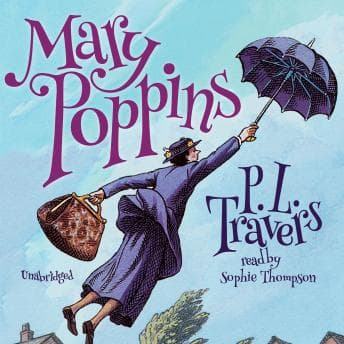

I need to lodge a formal complaint with whoever decided Mary Poppins was a children's character. Because the Mary Poppins in this audiobook? She's terrifying. Not in a jump-scare way, but in that deeply unsettling "I am unknowable and you will never understand my power" way. She's basically a fey creature who wandered into Edwardian London and decided to gaslight some children into behaving. I love her.
I was supposed to be working on my thesis chapter about procedural narrative structures. Instead, I spent four hours listening to a magical nanny be absolutely savage to everyone around her while Sophie Thompson delivered every cutting remark with the precision of a +5 vorpal blade. My advisor would be disappointed, but honestly? Worth it.
The Book Disney Didn't Want You To Know About
Forget everything Julie Andrews taught you. Book Mary Poppins doesn't sing. She doesn't dance on rooftops with chimney sweeps. She arrives on the east wind, refuses to explain anything, and when the children ask questions about the impossible things they've witnessed, she gaslights them with a straight face. "I have no idea what you're talking about." Every. Single. Time.
It's genuinely hilarious once you realize what's happening. The magic system here—and yes, I'm calling it a magic system because I'm me—operates on dream logic. Things happen because Mary Poppins wills them to happen, and the moment anyone tries to pin down the rules, she denies everything. It's like if Sanderson wrote a book where the magic was "nope, not telling you, figure it out yourself." Chaotic. Brilliant.
The episodic structure threw me at first. Each chapter is basically a self-contained adventure—visiting Mary's uncle who floats when he laughs, going shopping with a talking starling, having tea on the ceiling. Alice in Wonderland operates on the same dream-logic wavelength, just with more hookah-smoking caterpillars and fewer carpetbags. There's no overarching plot driving toward a climax. It's more like a D&D campaign where the DM just keeps throwing weird encounters at you and you roll with it. (My group would absolutely try to adopt Mary Poppins as an NPC. She'd hate it.)
Sophie Thompson Walks a Razor's Edge
Here's where it gets interesting. Thompson's narration is genuinely expressive—she does this thing where she draws out words and drops to a whisper during the magical moments that absolutely sells the wonder. Her Mary Poppins voice has this crisp, no-nonsense quality that's perfect for someone who can pull an armchair out of an empty carpetbag and then act offended that you noticed.
But.
Some of the secondary character voices are... a lot. I get what she's going for—colorful, eccentric Edwardian London types—but there were moments where I physically winced. Not the main cast, those are fine. Jane, Michael, the twins, Mary herself—all good. It's the random shopkeepers and relatives where things get pitchy. One reviewer called it "nails on a chalkboard" and while I wouldn't go that far, I understand the impulse.
At 3 hours 50 minutes, though? It's a quick listen. The occasional grating voice doesn't overstay its welcome. And when Thompson hits, she hits. The way she delivers Mary's dismissive "Humph" is genuinely perfect.
Who Should Slide Up This Banister
This is ideal for family listening or bedtime—short chapters, magical adventures, nothing scary. If you've got kids who love the movie, though, maybe prep them for a different vibe. Book Mary is not warm and fuzzy. She's competent and mysterious and slightly terrifying, and the children love her because she's the most interesting thing that's ever happened to them.
For adult listeners: if you want to understand why this character became a cultural icon before Disney got involved, this is the way. It's also just... weird? In a good way? The chapter where they go shopping at night and all the constellations come down from the sky to buy Christmas presents is genuinely imaginative in a way that feels older than modern children's fiction. That same kind of whimsical, pre-modern sensibility shows up in Adventures of Tom Sawyer, where the episodic adventures feel more like collected tall tales than structured plot. Like someone's fever dream grandmother story.
Skip if you need tight plotting or explained magic. This isn't that book. This is vibes and wonder and a deeply unsettling nanny who may or may not be a minor deity.
Rolling Investigation on Mary Poppins (Results Inconclusive)
I went in expecting a cozy children's classic and came out with questions. What IS Mary Poppins? Where does she go when the wind changes? Why does she deny the magic to the children's faces? The book doesn't answer any of this, and honestly, that's kind of the point.
Sophie Thompson's narration mostly serves the material well, with some caveats about those secondary voices. It's short enough that the episodic structure doesn't drag, and each adventure is genuinely imaginative. Not Sanderson-level world-building, obviously—more like if your most eccentric aunt wrote down her dreams and they somehow cohered into a narrative.
My thesis remains unwritten. My understanding of Edwardian magical nannies has increased significantly. Fair trade.