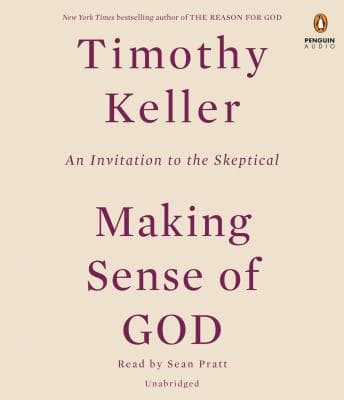

Timothy Keller wrote a psychology textbook disguised as Christian apologetics, and I'm genuinely impressed.
I was cooking lamb rogan josh—my mother's recipe, the one that takes three hours and fills my apartment with spices that linger for days—when Keller started dismantling the idea that secular modernity has somehow transcended the need for meaning-making frameworks. By the time the meat was falling apart, so was my assumption that I'd be hate-listening to this book.
The Apologetics That Actually Understand Human Motivation
Here's what makes Keller different from most religious writers I've encountered: he doesn't start with "God exists, here's why." He starts with "You already believe things you can't prove, and those beliefs are shaping your entire life." The protagonist exhibits classic cognitive dissonance—except the protagonist is you, the skeptical listener.
Keller spends the first several hours not defending Christianity but interrogating secularism with the same rigor skeptics apply to religion. Why do you believe in human rights? Can you prove dignity empirically? The research actually shows that most of our foundational moral intuitions rest on unprovable axioms. Keller knows this. He's done his homework on Charles Taylor, on Jonathan Haidt, on the philosophy of meaning that my grad students pretend to have read.
What makes this character compelling is—wait, Keller isn't a character. But he writes like one. There's a mind here, a specific intellectual personality that doesn't condescend or preach. He's the professor who asks the uncomfortable question in seminar and then actually waits for you to think about it.
Sean Pratt's Voice as Intellectual Companion
Sean Pratt narrates this like he's reading to a graduate seminar at 4 PM—calm, measured, never rushing the philosophical arguments that require you to actually follow the logic. His delivery is soothing without being soporific. I found myself asking: why does this work so well for this particular content?
Because Keller's arguments are dense. They build. Pratt gives you space between ideas, pauses that feel intentional rather than awkward. This isn't background listening material—I tried, while grading papers, and had to rewind three times in twenty minutes. The book demands what my therapist would call "active engagement," and Pratt's pacing respects that demand.
No vocal fireworks here. No character voices (there are no characters). Just clarity and warmth in service of complex ideas. For a nine-and-a-half-hour philosophical treatise, that's exactly right.
The Psychology of Belief (Finally, Someone Gets It)
This is a fascinating case study in how humans construct meaning—which is, embarrassingly, my actual research area. Keller argues that everyone operates from faith commitments, whether religious or secular. Your belief that science can answer all meaningful questions? That's a faith claim. Your conviction that individual freedom is the highest good? Also faith.
Psychologically, this tracks. We are meaning-making creatures. We cannot function without narrative frameworks that explain suffering, justify hope, and ground identity. Falling Upward explores this same territory—how we construct meaning at different life stages, though Richard Rohr comes at it from a contemplative rather than apologetic angle. Keller isn't saying "therefore, Jesus." He's saying "you already have a religion, you just haven't examined it."
I found myself genuinely challenged. Not converted—I'm still the skeptic he's addressing—but challenged in ways that felt intellectually honest rather than manipulative. He doesn't strawman atheism. He engages with Nietzsche, with the New Atheists, with the actual philosophical tradition of secular humanism. And then he asks: does it hold up under the same scrutiny you apply to Christianity? 50th Law does something similar with power dynamics—interrogating the assumptions we make about fear and control, though from a completely secular, street-philosophy perspective.
(My therapist would have thoughts about why I found this so destabilizing. Something about confronting unexamined assumptions. Whatever.)
Where It Loses the Thread
The final third gets more explicitly theological, and here Keller's case weakens—at least for the genuinely skeptical listener. The bridge from "secular meaning-making has problems" to "therefore Christianity specifically" feels rushed compared to the careful work of the first two-thirds. He assumes more than he proves. The author understands human nature in the diagnostic sections, but the prescription feels like it requires buy-in I don't have.
Also: nine and a half hours is a lot. The arguments could be tighter. Some sections repeat points with slightly different framing, and by hour seven, I was ready for him to land the plane.
Who Should Wrestle With This (And Who Should Skip)
If you're a believer looking for ammunition against atheists, this isn't it. Keller is too fair to the other side for that. If you're a skeptic who thinks religious people are intellectually lazy, this will annoy you—in a productive way. If you're genuinely curious about why smart, educated people still believe in God, Keller offers the most sophisticated answer I've encountered in popular apologetics.
Skip if you want something for the gym or your commute. This is focused, dedicated-listening territory that will make you think whether you want to or not.
Thesis Defended
I didn't expect to recommend a Christian apologetics book. But Keller wrote something that functions as philosophy of meaning, psychology of belief, and cultural criticism—with the Christianity almost as a case study rather than a sales pitch. Sean Pratt delivers it with the intellectual seriousness it deserves. Worth your time if you're willing to have your assumptions questioned. And honestly? We should all be willing to have our assumptions questioned.