
"Be grateful for everything you have and watch your life change." That's basically the entire book. I just saved you 4 hours and 45 minutes.
I'm kidding. Sort of.
My Parents Called This "Being Polite to God"
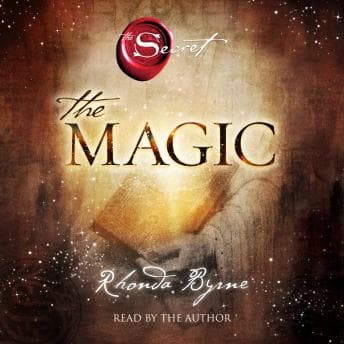
Look, I was on a red-eye back from a client engagement in Austin, couldn't sleep, and figured I'd knock out something short from my backlog. The Magic had been sitting in my Audible library for months - one of those "Jenny added it" situations. So I hit play.
Rhonda Byrne's premise: there's a hidden secret in ancient sacred texts, and that secret is... gratitude. She then structures the entire book as a 28-day program where each day you practice a different gratitude exercise. Day 1, you list ten things you're grateful for. Day 2, you focus on a relationship. Day 14, you bless your food and water (yes, literally). Day 28, you "remember the magic."
Here's where I get conflicted. My mom did this. Every single morning, before opening the dry cleaning shop at 6 AM, she'd pray and give thanks. Not because she read The Secret. Because that's what Korean church ladies do. This is what my parents did instinctively. Now it has a TED talk. And a 28-day workbook. And background music that sounds like a spa lobby.
The gratitude research is real - there's legitimate psychology behind it (Emmons and McCullough's 2003 study, the UC Davis work on gratitude journaling). But Byrne doesn't cite any of that. Instead she frames everything through "the law of attraction" and references to unnamed "sacred texts" and "great minds throughout history" without ever getting specific enough to fact-check. As a consultant, if a client handed me a strategy deck this light on sources, I'd send it back.
The 28-Day Structure Actually Works (Despite Itself)
Here's the thing I didn't expect: the daily exercise format is genuinely useful. Not because the metaphysics hold up, but because it turns gratitude from a vague concept into a specific habit. "Write ten things you're grateful for and say WHY" is better advice than 90% of the self-help books collecting dust in my library. The exercises around money (Day 6, counting blessings for bills you can pay) and health (Day 16, focusing on what works in your body rather than what doesn't) - those hit different when you've watched a startup founder burn out at 34.
Byrne narrates it herself, and her Australian accent has this measured, almost hypnotic quality. She reads at a pace that - even at 2.0x - feels deliberate. There's soundtrack music underneath the whole thing, gentle piano and strings that I normally find insufferable but somehow fits the meditative vibe. She sounds like she believes every word she's saying. That conviction carries weight even when the logic doesn't.
At under 5 hours, this is mercifully short. Finally, a business book that respects your time. Well, "business" is generous - this is pure self-help spirituality. But the brevity is a feature. You could listen once through, then replay individual chapters as you work through each day.
Where the Magic Disappears
The problem is the packaging. Byrne wraps solid gratitude practices in mystical language about "frequencies" and "magnetic signals" you supposedly send to the universe. She claims grateful thoughts literally attract money, relationships, and health through cosmic law. I've seen this fail at three different companies - founders who thought positive thinking would substitute for unit economics. Spoiler: it didn't.
There's also a frustrating lack of acknowledgment that structural barriers exist. Being grateful doesn't fix a broken healthcare system or systemic inequality. My parents were the most grateful people I've ever known and they still worked themselves to the bone. Gratitude didn't magnetize wealth to them. Fourteen-hour days did.
If you can separate the exercises from the ideology - treat it like a gratitude gym routine and ignore the pseudoscience about universal forces - there's genuine value here. If you need your self-help to be evidence-based, this will drive you up a wall.
Who Gets the ROI
People who've never tried structured gratitude practice: this is a solid on-ramp. The 28-day format gives you accountability, and Byrne's calm delivery makes it easy to absorb. People who want scientific rigor: skip this entirely and read "Thanks!" by Robert Emmons instead.
Jenny would say I'm being harsh. Jenny is right. She'd also point out that I've been doing the Day 1 exercise every morning for two weeks now. The vulnerability in admitting that reminded me of what Brené Brown does so well in Daring Greatly — she actually builds the intellectual scaffolding to justify why practicing something that feels a little embarrassing is worth defending out loud. We don't talk about that either.
The Engagement Letter
Bottom line: 45 minutes of genuinely useful gratitude exercises wrapped in 4 hours of unsubstantiated cosmic claims. The daily structure is the real product here - it's practical and actionable in a way most self-help isn't. But the intellectual framework is Swiss cheese. Worth a listen if you can filter. Not worth a credit when free gratitude apps exist.