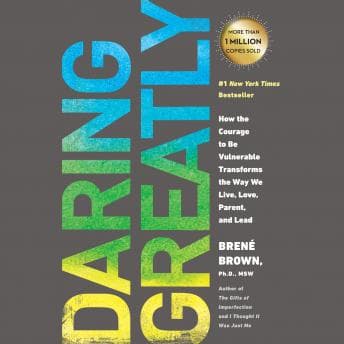

The "Texas Therapist" Effect
I was supposed to be writing a grant proposal. Seriously. The cursor was blinking at me, mocking my lack of productivity, so I put this on to have some "background noise."
Six hours later, the grant proposal was still blank, but I had emotionally deconstructed my entire career path, my relationship with my mother, and my inability to let people see me sweat. (Thanks, Brené. Really needed that on a Tuesday.)
Here's the thing about Daring Greatly on audio—it doesn't feel like a book. Because Brené Brown narrates it herself, and she has this warm, Texas-inflected delivery, it feels like you're sitting on a porch with your smartest, kindest friend who is gently explaining why your perfectionism is actually ruining your life.
Armor Up (Or Down, Actually)
Psychologically speaking, the concepts here aren't brand new if you're in the field—attachment theory, shame resilience, the ego's defense mechanisms. But the way she frames it? That's the magic. She talks about "armoring up"—that thing we do where we try to look perfect so nobody can hurt us.
I paused the track right there. Stood in my kitchen holding a spatula.
Because that's it, isn't it? That's what I see in every fictional character I analyze and, frankly, in the mirror every morning. The narration elevates this because you can hear the empathy in her voice. When she quotes Theodore Roosevelt's "Man in the Arena" speech, she's not reading it; she's feeling it. She emphasizes the "dust and sweat and blood." It's visceral.
She's not performing a text; she's sharing a piece of herself. There's a difference.
But Is It Too Soft?
Look, I'm a researcher. I like data. I usually get annoyed when self-help books devolve into fluffy anecdotes about "trusting the universe."
Brown walks this tightrope beautifully. She brings the qualitative data (thousands of interviews), but she delivers it like a storyteller.
That said—and I say this with love—if you've seen her TED talks or read The Gifts of Imperfection, you might find yourself going, "Yeah, yeah, I know about the shame web." It can feel a little repetitive. And if you're looking for a hard-science breakdown of neurochemistry, this isn't it. This is behavioral psychology meets a Sunday sermon.
If you want more of that same warm, conversational Brené energy, Braving the Wilderness hits a lot of the same psychological notes—though it's more about belonging than vulnerability.
(Also, there's a PDF included for the visual stuff. I didn't look at it once. The audio stands on its own, which is rare for this genre.)
The Verdict
My therapist would probably charge me a co-pay for listening to this.
It's not just for people in crisis. It's for anyone who thinks being "stoic" and "perfect" is a personality trait. (Guilty.) Brown's narration makes the medicine go down easy, but make no mistake—it's strong medicine.
Skip this if you want to stay comfortably numb, or if you need hard neuroscience over behavioral insight. Listen if you're ready to understand why you do the things you do—and you don't mind a Texas accent gently dismantling your defenses.