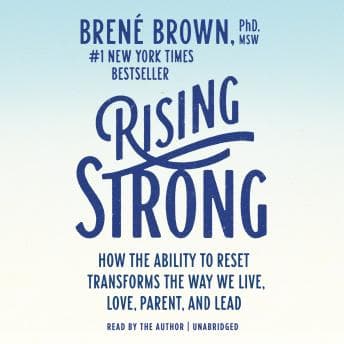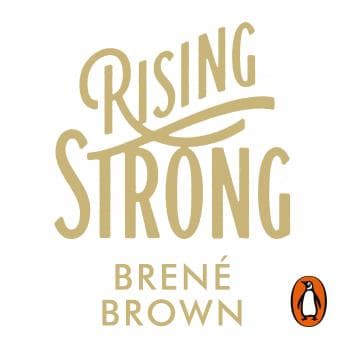

Look, I've sat through a lot of self-help audiobooks. Most of them could be a LinkedIn post. Brené Brown's Rising Strong is not that. It has the kind of substance I found in I Am: The Power of Discovering Who You Really Are—actual frameworks you can use, not just motivational platitudes.
I'll admit I came into this skeptical. The vulnerability industrial complex has produced a lot of fluff, and Brown is basically its CEO at this point. But here's the thing—she's also a researcher. An actual academic who backs up her frameworks with data. That combination is rare enough that I gave it a shot during a particularly brutal consulting project last quarter.
Why This Actually Works for Business Types
The core premise is simple: if you're brave enough to take risks, you're going to fail. A lot. The question isn't whether you'll fall—it's how you get back up. Brown calls this "the reckoning, the rumble, and the revolution." Sounds cheesy. I know. But the framework actually holds up when you apply it to real situations.
I've watched founders implode after failed funding rounds. I've seen executives spiral after a bad quarter. The pattern Brown describes—where we make up stories about what happened, usually casting ourselves as either the victim or the villain—that's exactly what I see in boardrooms. The difference is Brown gives you a process for interrogating those stories before they wreck your next decision.
My parents never had a framework for this. They just worked harder. Pushed through. Didn't talk about feelings. And honestly? That worked for them. But I've seen enough burnout in my consulting practice to know that approach has limits. Brown's method isn't about being soft—it's about being strategic with your emotional recovery.
Brown Reading Brown
She narrates it herself, which is usually a red flag. Authors are not voice actors. But Brown is also a professor and TED speaker, so she knows how to hold attention. Her delivery is warm, conversational—feels like you're getting advice from a really smart friend who also happens to have a PhD.
The pacing is slow though. I bumped it to 1.75x (couldn't quite do my usual 2.0x because some of the emotional content needed a beat to land). Some listeners apparently go full 2x, but I'd say 1.5x is the sweet spot if you actually want to absorb the material.
No dramatic flair here. She's not doing character voices or theatrical pauses. It's straightforward—almost too straightforward at times. I caught myself zoning out during a few of the longer personal anecdotes. But when she hits the research sections and the practical applications, she's locked in.
The ROI Question
Here's my bottom line calculation: Is this book worth 8 hours of your time? At 1.5x speed, call it 6 hours. That's roughly the length of a cross-country flight.
If you're in a leadership role, yes. The framework for processing failure is genuinely useful. I've already used the "story I'm telling myself" technique with two clients who were catastrophizing after setbacks. It works.
If you're looking for tactical business advice, skip it. This isn't about strategy or operations. It's about the emotional infrastructure that lets you execute strategy without self-destructing.
One note—some reviewers mention the end gets more targeted toward women. I didn't find it distracting, but I can see how certain examples might not land for everyone. The core principles are universal though.
The Bottom Line on Brené
Jenny made me listen to this one. (She's been on a Brené Brown kick since watching her Netflix special.) I expected to hate it. I didn't. The research backbone gives it credibility that most self-help lacks, and Brown's delivery makes it feel less like a lecture and more like a conversation.
Would I recommend it to a founder who just got their term sheet pulled? Actually, yes. Would I recommend it to someone looking for their next business strategy book? No—go read something else.
This is what emotional intelligence training should look like. Practical, research-backed, and respectful of your time. Mostly. Compare that to something like Think and Grow Rich, which has the research rigor of a fortune cookie but somehow still gets recommended in every business circle. Speed it up and you'll get through it faster than most business books, with more applicable takeaways than most.
My parents would probably roll their eyes at this. But then again, they didn't have therapy either, and I've seen how that turned out for their generation. Sometimes the soft stuff is the hard stuff.