
What happens when a self-help phenomenon tries to transcend itself?
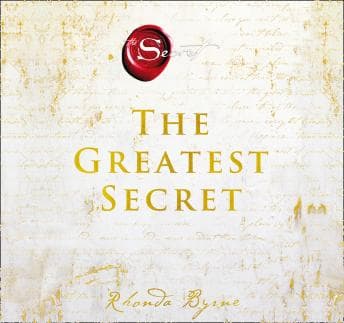
I was prepping for a client call at 6 AM—startup founder convinced his company culture problems could be solved with vision boards—when I decided to finally tackle Rhonda Byrne's latest. The Secret was everywhere in 2006. Every executive retreat, every team offsite. I watched smart people nod along to manifestation principles while their companies burned through runway. So yeah, I came into The Greatest Secret with... let's call it professional skepticism.
The Pivot from Manifestation to Meditation
Here's what surprised me: Byrne actually evolved. The Secret was about getting stuff—cars, money, relationships. The Greatest Secret pivots hard toward Eastern philosophy. We're talking awareness, the nature of consciousness, the observer behind your thoughts. It's less "attract a Ferrari" and more "realize the Ferrari was never going to make you happy anyway."
The audiobook features multiple spiritual teachers alongside Byrne's narration. You'll hear from various sages and modern teachers, their voices punctuating her core message. Interesting production choice—breaks up the potential monotony of six hours of consciousness exploration. But it also means the book feels stitched together, like a podcast compilation rather than a cohesive work.
Six Hours, One Idea
Look, I listen at 2.0x because most business and self-help books have 45 minutes of insight padded into 8 hours. This one? My 2.0x speed couldn't save it. The core message—that you are not your thoughts, that awareness is your true nature—gets repeated so many times I lost count. And I count things for a living.
The key takeaway is worth the listen. The other 5 hours? Not so much.
Byrne's narration is clear, motivational, competent. She believes what she's saying, and that sincerity comes through. But there's a flatness to the delivery that makes it better suited for background listening than active engagement. I found myself drifting during client prep, which—honestly—might be the point? Consciousness isn't exactly a spreadsheet exercise.
The Koreatown Test
My parents ran a dry cleaning business in Koreatown. Fourteen-hour days. No vision boards. No manifestation rituals. Just work, persistence, and showing up when you didn't feel like it. Every self-help book I review gets measured against their real-world hustle.
The Greatest Secret actually passes part of that test. The emphasis on being present, on not identifying with every anxious thought, on finding peace independent of circumstances—my mom would recognize that. It's what got her through the 1992 riots when the business nearly burned. She didn't call it "awareness" or "consciousness." She called it faith. Same idea, different vocabulary.
But here's where it fails: the book presents non-scientific theory as absolute fact. Consciousness is everything. You are infinite awareness. These are stated as truth, not philosophy. For some listeners, that lands as profound. For others—particularly anyone trained to ask "where's the evidence?"—it reads as spiritual assertion dressed up as wisdom.
Who This Is (And Isn't) For
If you need data, research citations, or logical frameworks, this isn't your book. If you're looking for practical business applications, keep walking. If the phrase "you are not your thoughts" makes you roll your eyes, save your credit.
But if you're in a dark place—genuinely struggling with anxiety, fear, or that 3 AM existential dread—there's something here. The message that your suffering isn't who you are, that there's an observer behind the pain, can be genuinely helpful. I've seen executives crack under pressure because they couldn't separate themselves from their circumstances. Driven to Distraction tackles a similar separation problem—learning to observe your brain's patterns without being controlled by them. This book addresses that, even if the delivery is imperfect.
The Billable Hours Breakdown
Jenny would say I'm being harsh. Jenny is right.
The Greatest Secret is better than The Secret. The writing has matured. The message has depth. But it's still padded, still repetitive, still presents belief as fact. Byrne's narration is serviceable but not memorable. The multi-voice production adds texture but fragments the experience.
Skip to the sections on awareness and the nature of suffering. Thank me later. The rest is filler that even 2.0x can't fix.
Bottom line: Worth streaming during a long commute if you're curious about consciousness-based self-help. Not worth a credit. The insights are real but could fit in a 90-minute podcast. My parents' hustle taught me more about presence than six hours of spiritual teachers ever could—but I get why some people need this vocabulary to access the same truths.