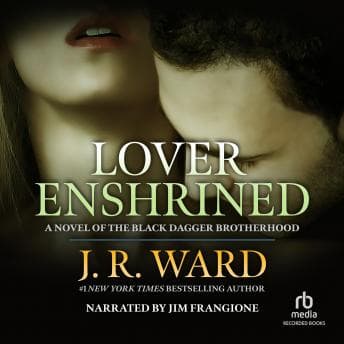
Look, I need to address something upfront: J.R. Ward's Black Dagger Brotherhood series occupies this weird space where it's technically paranormal romance, but the horror elements are real. Like, actually unsettling. The lessers, the Omega, the whole mythology—it's dark in ways that romance readers sometimes aren't expecting and horror readers don't always take seriously. Which is a shame, because Ward understands dread.
Phury's book hit me differently than I expected. Going in, I knew he was the tragic one—the celibate warrior with the drug problem and the survivor's guilt. What I didn't anticipate was how much this installment would lean into psychological horror territory. The scenes inside his head, with the wizard (yes, there's a wizard, and no, it's not explained as well as it should be), play like internal possession horror. It's messy. It's uncomfortable. And honestly? That's kind of the point.
The Voice That Carries This Whole Universe
Jim Frangione IS the Black Dagger Brotherhood. I don't make that statement lightly. After seventeen-plus hours with his voice in my ears—during late-night shelving at the library, during the drive home through Oregon fog that honestly felt too on-brand—I can't imagine these characters any other way.
Here's what he does that most narrators don't: he commits to the ridiculous names. Vishous. Rhage. Zsadist. These are names that could sound absolutely absurd, and in lesser hands, they would. Frangione delivers them with such consistent gravitas that you forget you're listening to a guy say "Tohrment" with a straight face. That's craft.
His pacing is steady—maybe a touch fast for some listeners, but I actually appreciated it. Seventeen hours is a lot, and the momentum kept me from checking how much time remained. His character distinctions are solid, though I'll be honest: the female characters don't always get the same depth of voice work. It's not bad, just... noticeable. Some listeners have mentioned preferring a female narrator for romance, and I get that. But Frangione's been doing this series long enough that switching now would feel wrong. He brings that same consistency to Lover Avenged, where the narration carries even heavier psychological weight.
Where the Darkness Actually Lives
Okay, so here's where my horror brain kicks in. The Cormia storyline—the Chosen who's supposed to be Phury's first mate as Primale—that's where Ward does something genuinely interesting with consent and autonomy. It's uncomfortable in ways that feel intentional. The whole Chosen situation is basically institutionalized control dressed up in religious ritual, and the book doesn't shy away from how messed up that is.
And then there's Phury's addiction. The red smoke. The internal battle. Ward writes addiction like someone who understands it's not just a character flaw—it's a haunting. The wizard in his head (still weird, still under-explained) functions almost like a possession narrative. That internal haunting reminds me of the possession mechanics in Giving Up The Ghost, where the threat isn't external violence but losing yourself from the inside out. Every time Phury reaches for the drugs, it's this slow-motion horror of watching someone lose to their own demons. Shirley (my cat) was thoroughly unimpressed by my 2 AM listening session, but I was genuinely unsettled.
The violence is graphic. The sex is explicit. If you're sensitive to either, this isn't your book. But here's the thing—Ward doesn't use either gratuitously. Well, okay, some of the sex scenes do drag. I'll give the critics that. But the violence serves the world-building, and the intimacy serves character development. Mostly.
The Ensemble Problem (That's Actually a Feature)
This deep into the series, Ward's doing something ambitious: she's running multiple storylines across her Brotherhood members, setting up future books while telling Phury's story. It can feel crowded. Some readers call it unfocused. I call it horror-adjacent world-building—the sense that danger exists beyond your protagonist's immediate arc, that the Omega's threat is systemic, not personal.
John Matthew's storyline in particular carries real weight here. The trauma, the transformation, the violence—it's setup for later books, but it's also genuinely dark content that Ward doesn't sanitize.
Who's Going to Love This (And Who Should Skip)
If you're already invested in the Brotherhood and want Phury's messy, frustrating addiction arc done justice, this delivers. Horror readers curious about paranormal romance with actual teeth—this series is what I recommend. Skip it if you need tight, focused single-POV romance, or if you're not already caught up. Context matters with this world.
Last Call at the Library
Is this the best Brotherhood book? No. That's probably Zsadist's (fight me). Is it essential for series fans? Absolutely. Phury's arc is messy and frustrating in ways that feel true to addiction narratives, and Frangione's narration carries you through the slower stretches.
It's not literary horror. It's not trying to be. But it understands that monsters aren't just external, and that's more than most romance gives you.
The production is clean, the audio quality solid, and at seventeen hours, you're getting your money's worth. Just maybe don't start here—go back to Dark Lover and work your way through.
I listened in the dark. Mistake? Maybe. Worth it? Absolutely.