
"The wisest thing you can do is just admit what you don't know." (Introduction, approx. 00:15:00)
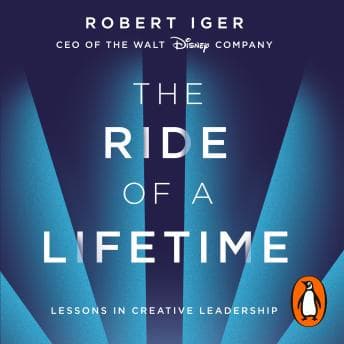
I hit play on this somewhere around Millbrae on the southbound Caltrain, expecting the usual CEO victory lap—you know, the standard "I woke up at 4 AM and drank green juice" humble-brag. Instead, I got Bob Iger sounding genuinely vulnerable, talking about the day he thought his career was over.
Here's the thing about business biographies: 90% of them are survivorship bias wrapped in expensive marketing. They could've been a blog post. I usually crank those to 2.5x speed just to extract the data points and discard the fluff. But Iger's tenure at Disney isn't just a success story; it's a case study in refactoring a legacy codebase without crashing production.
A Tutorial in High-Stakes M&A
Iger walks through the acquisitions of Pixar, Marvel, and Lucasfilm with the precision of a systems architect. He doesn't just talk about the wins; he breaks down the latency in the negotiations—specifically the friction with Steve Jobs. The way he managed the Jobs relationship during the Pixar deal is fascinating. He treated Jobs' ego like a critical dependency that couldn't be deprecated, only managed. For anyone in tech dealing with founders or legacy systems, the logic here holds up.
The Narrator Swap You Should Know About
We need to talk about the audio production because it threw me off. The introduction is narrated by Iger himself. It's raw, emotional, and you feel the weight of the decisions he's describing. Then, abruptly, the narration hands off to Jim Frangione for the rest of the 8+ hours.
Frangione is... fine. Professional. Clear. Sounds like a polished broadcaster. But going from the source code (Iger) to an interpreter (Frangione) creates a disconnect. Frangione brings that same polished broadcaster energy to Blood Truth, where the clean delivery works better because you're not constantly aware of the author's voice being absent. It's like when the Principal Engineer hands off the documentation to a Technical Writer—the information is cleaner, but you lose the specific grit of the person who actually built the system. If you're expecting Iger's voice for 9 hours, adjust your expectations accordingly.
Who Gets Value Here (And Who Won't)
If you manage people or products, especially at scale, the section on "The willingness to take risks" alone justifies the credit. Skip this if you want a warm, personal memoir—it's more debugging log than diary. Also skip if narrator consistency matters to you; that handoff will bug you the whole time.
Commit Merged, Would Recommend
Despite the narrator swap, the data density here is high enough to justify the credit. I finished this in three commutes. It's less self-help, more post-mortem on steering a massive, complex organization through multiple major integrations. Just don't expect the author to hold your hand the whole way through.