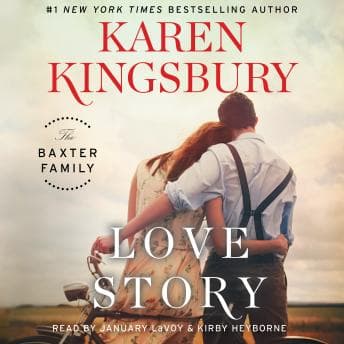

What do you do when someone asks you to tell the story of the love of your life — and that person is gone?
I was three hours into a logo redesign for a local bakery, the kind of repetitive vector work where my hands move on autopilot and my brain just... absorbs whatever's in my ears. Diego was draped across my keyboard (as usual), and I had to physically relocate him twice before giving up and designing around his tail. And somewhere between adjusting kerning and nudging anchor points, John Baxter started telling his grandson about Elizabeth, and I just — stopped working. Hands off the trackpad. Staring at nothing.
Because I know that voice. Not January LaVoy's voice (though she's lovely, more on that in a second). I mean the voice of someone trying to describe a person they loved to someone who never got to fully know them. My mom does this thing where she'll start telling me about Abuela — some random Tuesday memory, like how she'd sing while washing dishes — and her voice gets this specific quality. Thin. Careful. Like she's holding the memory in her hands and she's terrified of dropping it.
That's this whole book.
The Weight of Telling Someone Else's Beginning
Karen Kingsbury does something structurally that I think is pretty clever, even if the execution isn't always perfect. You've got John Baxter in the present, an older man revisiting his college-era love story with Elizabeth for his grandson Cole's school heritage project. And then there's this parallel storyline with Cody Coleman and Andi Ellison working through their messy on-again-off-again thing. The dual timeline lets Kingsbury do this thing where young love and mature love exist side by side — the breathless discovery of falling for someone new versus the ache of remembering someone you've already lost.
The John and Elizabeth sections hit harder. Way harder. There's a "secret heartbreak" threaded through their early relationship that Kingsbury holds close to the chest for a good chunk of the book, and when it lands, it reframes everything you've been listening to. I won't spoil it, but it gave me that gut-punch feeling where you have to pause the audio and just sit with it.
The Cody and Andi storyline? It's fine. It's... fine. It does what it needs to do as a counterweight. But honestly, every time the narration shifted back to them, I found myself mentally tapping my foot waiting to get back to John. The younger couple's drama felt like a telenovela B-plot — and look, I was raised on telenovelas, I love a good B-plot, but this one didn't earn its emotional real estate the way John's story did. The dual-storyline balancing act works better in Bourbon Kings, where the B-plot threads actually pull weight instead of just filling space between the moments you actually came for.
Two Narrators, Two Temperatures
Here's where I have to be honest about the gaps in what I can tell you. I couldn't find much specific feedback on how January LaVoy and Kirby Heyborne handle this particular audiobook, and I don't want to make stuff up. What I can say is this: the dual narrator setup — LaVoy handling female perspectives, Heyborne handling male — makes sense for a book toggling between love stories. At just under ten hours and 1.0x speed (my only speed, fight me), it's a comfortable two-day listen.
The pacing is gentle. Almost too gentle in spots. Kingsbury writes with this devotional quality — there's a faith element here that's pretty central to the Baxter family identity, and if inspirational fiction isn't your thing, you'll feel it. Prayers woven into emotional moments, references to God's plan, that sort of thing. It's not preachy exactly, but it's there, and it shapes the whole temperature of the book.
When Your Abuela's Rosary Would've Been Clutched
I ugly-cried once. Just once — so by my standards, this is a moderate cry book. But that one time was real. It was during the section where Cole presents his heritage project to the family, and the whole room is hearing this love story reflected back to them through a child's understanding. There's something about a kid processing the enormity of grandparent love that just — my heart. MY HEART. Abuela would have loved this one. She would've been dabbing her eyes with a tissue from that little embroidered holder she kept in her purse.
The book's biggest strength is also its limitation: it's warm. Genuinely, unapologetically warm. But warm can tip into safe, and sometimes Kingsbury pulls punches right when I wanted her to dig deeper into the mess. The secret heartbreak I mentioned? It deserved more pages. More ugly. More sitting in the discomfort before the resolution arrived.
Who Gets to Stay and Who Should Go
If you're already a Baxter family reader, this is comfort food and you don't need me to tell you to listen. If you're new to Kingsbury, this works as an entry point but know what you're walking into: faith-forward romance that prioritizes emotional safety over complexity. If you need spice, edge, or moral ambiguity — this isn't your book.
But if you want something that feels like a rainy Sunday book, something soft enough to cry into without feeling wrecked afterward? This will do the job. Not every book has to shatter you. Sometimes you just need to feel held.
The Bookmark I'm Leaving Here
This book felt like finding an old love letter in a coat pocket — tender, a little faded, but still warm from being kept close to someone's chest for thirty years. I'm giving it credit for making me stop working, which honestly doesn't happen often enough.