
Can a story about faith in public schools ever avoid feeling like a sermon? That's the question I kept asking myself while grading a stack of sophomore essays on The Scarlet Letter—the irony of which was not lost on me.
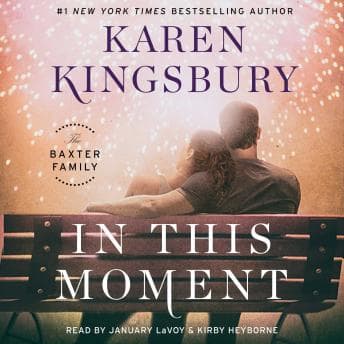
Karen Kingsbury's In This Moment tackles religious freedom in education, a topic that hits uncomfortably close to home for anyone who's spent two decades navigating the minefield of public school politics. Principal Wendell Quinn starts a voluntary Bible study, violence drops, test scores rise, and then—because this is America—someone sues. It's the kind of premise that could go sideways fast, and I'll be honest: parts of it do.
The Courtroom vs. The Kitchen Table
Here's where Kingsbury does something interesting. The legal drama with Luke Baxter (yes, that Baxter family) is competent but predictable. You know where this is heading from chapter one. But the moments that actually landed? The Baxter family scenes. The quiet conversations. The way Kingsbury writes familial love with the same care Faulkner gave to Southern decay—though with considerably more hope and fewer run-on sentences.
I've read enough Kingsbury to know her strengths, and courtroom tension isn't one of them. What she does well is intimacy. The scenes where characters wrestle with faith privately, away from the national spotlight? Those felt earned. The scenes where characters make speeches about religious freedom? Those felt like I was back in a faculty meeting listening to someone read bullet points.
This reminds me of what Hemingway said about writing: show, don't tell. Kingsbury shows beautifully when she trusts her characters. She tells when she's worried her message won't land. Bend in the Road had the same issue—gorgeous character work undermined by moments of over-explanation.
LaVoy and Heyborne Earn Their Keep
The dual narration here is genuinely excellent. January LaVoy handles the emotional weight with restraint—she knows when to let a pause do the work, which is something I try to teach my students about punctuation. The pause IS the punctuation. Kirby Heyborne brings warmth to the male characters without slipping into that generic "inspirational fiction voice" that plagues this genre.
What struck me most was their differentiation. You never lose track of who's speaking, even in crowded scenes. LaVoy's voice for the mother characters carries a different weight than her voice for younger women—there's lived experience in the tone. Heyborne's Principal Quinn sounds like a man who's tired but still believes, which is... well, that's basically every teacher I know.
The prose deserves to be savored at 1.0x. These narrators understand that Kingsbury's sentences are meant to breathe.
The Preaching Problem
Let me be direct: if heavy-handed messaging bothers you, parts of this will test your patience. There are moments where characters essentially deliver position papers on religious liberty. The legal arguments feel researched but simplified—which, fair, this is fiction, not a constitutional law textbook. But some listeners have noted factual inaccuracies that might pull you out of the story if you know the subject well.
I found myself more forgiving than I expected. Maybe because I've spent twenty years watching teenagers struggle with exactly the questions this book raises—not the legal ones, but the personal ones. What do you believe? Why? What happens when believing costs you something?
My students would hate this. I... didn't hate it. That's higher praise than it sounds.
Who Should Press Play (And Who Should Skip)
If you're already a Baxter family fan, this delivers exactly what you want: more time with characters you love, wrapped around a timely issue. If you're new to Kingsbury, this isn't where I'd start—the earlier family novels give you context that makes these glimpses richer. Paris Rose works better as a standalone entry point to this kind of faith-centered fiction—less baggage, clearer emotional arc.
If you're looking for a balanced legal thriller about church-state separation, look elsewhere. This is inspirational fiction with a clear point of view, and it doesn't pretend otherwise. Skip it if you want nuanced debate; lean in if you want affirmation wrapped in family drama.
I listened during a particularly brutal week of parent-teacher conferences, and there's something to be said for fiction that believes people can change, that communities can heal, that doing the right thing matters even when it costs you. Naive? Maybe. But after twenty years in education, I'll take naive hope over cynical realism.
Mr. Williams's Final Grade
Not quite worth pausing the faculty meeting for. But worth the lakefront walk with Denise on a Sunday afternoon, when you want something that affirms rather than challenges. The narration elevates material that could feel preachy into something warmer—proof of what good performance can do for a story. Just don't expect Middlemarch. Expect comfort food for the faithful, served by two narrators who know exactly what they're doing.