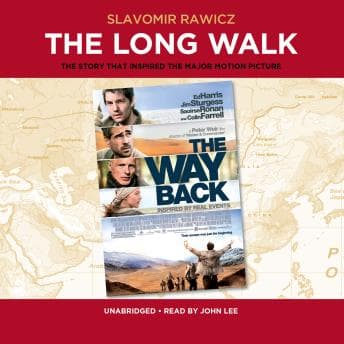

What would you actually do - not what you think you'd do from the comfort of your couch - if survival meant walking four thousand miles through Siberian tundra and the Gobi Desert with nothing but an ax head and a homemade knife?
I started this one on my day off. Rare thing. Kids at school, Carlos at work, me folding laundry in blissful silence. Figured a survival memoir would be light enough to fold towels to. I was wrong. By hour two, the laundry was forgotten in the dryer and I was sitting on the couch with my coffee going cold, just... listening.
The Body Knows What It Can't Do (Until It Does)
As someone who's spent fifteen years watching what the human body does under extreme stress - the way it shuts down, the way it sometimes refuses to quit when all the numbers say it should - this book hit different than I expected. Rawicz and his companions didn't have monitors or IV fluids or a crash cart down the hall. They had willpower and each other. The descriptions of dehydration, frostbite, starvation - the medical details are accurate. Finally. Not thriller-novel-accurate where someone bounces back from a gunshot wound after a good night's sleep. This is the real ugly truth of what deprivation does to a body over weeks and months.
What surprised me was how quiet the suffering is in Rawicz's account. He doesn't dramatize. He just... reports. A man's feet are destroyed by frostbite. They keep walking. Someone can't go on. They wait. Or they don't. There's a matter-of-factness that anyone who's worked trauma recognizes - that flatness that comes after you've seen too much. It's not cold. It's survival mode. I know that voice. I hear it in my patients. I hear it in myself at 4 AM on a bad shift.
John Lee Walks Every Single Mile With You
The narration here is deliberate. And I mean that as a compliment, even though I usually listen at 1.25x like the impatient person I am. John Lee paces this like the trek itself - measured, steady, with this weight behind every sentence that makes you feel the distance. There's no rushing through the Gobi Desert. You sit in the thirst and the heat and the hallucinations right alongside these men.
He doesn't do flashy character voices. This isn't that kind of book. It's one man's account filtered through one narrator's steady delivery, and Lee keeps it grounded. The AudioFile Earphones Award makes sense - it's the kind of performance that doesn't call attention to itself, which is exactly right for a story where the protagonist isn't trying to be a hero. He's just trying not to die.
At 9 hours and 35 minutes, it's a commitment but not an unreasonable one. I finished it over three sessions. And here's the thing - I kept choosing it over the thriller I had queued up next. That says something. I’ve come to trust John Lee with just about any story; his narration of Revelation Space proved he can make deep-space survival every bit as gripping as the Gobi.
The Elephant in the Room (Because I Can't Not Mention It)
I should note - there's been debate over the years about how much of Rawicz's account is literally, verifiably true versus composite or embellished memory. I'm a nurse. I document everything. The charting-is-a-legal-document part of my brain twitches at "true story" when historians have raised questions. But here's what I've settled on: whether every mile happened exactly as described, the experience of the gulag, of escape, of impossible endurance - that was real for thousands of people. The story carries emotional truth even where specific details might be fuzzy. I've read patient charts that were technically accurate and told you nothing about what actually happened in that room. Truth is complicated. I’ve had the same argument with myself about Devil in the White City, which is nonfiction but reads like a serial killer thriller—and I mean that as a compliment.
Who Should Lace Up for This Trek
If you want explosions and plot twists, keep scrolling. If you want to understand what humans are capable of when everything is stripped away - comfort, safety, food, hope - put this on. It demands focused listening. Not a background book. Not a housework book (sorry, laundry, you stayed wrinkled). It asks you to pay attention and rewards you for it.
Skip the movie adaptation. The book gives you the interior experience of endurance that a film can only gesture at.
My mom would love this. She walked to school barefoot in the Philippines and has never let any of us forget it. This would either validate her entire philosophy or make her realize she had it comparatively easy. Either way, I'm sending her the link.
Post-Shift Prescription
Carlos asked why I was sitting in the living room staring at nothing when he got home. I blamed allergies. But really I was just turning over what it means to keep walking when every rational part of your body says stop. Fifteen years of night shift, I thought I understood endurance. Rawicz recalibrated my scale.








![Steve Jobs [unabridged audiobook] audiobook cover](/_next/image?url=https%3A%2F%2Fcovers.audiobooks.com%2Fimages%2Fcovers%2Ffull%2F9788499923406.jpg&w=1920&q=75)