
"The Queen's Majesty seemed greatly displeased, and the cause of her displeasure was not difficult to divine."
Somewhere around hour seven, that line stopped me mid-grade. Red pen hovering over a sophomore's mangled thesis statement about The Great Gatsby, and I'm thinking about Elizabeth I's calculated rage. This is why we still read the classics. Or in this case, listen to the Victorians reading the classics for us.
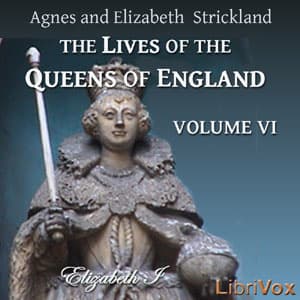
The Stricklands—and yes, I mean both sisters, because Elisabeth did most of the heavy lifting while Agnes took the credit, which is its own fascinating bit of literary history—produced something genuinely valuable here. Volume six covers Elizabeth I through 1586, which means we're deep in the political chess matches, the religious tensions, the Mary Queen of Scots problem. Nineteen hours of Tudor drama. My wife Denise asked why I was muttering about Walsingham during our Sunday lakefront walk. I didn't have a good answer.
When Victorian Scholarship Meets Modern Ears
Let me be honest about what you're getting here. This isn't modern biography. The Stricklands wrote with all the moral certainty and narrative flourishes of their era. They had opinions. Strong ones. Elizabeth was brilliant but vain. Mary Stuart was tragic but foolish. The prose assumes you're a literate Victorian with time to spare and a tolerance for lengthy digressions about court dress.
And you know what? I found that refreshing.
We've become so obsessed with "objective" history that we've forgotten biography used to be an art form. The Stricklands weren't trying to be neutral. They were trying to make you feel something about queens who died centuries ago. By modern academic standards, it's not rigorous. By storytelling standards, it's genuinely compelling.
Ann Boulais reads this with the steady, measured pace the material demands. No vocal fireworks, no dramatic interpretation. Just clear, consistent delivery that lets the Victorian prose breathe. At nineteen hours, you need a narrator who won't exhaust you, and Boulais understands that. She's reading history, not performing it. The distinction matters.
The Elizabeth Problem (Or: Why This Volume Works)
Here's the thing about Elizabeth I—every modern biography either worships her or psychoanalyzes her into abstraction. The Stricklands caught her before all that. They had access to sources we've since picked apart and recontextualized, but they also had a directness we've lost. When they describe Elizabeth's fury at Leicester's secret marriage, there's no hedging about what it "might have meant" for her psychological development. She was angry. She made people suffer for it. Next paragraph.
I teach teenagers who've been trained to qualify every statement into meaninglessness. "Perhaps the author intended..." "It could be argued that..." The Stricklands just tell you what happened and what they think about it. My students would hate this. I love it. That same directness—history without hedging—is what makes Communist Manifesto so readable, even when you disagree with every word.
The section covering Elizabeth's relationship with Mary Stuart is particularly strong. You feel the weight of that decision building over years—the diplomatic dance, the religious pressures, the sheer political impossibility of the situation. By the time we reach 1586, with Mary's fate essentially sealed, there's a genuine sense of tragedy. Not sympathy for Mary necessarily, but recognition that history sometimes offers only terrible choices.
Who Should Spend Nineteen Hours Here (And Who Shouldn't)
This is not casual listening. Let me be clear about that. You need to be the kind of person who finds Victorian prose charming rather than exhausting. You need patience for digressions about genealogy and court protocol. You need to accept that the Stricklands are going to editorialize, and you're going to have to do your own fact-checking if you want modern scholarly consensus.
Skip this if you want streamlined narrative history or can't tolerate nineteenth-century moralizing. But if you're a Tudor obsessive—and I know you're out there, because I've taught your children and they write surprisingly good essays about Anne Boleyn—this is worth your time. It's primary source material now, really. A window into how the Victorians understood their royal past. And Boulais makes nineteen hours feel manageable, which is no small achievement.
I listened mostly during late-night grading sessions, letting Elizabeth's court intrigues distract me from the seventeenth essay claiming Gatsby was "relatable." (He wasn't. That's the point. But I digress.) The measured pace works well as background for concentration—present enough to engage, steady enough not to derail focus.
Worth Pausing the Faculty Meeting For
Is this essential listening? No. Is it a hidden gem for the right audience? Absolutely. The Stricklands gave us something we don't get anymore—biography as literature, history as storytelling, queens as characters rather than case studies. Ann Boulais delivers it cleanly, and at nineteen hours, you'll emerge knowing Elizabeth I in a way no modern biography quite captures.
Principal Martinez, if you're reading this, I was definitely paying attention to your budget presentation last Tuesday. (I was listening to Elizabeth outmaneuver Parliament on taxation. Same energy, honestly.)






![Steve Jobs [unabridged audiobook] audiobook cover](/_next/image?url=https%3A%2F%2Fcovers.audiobooks.com%2Fimages%2Fcovers%2Ffull%2F9788499923406.jpg&w=1920&q=75)