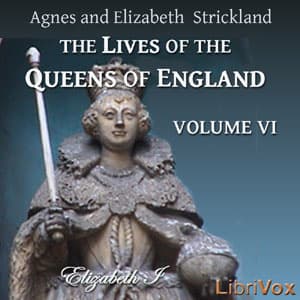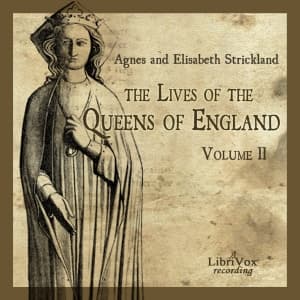

How many queens can you name before 1300? If you're like me, you probably get to Eleanor of Aquitaine and then start guessing. That gap in my knowledge is exactly what had me queuing up Volume 2 of Agnes Strickland's Lives of the Queens of England during a bout of insomnia that Ranger and I were sharing — him twitching through some dream about squirrels, me staring at the ceiling after too much coffee at a client dinner.
Let me cut to the chase: this is a Victorian-era biographical work covering the queens of medieval England, and it reads exactly like what it is — a 180-year-old history text. If you're expecting a modern narrative history with dramatic pacing and cinematic set pieces, you're in the wrong foxhole. But if you want to spend ten hours with women who've been largely erased from the popular telling of English history, there's genuine value here.
The Strickland Sisters Did the Digging So You Don't Have To
Here's what's actually interesting about this project: Agnes Strickland gets her name on the cover, but her sister Elizabeth did most of the heavy lifting on research. The Stricklands were pulling from primary sources that nobody had touched before the 1840s — royal correspondence, household accounts, diplomatic records. By modern academic standards? Sure, the analysis is thin and the Victorian moralizing gets thick. Agnes has a habit of judging these medieval women by 19th-century standards of feminine virtue, which can be pretty grating. But the raw material they unearthed is genuinely valuable. You get details about dowry negotiations, political marriages that were essentially treaty signings with a wedding attached, and the day-to-day realities of being a queen consort when "consort" often meant "political hostage with a crown."
I've seen this scenario play out in real life — well, not the crown part, but the politics of being the spouse attached to someone else's power structure. Some of these queens were sharper operators than their husbands. The book doesn't always give them credit for that, but the facts speak for themselves if you're paying attention. That tension between what the record shows and what the official story chooses to honor is something Three Day Road wrestles with too — different era, different continent, but the same pattern of capable people getting written out of the version that gets passed down.
Ann Boulais and the Ten-Hour Marathon
This is where I have to be honest about limited intel. I don't have a ton of specifics on Boulais's performance beyond the listen itself, and this appears to be a LibriVox-sourced recording, which means volunteer narration. The production quality reflects that — you're not getting a Recorded Books studio polish here. Boulais handles the material competently, keeping a steady, measured pace through dense Victorian prose that would trip up a lot of narrators. The sentence structures Strickland uses are long, nested things with clauses stacked like Russian dolls, and Boulais doesn't lose the thread, which counts for something.
But I'll be straight with you — at ten and a half hours, the narration style is more "someone reading you a textbook" than "someone telling you a story." There's limited vocal variation between the different queens' sections, so one biography can blur into the next if your attention drifts. I bumped it to 1.25x (my standard) and that helped keep the energy up. At normal speed, I think the pacing would've had me reaching for my phone.
Who's Going to Actually Enjoy This?
History buffs who want primary-source-adjacent material on English queens before the Tudors — this is your lane. If you're working through medieval English history and you're tired of every book being about kings and battles, the Stricklands at least centered women's stories when almost nobody else was doing it. That matters.
But if you're coming from modern narrative nonfiction — Dan Jones, Helen Castor, that crowd — you'll find the style archaic and the analysis frustratingly surface-level. Strickland tells you what happened but rarely digs into why with any sophistication. And the Victorian editorializing about proper womanly behavior will make your eyes roll so hard you'll see your own brain.
This is also free content (LibriVox), which changes the calculus entirely. You're not spending a credit on this. You're spending time. And ten hours is a real commitment for material that requires active attention to stay engaged.
Mission Debrief
Worth your time? Conditionally. If you're a medieval history completist or you want to understand how the Victorians constructed narratives about royal women, this delivers. If you want entertainment or sharp modern analysis, look elsewhere. I got through it, I learned some things about queens I'd never heard of, and Ranger slept through all of it. Fair assessment from both of us.



![Steve Jobs [unabridged audiobook] audiobook cover](/_next/image?url=https%3A%2F%2Fcovers.audiobooks.com%2Fimages%2Fcovers%2Ffull%2F9788499923406.jpg&w=1920&q=75)