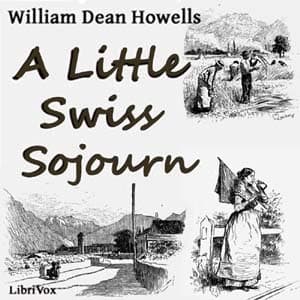

I was grading a stack of junior essays on The Great Gatsby - the ones where every third student calls Nick Carraway 'relatable' without explaining why - when I needed something to cleanse my palate. Something short. Something that wouldn't demand too much from a brain already exhausted by seventeen variations of 'the green light symbolizes hope.' At under two hours, Howells' Little Swiss Sojourn seemed perfect. A literary sorbet, if you will.
And that's exactly what it is. But here's the thing about sorbet - it's not trying to be a five-course meal.
The Dean Takes a Vacation
William Dean Howells - the man who championed American realism, mentored Mark Twain and Henry James, and basically ran the Atlantic Monthly like his personal literary kingdom - wrote this little gem in the late 1800s after a two-month family stay on the shores of Lake Geneva. It's not a novel. It's not even really a memoir in the modern sense. It's a series of observations, the kind of thing a sharp-eyed writer jots down when he's supposed to be relaxing but can't quite turn off his brain.
Howells notices everything. The way Swiss landlords maintain their properties with almost religious devotion. The peculiar customs of English tourists abroad (he's delightfully catty about them). The architecture, the food, the strange social hierarchies of a resort town in autumn. He's doing what great writers do - paying attention when everyone else is just looking.
This reminds me of what Hemingway said about writing - that you should write one true sentence and go from there. Howells writes dozens of true sentences about Switzerland, and while none of them add up to a grand narrative, they create something lovely in their accumulation. A portrait of a place and time, rendered by someone who understood that small observations often reveal more than grand pronouncements.
Clifford Reads Like Your Favorite Professor
The narrator deserves credit for something specific: he handles Howells' occasionally serpentine 19th-century sentences without making them feel like homework. There's a clarity to his reading that respects the prose without over-dramatizing it. When Howells drops in French or German phrases - which he does, because that's what educated Americans did in 1892 - Clifford handles them naturally, without the awkward pause-and-pronounce that some narrators fall into.
Is it a performance that will haunt your dreams? No. But it shouldn't be. This is travel writing, not Macbeth. Clifford understands that his job is to be a window, not a spotlight. The prose deserves to be savored, and he lets you do exactly that.
Why We Still Read the Minor Classics
Here's what my students would never understand about a book like this: its value isn't in plot or character development or any of the things they've been trained to look for. It's in the prose itself. It's in watching a master craftsman describe a Swiss sunset or the peculiarities of continental breakfast service with the same attention he'd give to a novel.
Howells writes about watching other tourists with a kind of affectionate mockery that feels surprisingly modern. He's not cruel, but he's not blind either. There's a passage about English families at the hotel that could've been written by a contemporary travel essayist - that same mix of observation and gentle judgment.
At 1 hour and 39 minutes, this is the audiobook equivalent of a long lunch break. You won't finish it transformed. You won't finish it with a new understanding of the human condition. But you might finish it with a strange desire to visit Lake Geneva in autumn, and a renewed appreciation for writers who bother to really look at the world around them.
Who Should Take This Swiss Detour (And Who Should Stay Home)
If you loved Twain's travel writing - Innocents Abroad, A Tramp Abroad - this is its more refined, less comedic cousin. For a completely different take on American storytelling from the same era, Truth About Tall Tales explores the wilder, more mythic side of our national character. If you're a fan of 19th-century American literature and want to hear from one of its most influential (if now somewhat forgotten) figures, this is a lovely introduction. If you need something short for a single commute or while doing dishes, this fits perfectly.
Skip it if you need plot. Skip it if you want drama or tension. And if Victorian-era prose makes you impatient, this will test you.
Class Dismissed
My students would hate this. I love it. Worth pausing the budget presentation for - though at this length, you could finish it during Principal Martinez's entire quarterly review and still have time left over for the curriculum discussion. Sometimes the best audiobooks aren't the ones that change your life. They're the ones that remind you why you fell in love with good prose in the first place.







![Steve Jobs [unabridged audiobook] audiobook cover](/_next/image?url=https%3A%2F%2Fcovers.audiobooks.com%2Fimages%2Fcovers%2Ffull%2F9788499923406.jpg&w=1920&q=75)