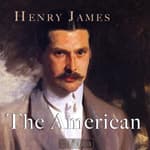

"I am not a cruel man, but I am a very honest one." Christopher Newman says something close to that around hour three, and I had to stop walking and just stand there on the lakefront path like an idiot while joggers swerved around me. Because that line - that tension between American directness and what it costs you in a world built on euphemism and secrecy - that's the whole novel in one breath.
Let me back up. I'd been meaning to get to The American for years. I teach Portrait of a Lady to my AP seniors, and I've listened to Daisy Miller probably four times, but this earlier James novel kept slipping down the queue. Denise finally said, "You talk about the international theme every Thanksgiving - just listen to the book already." She wasn't wrong.
Newman Walks Into Paris Like He Owns It (He Can Afford To)
What surprised me - and shouldn't have, given how well I supposedly know James - is how genuinely likable Christopher Newman is, at least early on. He's not the bumbling American caricature you might expect. He's confident, self-made, a little too sure that money can solve cultural equations the way it solves business ones. James writes him with real affection and real skepticism simultaneously, which is a trick not many authors pull off. Newman sits in the Louvre staring at paintings he doesn't fully understand, and instead of mocking him, James lets us feel the sincerity of a man trying to expand himself. It's touching. My students would hate this. I love it.
But here's where James does something sneaky. The de Bellegarde family - Claire's mother and brother especially - aren't just snobs. They're predators operating under the thinnest veneer of aristocratic propriety. The Marquise de Bellegarde, with her cold little drawing-room maneuvers, is one of the most chilling antagonists James ever wrote, and she barely raises her voice. The conflict isn't Newman versus France. It's Newman's belief that the world operates on fair exchange versus the Bellegardes' understanding that power has nothing to do with fairness. This reminds me of what Hemingway said about courage being grace under pressure - Newman has the courage, but James is asking whether grace is even possible when the rules are hidden from you.
Nicholas Clifford Gets the James Sentence
Here's what matters in a Henry James audiobook: can the narrator handle the sentences? James writes these long, winding, subordinate-clause-upon-subordinate-clause constructions that can either become music or become a fog. Nicholas Clifford gets them. He understands where the stress falls, where the irony lives, where James is being sympathetic and where he's being devastating. There's a sophistication to his reading that matches the material without ever feeling stuffy.
His Newman has this slight plainspoken quality - not a broad American accent, but something straighter, more direct than the way he voices the French characters. The Bellegardes get a cooler, more measured delivery. It's subtle work. The narrator understands that pause is punctuation, and Clifford uses silence effectively in the drawing-room scenes where what's not being said matters more than the dialogue. Around hour nine, when Newman confronts the family secret - I won't spoil it, but you'll know the scene - Clifford lets the weight of the revelation sit. He doesn't rush to the next paragraph. That restraint is everything.
At fourteen hours, this is a commitment. I won't pretend every passage earns its length. James indulges in some middle-section social cataloguing - party scenes, secondary character introductions - that feel more like the author furnishing a room than advancing a story. If you're coming from Daisy Miller at two hours, this will test your patience around hours six through eight. But push through. The final act is devastating.
Who Should Cancel Their Evening Plans For This
If you loved Portrait of a Lady, this is its spiritual successor - or rather, its predecessor, the rougher, more openly dramatic version of the same obsession. James hadn't yet developed his late-period difficulty here. The prose deserves to be savored, but it won't punish you the way The Golden Bowl will.
This is for listeners who want to sit with ambiguity. Newman's final choice - what he does with the Bellegardes' secret - is one of the great moral questions in American literature, and James refuses to tell you whether it's noble or naive. I've been turning it over for three days now. That same refusal to resolve moral ambiguity - the author just leaving you alone with the question - hit me just as hard in Brothers Karamazov, where Dostoevsky spends nine hundred pages asking whether goodness is possible in a broken world and then has the audacity to shrug.
Skip this if you need plot momentum. James is building atmosphere and character psychology, not suspense. And listen at 1.0x. I know, I know. But the author chose those words.
Worth Pausing the Faculty Meeting For
This is why we still read the classics. The American asks what happens when optimism meets a system designed to crush it - and whether walking away from a fight can be the bravest thing you do. Newman came to Europe to buy culture, and discovered you can't purchase the thing that matters most. Twenty years of teaching literature and that idea still stops me on a running path. Clifford's performance gives it the room it needs to land.