Look, I need to talk about Steven Pacey. Because what this man does with twenty hours of grimdark fantasy is something close to witchcraft.
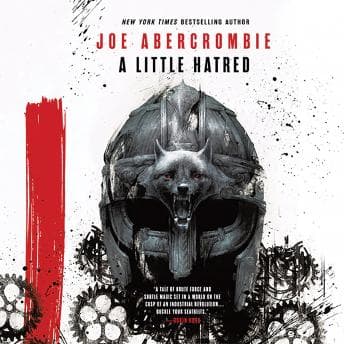
I've been a First Law devotee since the original trilogy, and I'll admit I was nervous picking up A Little Hatred. New generation, new characters, new chance for Abercrombie to break my heart. But Pacey? Pacey is the constant. The man who made Glokta's lisp iconic. The voice who turned Logen Ninefingers into a living, breathing tragedy. If you haven't heard what he does with those characters in Last Argument of Kings, you're missing some of the most emotionally devastating voice work in the genre. And here he is again, somehow adding another thirty-odd voices to his repertoire like it's nothing.
The Voice That Haunts My Commute
Pacey doesn't just read characters. He becomes them. And in a book with this many POVs—we're talking Leo dan Brock's battle-hungry optimism, Savine's razor-sharp social climbing, Rikke's mystical chaos, and Orso's magnificent disappointment of a prince—that's no small feat.
The thing that gets me? Each character sounds like they've lived a whole life before you meet them. Leo has this young, eager quality that makes his desire for glory feel genuine rather than annoying. Savine's voice drips with the kind of calculated charm that makes you understand exactly how she manipulates everyone around her. And Orso—god, Orso. Pacey gives him this weary, self-aware delivery that had me cackling on the subway. (Yes, people stared. No, I don't care.)
I listened to most of this in the dark, which is how I consume anything with this much moral ambiguity. The production is clean—some subtle sound effects and musical interludes that enhance without overwhelming. But honestly, Pacey could narrate this in a wind tunnel and I'd still be hooked.
Where the Age of Madness Earns Its Name
Abercrombie is doing something fascinating here. The industrial revolution is creeping into the Circle of the World, and with it comes new kinds of horror. Factory conditions that would make Victorian England wince. Class warfare brewing in the slums. The old magic clashing with the new machines. It's grimdark, sure, but it's grimdark with something to say.
The pacing on this one is interesting. At twenty hours, you'd expect some drag, but Abercrombie keeps the threads tight. Each POV chapter ends on a hook that made me groan when the perspective switched—not because I didn't want the new character, but because I needed to know what happened next. That's craft. That's also torture, but the good kind.
I will say—and this is minor—the two romance subplots feel a little forced. Not enough to derail anything, but there were moments where I thought "okay, we get it, they're attracted to each other." The writing, not the narration. Pacey sells even the clunkier emotional beats.
The Grimdark Gospel According to Abercrombie
Here's what I appreciate about Abercrombie's horror—because make no mistake, this IS horror. Not supernatural horror, but the horror of human nature. The violence isn't gratuitous; it's consequential. When someone dies in this world, you feel the weight of it. When someone does something monstrous, you understand exactly how they got there.
The Long Eye sequences with Rikke? Genuinely unsettling. Pacey shifts into something otherworldly for those visions, and I found myself holding my breath more than once. This understands that horror isn't about gore—it's about dread. About knowing something terrible is coming and being powerless to stop it.
Shirley (my cat) was unimpressed by my gasps during the battle scenes. I was on the edge of my seat. The contrast in our reactions really highlighted how alone I am in my obsessions.
Who Needs This in Their Ears (And Who Should Run)
If you've read the First Law trilogy, this is essential listening. Full stop. The callbacks are there, the world-building expands beautifully, and seeing the children of characters you know is both delightful and devastating.
If you're new to Abercrombie... honestly, start with The Blade Itself. Pacey's narration of The Blade Itself is where this whole magnificent journey begins, and it's still one of the best performances in fantasy audiobooks. You'll appreciate this more with the foundation. But if you're the type who likes jumping into series mid-stream (chaotic, but I respect it), you can follow along. Abercrombie gives you enough context.
Skip if you need your fantasy sanitized. There's violence, cruelty, language that would make a sailor blush, and some explicit content. This is not cozy fantasy. This is "the world is terrible and everyone is complicit" fantasy. Which, given everything, feels pretty relevant.
At 1.0x speed, this is a commitment. I bumped to 1.25x for my commute sections and Pacey's performance still landed perfectly. The man's diction is impeccable.
Signing Off From the Darkness
My podcast listeners are going to love this recommendation. Finally, fantasy that respects the darkness it's playing with, performed by a narrator who understands that audiobooks are theater. Pacey commits. That's rare. And in this case? It's exceptional.