What happens when you give deeply flawed people exactly what they think they want?
I was asking myself this around 2 AM, lights off, Shirley curled against my feet, completely unable to stop listening. This is not a horror novel. But Joe Abercrombie understands something that most fantasy writers don't—dread isn't about monsters. It's about watching characters you've grown attached to make choices you know will destroy them. And then watching them do it anyway.
The Slow Knife Twists Deeper
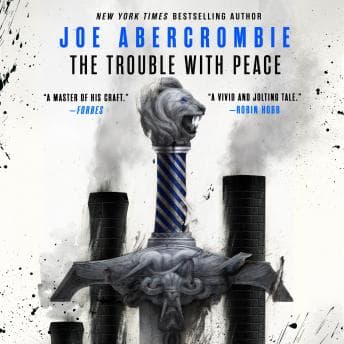
The Trouble With Peace is a clinic in political horror. And yes, I'm calling it that. The setup from A Little Hatred pays off here in ways that made me genuinely uncomfortable—not because of violence (though there's plenty), but because Abercrombie makes you complicit. You understand why Leo dan Brock charges headfirst into rebellion. You get why Savine dan Glokta claws her way back to power with zero regard for collateral damage. You even feel for Orso, the reluctant king who can't seem to stop being decent in a world that punishes decency like a mortal sin.
The chapter titled 'Little People' does something structurally clever that I won't spoil, but it's the kind of narrative trick that rewards close attention. My podcast listeners are going to love dissecting it. Abercrombie shifts between perspectives so each character's victory feels like someone else's tragedy—sometimes within the same scene.
Steven Pacey Commits (That's Rare)
Look, I've said it before and I'll keep saying it: audiobook narrators are actors. The ones who understand this create something that transcends the page. Steven Pacey doesn't just read this book—he inhabits it.
His Leo is all swagger and wounded pride, voice dripping with the dangerous confidence of a man who's never been told no. His Savine is ice and calculation, every syllable precisely placed. But it's the banter that really showcases his range—the comedic timing between characters lands perfectly, which is harder than it sounds when you're doing all the voices yourself. The emotional delivery in the explosive final quarter had me holding my breath. Literally. Shirley looked at me like I was having a medical event.
I've listened to a lot of fantasy audiobooks. A lot. Pacey's work on the First Law universe remains the gold standard. No notes.
Peace Is Just War With Better PR
Here's what Abercrombie gets that lesser grimdark writers miss: cynicism without heart is just nihilism. And nihilism is boring. The Trouble With Peace is absolutely brutal—there's violence, there's betrayal, there's the systematic dismantling of everything characters worked for in the previous book. But underneath all that blood and ambition, there's genuine tragedy. These people want things. Love, respect, legacy, freedom. They just want them badly enough to burn everything down.
The Breakers subplot—the revolutionary movement lurking in the shadows—adds a fascinating layer of class commentary that feels uncomfortably relevant. Abercrombie doesn't preach, but he doesn't let you look away either.
Who Gets an Invitation to This Massacre
If you've read the First Law trilogy and haven't continued into Age of Madness—what are you doing? This is Abercrombie operating at peak form, with 22 hours to let his characters scheme and suffer.
If you're new to his work, start with The Blade Itself. You need the foundation. Though if you want something lighter in the fantasy realm, Eldest: Inheritance, Book II offers a more traditional hero's journey—still complex, just less morally bankrupt. The callbacks and character connections here reward longtime readers in ways that would just confuse newcomers.
Skip if you need heroes to root for. These are protagonists, not heroes. There's a difference, and Abercrombie makes sure you feel it.
Shirley Jackson Would Approve
Finally, fantasy that respects the genre while pushing it somewhere darker. The Trouble With Peace isn't horror in the traditional sense, but it understands that the scariest monsters are the ones who think they're the good guys. I listened in the dark. Mistake? Maybe. Worth it? Absolutely.
Now if you'll excuse me, I have 200 pages of notes to organize for the podcast episode. Shirley (my cat) was unimpressed by the political intrigue. She's more of a supernatural horror girl. I, however, am still thinking about that ending.