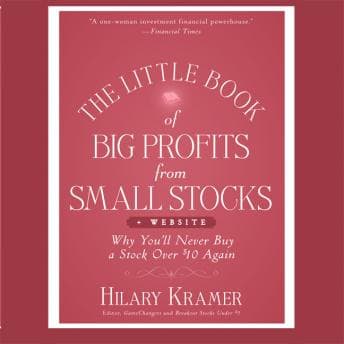

Why do we keep falling for books with "never" in the title? "Never Buy a Stock Over $10 Again." Really? That's the hill we're dying on?
Look, I get the appeal. Small stocks, big dreams. My parents would've loved this pitch back in the day - the idea that you can find hidden gems the big players missed. Except they were too busy actually running a business to gamble on penny stocks. But I digress.
The Kramer Methodology (And Why It's Not Crazy)
Here's what Hilary Kramer gets right: she's not selling snake oil. The woman has Wharton credentials and 25 years of actual portfolio management experience. That matters. She's identifying what she calls "breakout stocks" - companies under $10 that are undervalued with specific catalysts on the horizon. It's the kind of pattern recognition that Mastery argues takes years to develop—except Kramer's trying to teach it in three hours. FDA approvals that got delayed. Overreactions to temporary bad news. The Ford example she uses actually makes sense.
The framework is solid: find the disconnect between price and value, identify the catalyst, get in before the crowd. It's not revolutionary - value investors have been doing versions of this forever - but she packages it in a way that's accessible. And at 3 hours 15 minutes, she respects your time. I finished this on a single round-trip flight to Chicago. That's the right length for this kind of content.
But here's my issue. She's talking about 50 to 200 percent upside potential. That sounds amazing until you remember the flip side. Small stocks can vaporize. I've watched clients lose their shirts chasing exactly this strategy. The book mentions the upside plenty. The downside? Not so much.
Walter Dixon Does His Job
I couldn't find much about Walter Dixon online, but based on this performance, he's exactly what a business audiobook needs. Clear. Professional. No weird inflections or dramatic pauses. He's not trying to make stock analysis sound like a thriller - and thank God for that.
The pacing works. Complex concepts get enough breathing room without dragging. I listened at 1.5x (yes, I slowed down from my usual 2.0x - the content actually warranted it) and everything stayed comprehensible. Clean production, no audio issues. It's the kind of narration that gets out of the way and lets the content do the work.
The Website Angle
The book comes with access to educational videos and interactive tools. In theory, great. In practice? I've seen too many of these "bonus content" promises turn into email list farms or outdated material. The book was published in 2012, so some of those stock picks are... historical artifacts at this point. Ford was around $10 back then. It's been on quite a ride since.
This is the problem with investment books in audio format. The strategies might be timeless-ish, but the specific examples age fast. You're really buying the framework here, not the picks.
Who Should Listen (And Who Should Skip)
If you're new to investing and curious about small-cap stocks, this is a decent primer. Kramer explains her methodology clearly, and you'll come away understanding how to evaluate low-priced stocks beyond just "it's cheap." That's valuable.
If you're already doing this kind of analysis? You'll probably find yourself nodding along without learning much new. And if you're looking for a comprehensive risk management discussion? Keep looking. This book is more cheerleader than coach when it comes to the dangers of small-stock investing.
My parents would've listened to this and then done exactly what they always did - put their money back into the dry cleaning equipment. That's the kind of self-control Awaken the Giant Within preaches, though Robbins would probably add more firewalk metaphors. They understood that the best investment is often the one you can control. Kramer's not wrong about her approach, but she's selling a specific kind of optimism that doesn't account for the average investor's tendency to panic sell at the worst possible moment.
Bottom line: It's a quick, competent listen that delivers exactly what it promises - a framework for small-stock investing. Just don't mistake a methodology for a guarantee. At 3 hours, it won't waste your time. Whether it'll make you money is a different question entirely.