
This book is romance in a historical costume, and I need to be upfront about that.
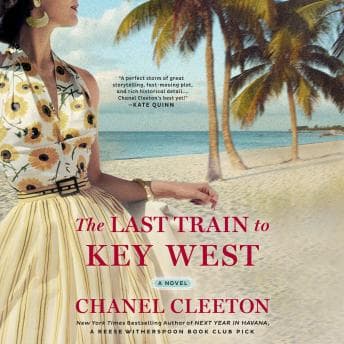
I grabbed Last Train to Key West because I'm a sucker for disaster narratives - you spend enough years in a trauma center and you develop this weird fascination with how people behave when everything falls apart. A Category 5 hurricane bearing down on the Florida Keys in 1935? Three women whose lives intersect as the storm approaches? Sign me up. But what I got was about 70% love stories and 30% hurricane, and I had to recalibrate my expectations somewhere around hour three while I was making breakfast for the kids and trying not to burn the eggs.
Three Women, Three Narrators, Uneven Magic
The triple-narrator setup is ambitious and mostly works. Karissa Vacker, Kyla Garcia, and Rachel L. Jacobs each take one of the three women - Helen, Mirta, and Elizabeth - and having distinct voices for each POV keeps you oriented when the chapters rotate. Vacker in particular has this range that impresses me every time I hear her work. She handles male voices without that thing some female narrators do where every man sounds like he's gargling gravel. Her men sound like actual men. Different men, even. The last time I noticed that kind of genuine range in a narrator was during Enemy, where the voice work alone kept me second-guessing what was real.
But here's the thing - with three narrators splitting a nine-hour book, you're getting roughly three hours per storyline. That's not a lot of runway. Mirta's story - the Cuban woman in an arranged marriage to an American with shady business dealings - gets the most heat, both romantic and dramatic. Her honeymoon-that-might-get-her-killed tension actually kept me sitting in my car in the garage for an extra ten minutes one morning. Helen's Key West native desperate to escape felt the most emotionally honest to me. Elizabeth's treasure-hunt-adjacent plot with the WWI veterans in the work camps? That's where the real historical gold is buried, and it doesn't get enough room to breathe.
As someone who's actually worked through enough emergencies to know - the anticipation before disaster hits is often more terrifying than the event itself. Cleeton gets that right. The slow build of barometric pressure dropping, the locals who know what's coming versus the tourists who don't, the veterans in those flimsy camps who've already survived one kind of hell. That stuff landed.
The Romance-to-History Ratio Problem
Look, I knew going in this was from the author of Next Year in Havana. The Perez Family series leans romantic. I get it. But the 1935 Labor Day Hurricane killed over 400 people, many of them WWI veterans who'd been sent to build a highway and were essentially abandoned when the storm hit. That's a story that deserves full weight, and here it plays second fiddle to love triangles and stolen glances and will-they-won't-they moments.
I didn't yell at my dashboard during this one - the historical details that ARE there seem solid, and nothing made my nurse-brain twitch the way bad emergency medicine writing does. But I kept wanting MORE of the storm, more of the camps, more of the desperate evacuation that came too late. When the hurricane finally hits, it's genuinely harrowing. Cleeton doesn't shy away from the destruction. I just wish she'd given it more page time.
The romance works if that's what you're here for. Mirta's husband is the kind of dangerous-but-tender love interest that my sister-in-law would absolutely devour. Helen's love interest felt more grounded, more real. Elizabeth's... honestly I kept losing the thread of Elizabeth's romantic subplot because I was more interested in what was happening with the veterans.
Who's Going to Love This (And Who Should Temper Expectations)
If you loved the first two Perez Family books and you're here for the family saga with romance and Cuban-American history woven through, this will satisfy you. If you're coming in cold expecting a disaster thriller - like I basically did - you'll enjoy it but wish for a different book buried inside this one.
The audio production is clean, though I did notice a couple spots where the volume dipped and I had to crank my car stereo. Minor, but on a 3 AM drive home when you're already fighting fatigue, losing a sentence or two is annoying. The pacing is steady - not slow, but not the kind of propulsive drive you get from pure thrillers. It's a simmer, not a boil, until the last couple hours.
Perfect for that post-shift decompression, honestly. It's engaging enough to keep your brain occupied but not so intense that it spikes your cortisol when you're trying to come down from twelve hours of trauma nursing.
My Mom Would Actually Love This
Seriously. Strong women making impossible choices, family loyalty, a little forbidden romance, real history. She'd eat it up. (She still thinks I should've been a doctor, but she'd approve of this book.)
Carlos asked why I looked so tense when I came in one morning and I told him I was worried about fictional people in a hurricane that happened 90 years ago. He just handed me coffee. That man understands.