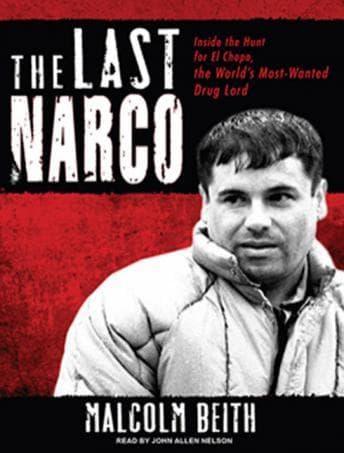

Everyone told me this was THE definitive El Chapo book. The one that gets you inside Sinaloa, inside the cartel machinery, inside the hunt. And look - Malcolm Beith clearly did dangerous, boots-on-the-ground reporting. The man lived in Mexico City, talked to soldiers, talked to traffickers, put himself in real jeopardy to write this. I respect that enormously. But the audiobook experience? That's where things get complicated.
I was sitting in my driveway at 6:47 AM after a brutal night shift - we'd had three traumas roll in back to back, and I was too wired to go inside and start breakfast. So I just sat there, engine off, listening to the last hour. And I realized I'd been listening to this book for several mornings now without ever feeling like I was getting closer to understanding who Chapo actually was.
The Reporting Is Real, But the Structure Fights You
Beith writes like a journalist filing dispatches, which makes sense because that's exactly what he is. You get the macro picture of how Mexican cartels evolved from Colombian middlemen into their own empires. You get the political corruption, the DEA frustrations, the shifting alliances. The anecdotal details - Chapo's escape from Puente Grande prison in a laundry cart, the way he built his mythology among Sinaloan farmers - those moments are genuinely fascinating.
But the book can't quite decide what it wants to be. Is it a biography of Guzmán? A history of the Mexican drug war? A real-time chase narrative? It tries to be all three and doesn't fully commit to any. I went in expecting something like a deep character study - who is this man, what drives him, how does he think - and instead got a broader survey of cartel politics with Chapo as the organizing thread. Not bad, exactly. Just not what was promised.
And some of the analysis feels thin. Listeners who know the region have flagged errors in Spanish grammar and some conclusions that feel like stretches. I caught a few moments where Beith seemed to be filling gaps with speculation dressed up as insight. As someone who's actually worked a code, I know what it looks like when someone's narrating with confidence but doesn't quite have all the data. You can feel the seams.
Let's Talk About John Allen Nelson
Okay. Here's the thing I need to be honest about. Nelson is an accomplished actor. He won an AudioFile Earphones Award for Zoo Story. He clearly has skill. But this material needed a narrator who could handle the weight of Mexican culture, cartel vernacular, and Spanish-language names without making it sound like a performance of otherness.
Some listeners have called his narration "borderline racist," and while I wouldn't go that far, I understand the frustration. When you're Filipina-American, when you've grown up hearing people mangle the sounds of your family's language, you're sensitized to it. Every time a narrator approaches non-English names or phrases with a kind of... exaggerated attempt at accent, or worse, a flat refusal to try, it pulls you out. Nelson lands somewhere uncomfortable in between. It's not offensive so much as distracting. And for a book that's supposed to immerse you in Sinaloan culture, that distraction costs you.
The straight narration portions are competent. His pacing is steady, his voice is clear. But there's no fire in the delivery. This is a story about billionaire drug lords, mass murder, government corruption on a staggering scale - and Nelson reads it with the energy of a well-produced documentary voiceover. Honestly, even Dracula — a novel from 1897 — manages more dread per page than this narration musters for actual real-world atrocities. Fine for background listening. Not great for the 3 AM moment when you need a book to grab you by the throat.
Who Actually Needs This
If you've never read anything about El Chapo or the Mexican drug war, this is a reasonable starting point. Beith's reporting access is legitimate, and the historical context about how cartels rose from the 1980s forward is educational. At 8 hours, it's not a massive time commitment.
But if you've already read El Narco by Ioan Grillo or watched the Netflix documentaries, you might find yourself ahead of the book more often than not. And if you're looking for the kind of true crime that reads like a thriller - that promises-in-the-description "true crime thriller happening in real time" energy - this ain't it. It's more measured, more journalistic, which is fine, but don't come in expecting pulse-pounding.
I yelled at my dashboard during this one, but not for the usual medical-inaccuracy reasons. More like, "Tell me what he was THINKING, not what the DEA's organizational chart looked like!"
Night Shift Prescription
Decent journalism, frustrating audiobook. The reporting is brave and the history is worth knowing, but the narration creates a barrier that the material can't quite overcome. Carlos asked me if I liked it when I finally came inside that morning. I said, "It was fine." And "fine" is exactly the problem - this story shouldn't be fine. It should be devastating. Read the print version if the subject interests you. The audio doesn't do it justice.