
I was sitting in my classroom at 4:30 PM on a Friday, staring at a stack of sophomore essays on Macbeth that I absolutely did not want to grade. You know the vibe—fluorescent lights humming, the smell of floor wax, and the crushing realization that three students definitely copied their thesis from Wikipedia. I needed an escape.
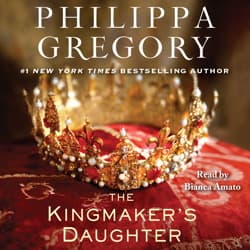
So I put my headphones in and hit play on The Kingmaker's Daughter.
(Yes, I know, escaping teenage drama by listening to a book about teenage girls being used as political pawns in the 1400s is... ironic. My wife Denise calls it my "busman's holiday." She's not wrong.)
Here's the thing about Philippa Gregory: she takes these women who are usually just footnotes in a history textbook—or worse, villains in a Shakespeare play—and gives them a pulse. And frankly, after listening to Bianca Amato narrate this, I'm pretty sure Shakespeare got it wrong.
When the Voice Matches the Crown
Let's talk about Bianca Amato for a second.
In my AP Lit class, I try to teach my students that tone is everything. You can say "I love you" and mean "I hate you" just by shifting your pitch. Amato gets this completely. She doesn't do that annoying thing some narrators do where they try to make every male character sound like a chain-smoking pirate. Instead, she focuses on the tension. There are scenes where Anne Neville is terrified—literally fearing for her life—and Amato drops her voice just a fraction. It forces you to lean in.
I listen at 1.0x speed (my students think I'm a dinosaur, I don't care), and Amato's pacing is deliberate. She understands that the silence between the words is where the real political maneuvering happens. It's performance art, really. If I could get my students to read Hamlet with half this much intentionality, I could retire happy.
History is Just Gossip with Better Outfits
Okay, I have to be honest about the pacing though.
The first half of this book? It drags. Seriously. It felt a bit like the budget presentation Principal Martinez gave last Tuesday—necessary, I guess, but painful. We spend a lot of time with Anne as a child, watching her father (the "Kingmaker") move her around like a piece of furniture.
I almost bailed around the four-hour mark. I was walking the lakefront, the wind was whipping off Lake Michigan, and I thought, "If I hear one more complaint about Isabel Neville, I'm switching to a podcast."
But stick with it.
Once Anne marries Richard (yes, that Richard, the Duke of Gloucester), the story shifts gears. It goes from a domestic drama to a survival thriller. Gregory does this thing where she makes you root for the people history tells us are the bad guys. By the end, I was completely stressed out for a woman who has been dead for 500 years.
(And look, the sister rivalry? It's brutal. It makes the drama in the English Department look like a tea party. At least when we fight over the copier, nobody gets beheaded.)
Who's This For?
If you want to understand the War of the Roses without needing a flowchart (though you still might need one—everyone is named Edward or Richard), this is your listen. Perfect for historical fiction fans who like their queens complicated and their politics cutthroat. Skip it if slow-burn first halves make you twitchy, or if you need strict historical accuracy to enjoy yourself.
The Final Grade
Is this historically accurate? Probably not entirely. Do I care? Nope.
Amato elevates the material way above standard historical romance. She gives Anne a spine. That same kind of character depth—where you end up caring way more than you expected—shows up in Hotel on the Corner of Bitter and Sweet, though the setting couldn't be more different.
I finished this while grading that last Macbeth essay. The student got a C-, but the audiobook? Solid A.
(Now I just need to convince my mom to listen to this instead of watching the TV show again. Wish me luck.)