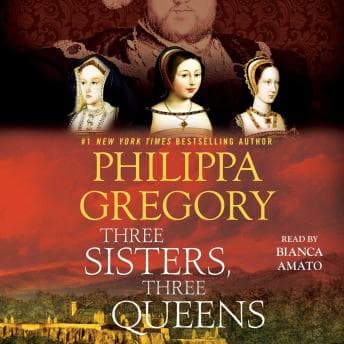

What happens when sisterhood meets the Tudor court, where love is a political weapon and family loyalty can get you killed?
Okay, so I spent three weeks with this 21-hour beast of an audiobook, and honestly? I have feelings. Like, messy, complicated, "I need to talk about this with someone" feelings. Abuela would have been OBSESSED with this book. The petty rivalry, the dramatic betrayals, the queens throwing shade across international borders - it's basically a telenovela with crowns and way more death.
Margaret Tudor Is That Friend You Can't Stand But Can't Look Away From
Here's the thing about this book that some people hate: Margaret Tudor, our narrator, is kind of... insufferable? She's jealous, petty, obsessed with her own importance, and constantly comparing herself to Katherine of Aragon and her sister Mary. And I get why that turns people off.
But also - I ugly-cried at chapter thirty-something when she loses James. Because Philippa Gregory does this thing where she makes you understand WHY someone is the way they are, even when they're being their worst self. Margaret grew up being told she was destined for greatness, then watched her Spanish sister-in-law get all the attention. She's insecure and defensive and yeah, sometimes I wanted to shake her. But the vulnerability underneath? Bianca Amato finds it. Every single time.
I was designing wedding invitations (the irony, I know) when Margaret's marriage to James IV of Scotland starts falling apart, and I had to pause because my eyes were too blurry to see the font choices. The vibes are immaculate in the worst possible way - you FEEL the cold Scottish castle, the political isolation, the way she clings to her Tudor identity like a lifeline.
The Voice in My Head for Three Weeks
Bianca Amato. That's it. That's the section.
(Okay fine, I'll elaborate.)
She does this thing where each queen has a distinct presence without ever doing a "voice" voice, you know? Katherine is measured and dignified. Mary is lighter, more impulsive. And Margaret - Margaret sounds like someone who's constantly performing confidence while falling apart inside. The accent work is clean, the pacing matches the political tension, and when the emotional gut-punches hit, Amato doesn't oversell them. She just... lets them land.
One reviewer said she "subsumes herself into the story" and yeah, that's exactly right. At 1.0x speed (because I'm not a monster), this audiobook felt like being told a very long, very dramatic story by someone who actually lived it. The 21 hours flew by - well, mostly. There are some slow stretches in the middle where the political maneuvering gets dense, but Amato's delivery kept me engaged even when Margaret was being exhausting about her precedence rights for the fortieth time.
This Is Not Actually About Three Sisters
Fair warning: if you're picking this up expecting equal time with Katherine, Mary, and Margaret, you're going to be disappointed. This is Margaret's story, full stop. Katherine and Mary appear through her eyes, which means you're seeing them through a lens of rivalry and resentment and occasional grudging admiration.
I actually didn't mind this? The title is misleading, sure, but the book is really about how Margaret defines herself against these other women. How she measures her worth by their successes and failures. It's a portrait of female competition in a world where women had almost no power except through the men they married and the sons they bore. That same constrained-world tension shows up in Memoir of Jane Austen, though the stakes are quieter there.
And honestly, the moments between the sisters - the letters, the rare visits, the complicated mix of love and jealousy - those hit different. There's this scene where Katherine sends Margaret a gift after a particularly brutal loss, and I had to pause my design work because my heart. MY HEART.
Who This Is For (And Who Should Run)
This is a rainy Sunday book. Actually, this is a rainy three-week book. It's long, it's dense with Tudor politics, and the main character will test your patience. But if you love Philippa Gregory's particular brand of historical fiction - the messy women, the political intrigue, the way she makes you feel the weight of corsets and crowns - this delivers.
Best for: commutes, long design sessions, anyone who's ever felt competitive with their siblings (so... everyone?), Tudor history nerds, people who appreciate complex female characters even when they're not "likable."
Maybe skip if: you need a fast-paced plot, you want equal focus on all three queens, or unsympathetic narrators make you ragequit. Also if you're sensitive to violence and loss - there's a lot of both.
Abuela Would Have Loved This One
Frida judged me hard for crying at a book about a 500-year-old queen. Diego just wanted treats. But Abuela would have loved this one - the drama, the sisterhood, the way love and power twist together until you can't tell them apart. The chemistry between the narrative and Amato's performance is chef's kiss.
Not a perfect book. But a deeply felt one. And sometimes that's enough.